Introduction to Data Science
Introduction to Data Science
What Is Data Science?
Data science is the practice of using data to understand and solve real-world problems. It's a field that combines methods from statistics, computer science, and business to turn raw data into meaningful insights.
Think about the last time a streaming service recommended a movie you loved. That wasn't a lucky guess. It was data science. The service analyzed your viewing history, compared it to millions of other users, and predicted what you'd want to watch next. This ability to find patterns and make predictions is what makes data science so powerful.
Data Science is an interdisciplinary field that combines techniques from statistics, mathematics, and computer science to extract knowledge and insights from data.
At its heart, data science is interdisciplinary. It's not just about math or just about coding. It requires a blend of skills.
- Computer Science: This provides the tools to collect, store, and process large amounts of data.
- Math and Statistics: These are the foundations for building models and verifying that the insights you find are significant, not just random chance.
- Domain Expertise: This is the deep understanding of a particular field—like finance, healthcare, or marketing. It provides the context needed to ask the right questions and interpret the results correctly.
The Data Science Lifecycle
A data science project isn't a straight line. It's a cycle of steps that often involves looping back to earlier stages as you learn more. While the specifics can vary, most projects follow a general pattern.
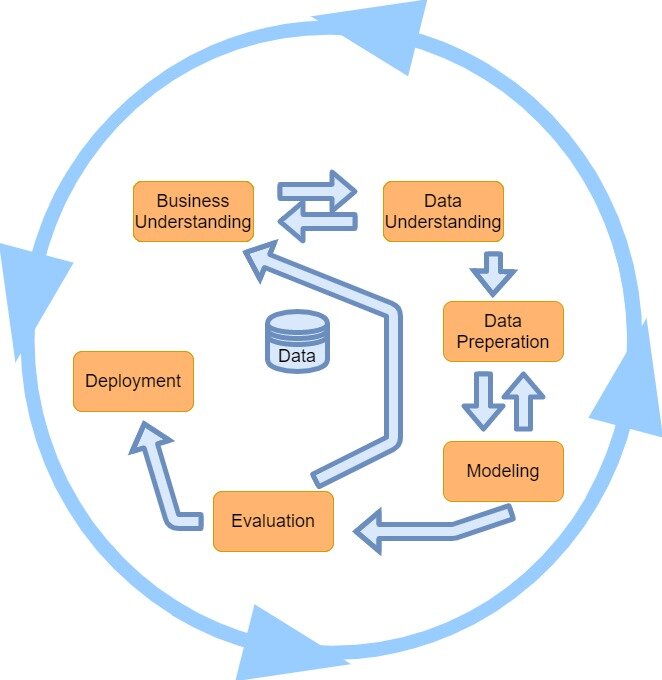
Here are the key phases:
-
Business Understanding: It all starts with a question. What problem are we trying to solve? What goal are we trying to achieve? This step is about defining the project's objectives from a business perspective.
-
Data Collection and Understanding: Next, you find and gather the necessary data. This might come from company databases, public records, or web scraping. Once you have the data, you explore it to get a first feel for its structure, quality, and content.
-
Data Preparation: Raw data is rarely perfect. It's often messy, with missing values, errors, or inconsistencies. This phase involves cleaning and transforming the data into a usable format. It's usually the most time-consuming part of the process.
-
Modeling: This is where you use machine learning algorithms and statistical models to find patterns in the data. The goal is to create a model that can make predictions or classify information to help answer the initial question.
-
Evaluation: Once you have a model, you need to test it. How accurate is it? Does it actually solve the business problem? This step involves assessing the model's performance and ensuring it meets the project's goals.
-
Deployment: If the model is successful, it's put into production. This could mean integrating it into an app, a company's website, or a business reporting dashboard so that it can provide ongoing value.
Traditional Analysis vs. Data Science
People have been analyzing data for centuries. So, what makes data science different from the traditional data analysis that businesses have always done? The main difference lies in the goal. Traditional analysis is typically descriptive, while data science is often predictive.
Traditional analysis looks at the past to explain what happened. Data science looks at the past to predict what will happen next.
This shift is powered by two key developments: big data and machine learning. We now have access to enormous datasets (big data) and the computational power to automatically learn complex patterns from that data (machine learning). This allows data scientists to move beyond simple reports and build systems that make proactive, data-driven decisions.
| Feature | Traditional Data Analysis | Modern Data Science |
|---|---|---|
| Goal | Explain past events (Descriptive) | Predict future outcomes (Predictive) |
| Data Source | Structured, often from a single source | Structured and unstructured, multiple sources |
| Methods | Statistical analysis, business intelligence | Machine learning, algorithms, statistics |
| Questions | "What were our sales last quarter?" | "What will our sales be next quarter?" |
| Focus | Reactive | Proactive |
Time to check what you've learned.
What is the primary goal of data science?
In the context of the three core areas of data science, which one provides the necessary context to ask the right questions and correctly interpret results?
Data science provides a powerful framework for turning raw data into actionable knowledge, moving beyond simply looking at the past to actively shaping the future.