Introduction to Data Science
Introduction to Data Science
What Is Data Science?
Data science is the art of asking questions and finding answers in data. Think of a data scientist as a modern detective. Instead of a magnifying glass, they use computers. Instead of a crime scene, they have datasets. Their job is to sift through all the information, find clues, connect the dots, and solve a puzzle.
Data Science is an interdisciplinary field that uses various techniques from statistics, mathematics, computer science, and domain-specific knowledge to extract insights from vast amounts of data.
This process isn't about just one skill. It's a blend of three key areas: statistics (the science of data), computer science (the tools to process data), and domain expertise (understanding the context of the data). Imagine you're trying to figure out why a new ice cream flavor isn't selling. You'd need:
- Statistics to analyze sales numbers and customer surveys.
- Computer science skills to handle the large amount of sales data from thousands of stores.
- Domain expertise in the food industry to understand customer tastes and market trends.
When these three fields overlap, you get data science.
The Data Science Lifecycle
Finding insights isn't a single event. It’s a cycle with several steps. While different models exist, they generally follow a similar path from a question to an answer.
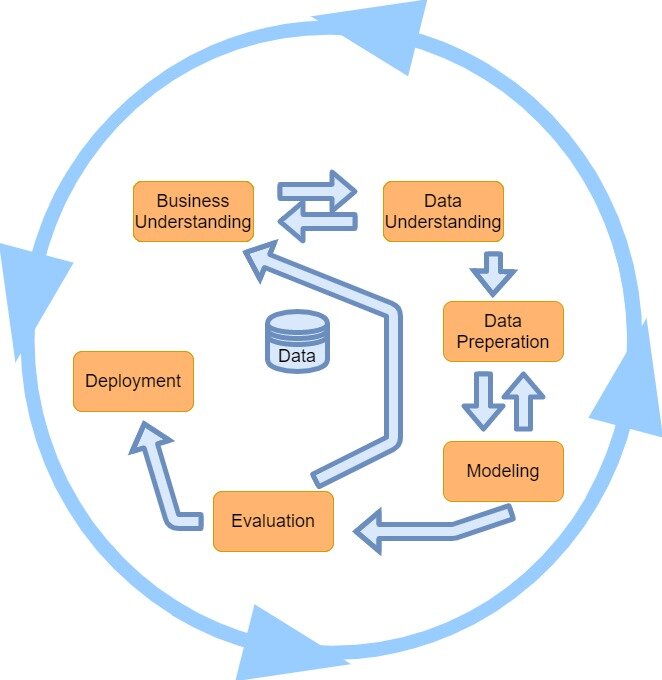
The process typically includes these key phases:
-
Problem Definition (Business Understanding): It starts with a clear question. What problem are we trying to solve? For example, a business might want to know, "Why are customers leaving our service?"
-
Data Collection: Once you have a question, you need data to answer it. This means gathering relevant information, like customer purchase history, support call logs, and website activity.
-
Data Preparation: Raw data is almost never perfect. It’s often messy, with missing pieces or errors. This stage involves cleaning and organizing the data to get it ready for analysis.
-
Data Analysis (Modeling): Here's where the discovery happens. Data scientists use statistical methods and algorithms to explore the data, find patterns, and build models that can predict outcomes.
-
Reporting (Evaluation & Deployment): The final step is to share the findings. This could be a report, a visualization, or a new tool that helps the business make better decisions. The insights from one cycle often lead to new questions, starting the process all over again.
Why Data Quality Matters
The entire data science process depends on one thing: the quality of the data. You could have the most advanced algorithms and the smartest analysts, but if the data is bad, the results will be useless. This is often called the "garbage in, garbage out" principle.
High-quality data is accurate, complete, and consistent. Poor-quality data can lead to flawed conclusions and costly mistakes.
Imagine a hospital trying to predict patient recovery times. If the data has incorrect admission dates or missing treatment information, any prediction will be unreliable. A big part of a data scientist's job is ensuring the data they work with is trustworthy.
The Role of a Data Scientist
So, what does a data scientist actually do? They are versatile problem-solvers who guide projects through the entire data lifecycle. They need to be curious enough to ask good questions, technical enough to wrangle data and apply analytical techniques, and communicative enough to explain their findings to people who aren't experts.

Data scientists are in demand across nearly every industry. In finance, they build models to detect fraud. In healthcare, they analyze clinical data to improve patient outcomes. In retail, they study shopping habits to personalize recommendations. They are the storytellers who translate the language of data into actionable insights that drive progress.
Let's review the key terms we've covered.
Now, check your understanding of these core concepts.
Which combination of fields forms the foundation of data science?
A data scientist is analyzing customer churn for an e-commerce company. They use their knowledge of online retail trends to interpret the data. This best demonstrates which core component of data science?
Data science provides a powerful framework for making sense of the world. By combining curiosity with analytical rigor, it helps us turn raw information into meaningful knowledge.