Introduction to Data Networks
Introduction to Data Networks
What is a Data Network?
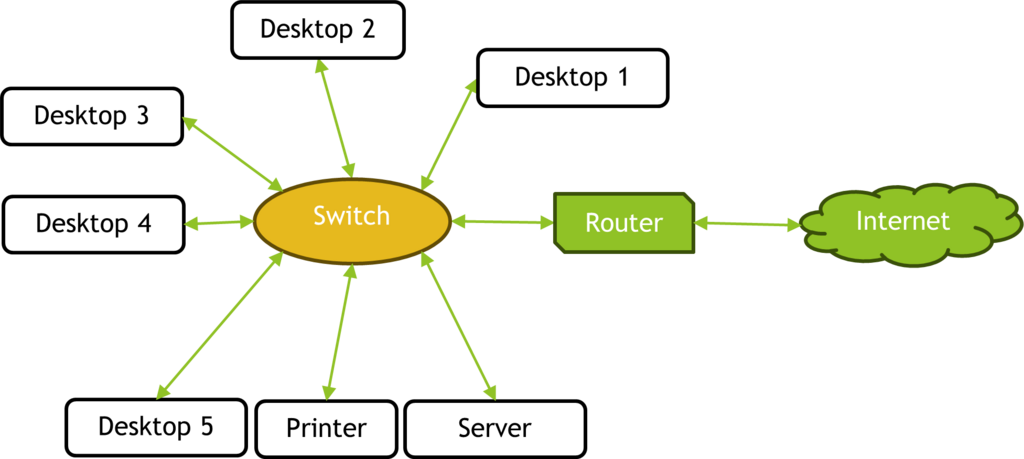
At its heart, a data network is just a group of devices connected together so they can share information. Think of it like a conversation. For two people to talk, they need to be connected, whether by being in the same room or on a phone call. Similarly, for your laptop to get a webpage from a server, they need a connection.
The main purpose of a network is to move digital information from one place to another. This simple idea powers almost everything we do online, from sending an email to streaming a movie. It also allows devices to share resources, like when multiple computers in an office all use the same printer.
A network connects devices, allowing them to share data and resources.
To make this happen, networks have a few key players. On one end, you have clients. These are devices that request information, like your computer, phone, or smart TV. On the other end are servers, which are powerful computers that store and provide information. When you visit a website, your computer (the client) asks a web server for the page.
But how do their messages travel? That's where connecting devices come in. Switches are like traffic coordinators for a local neighborhood, making sure messages between devices in one location (like an office) get to the right place. Routers are like the postal service for the whole city, figuring out the best path to send information between different neighborhoods, or networks.
From Experiment to Global Web
The internet didn't just appear overnight. Its roots go back to the 1960s with a U.S. government project called ARPANET. The goal was to build a computer network that could survive a major disruption. If one connection went down, information could still find another path to its destination.
In 1969, the first message was sent between two computers at UCLA and Stanford. The network started small, connecting just a handful of universities and research labs to share data and computing power.
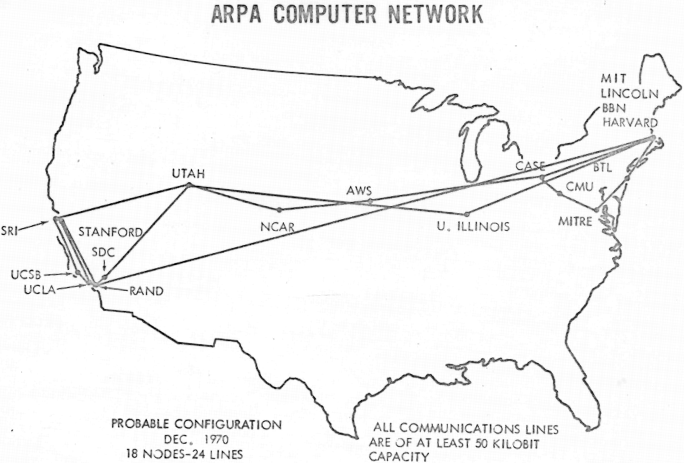
This experimental network was a success. It proved that a decentralized, packet-switching network—where data is broken into small pieces and sent independently—was a reliable way to communicate. The principles and technologies developed for ARPANET became the foundation for the internet we use every day.
Networks Big and Small
Not all networks are the size of the internet. We classify them based on the geographical area they cover. The three main types are LAN, WAN, and MAN.
LAN
noun
A Local Area Network (LAN) connects devices within a limited area, like a home, school, or office building. They are typically private and managed by a single organization.
Your home Wi-Fi is a perfect example of a LAN. It connects your phone, laptop, and smart TV, allowing them to communicate with each other and share a single internet connection. In an office, a LAN connects employee computers, servers, and printers.
WAN
noun
A Wide Area Network (WAN) spans a large geographical area, such as a state, country, or even the entire globe. It connects multiple LANs together.
The internet is the largest WAN in the world. It’s a massive, public network of networks that links billions of devices. Companies also build private WANs to connect their different office locations, allowing an employee in one city to access a server in another.
MAN
noun
A Metropolitan Area Network (MAN) is a network that covers a geographic area larger than a LAN but smaller than a WAN, typically a city or a large campus.
A MAN often acts as a high-speed network that connects various LANs within its coverage area. For example, a city government might use a MAN to connect the police department, fire department, and city hall.
| Network Type | Scale | Example |
|---|---|---|
| LAN | Small area (room, building) | Home Wi-Fi network |
| MAN | Medium area (city, campus) | A university's multi-campus network |
| WAN | Large area (global) | The Internet |
Understanding these basic building blocks is the first step to seeing how our digital world is connected.
What is the primary role of a router in a data network?
A university campus connects all of its buildings, including libraries, dorms, and administrative offices, with a high-speed fiber-optic network. This setup is a classic example of which type of network?