Introduction to Data Analytics
Introduction to Data Analytics
What Is Data Analytics?
Every day, we create a staggering amount of data. Every online purchase, social media post, and GPS route adds to a vast digital ocean of facts and figures. By itself, this raw data is just noise. Data analytics is the process of turning that noise into useful information.
Data analytics is the collection, transformation, and organization of these facts to draw conclusions, make predictions, and drive informed decision-making.
Think of it this way: a grocery store manager has a list of every item sold last month. That's raw data. By analyzing it, they might discover that people buy more ice cream on hot days or that a certain brand of cereal is suddenly unpopular. These are insights. Armed with this knowledge, the manager can stock more ice cream before a heatwave or put the unpopular cereal on sale.
This is the power of data analytics. It helps businesses and organizations move beyond guesswork and make smarter, evidence-based decisions. From optimizing shipping routes to recommending your next favorite movie, data analytics is working behind the scenes in nearly every industry.
The Data Detective
So, who does this work? A data analyst is like a detective for data. Their job is to dive into large datasets, search for clues, and piece together a story that can help solve a problem or answer a question.
A data analyst's responsibilities include:
- Gathering Data: They find and collect data from various sources, like databases, surveys, or web traffic.
- Cleaning Data: Raw data is often messy. It can have errors, duplicates, or missing pieces. An analyst tidies it up to ensure it's accurate and ready for analysis.
- Analyzing Data: Using various techniques, they look for patterns, trends, and connections within the data.
- Sharing Insights: Finding the answer isn't enough. Analysts must communicate their findings clearly to others, often using charts and graphs to tell a compelling story.
The Analytics Process
While every project is different, data analysis generally follows a standard lifecycle. It's a structured approach that ensures the journey from raw data to actionable insight is both efficient and effective.
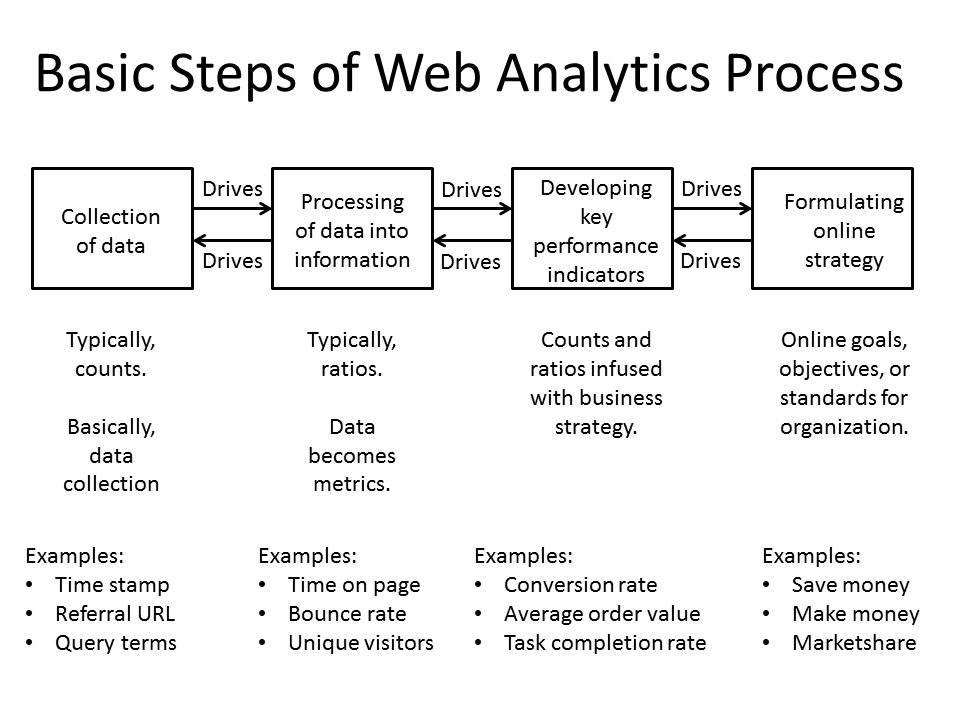
Let's break down these key stages:
-
Collection: The process begins with gathering raw data. This could be anything from customer feedback and sales figures to website clicks and sensor readings.
-
Processing: Here, the collected data is cleaned and organized. This crucial step, sometimes called data cleaning or preparation, involves removing errors, handling missing values, and structuring the data in a way that makes it suitable for analysis.
-
Development (Analysis): With clean data in hand, the analyst explores it to find patterns and trends. This is where they dig for the
aha!
moments—the hidden insights that can answer important business questions.
- Strategy (Interpretation & Action): The final step is to interpret the findings and turn them into a concrete strategy. The analyst communicates what the data means and recommends actions based on those insights. This is how data leads to better decisions.
Ready to check your understanding?
What is the primary goal of data analytics?
A data analyst receives a spreadsheet where some dates are formatted as 'MM/DD/YYYY' and others as 'Day, Month Date, Year'. The analyst converts them all to a single format. This task is part of which stage of the data analysis lifecycle?
This structured process is the foundation of all data analytics work, turning numbers and text into a powerful tool for progress.