Introduction to Data Analytics
Introduction to Data Analytics
What Is Data Analytics?
Data analytics is the process of examining data to find trends, answer questions, and draw useful conclusions. Think of a data analyst as a detective. They gather clues (data), look for patterns, and solve a mystery, like why sales dropped last month or which customers are most likely to buy a new product.
In a world overflowing with information, data analytics helps us make sense of the noise. Instead of guessing, businesses can use data to make smarter decisions. This could mean creating more effective marketing campaigns, improving a product, or streamlining operations to save money.
The primary goal of data analytics is to help individuals or organizations make informed decisions based on patterns, behaviors, and trends.
It’s not just for big companies. From sports teams analyzing player performance to city planners improving traffic flow, data analytics is a powerful tool for understanding the world and making it better.
The Four Types of Analytics
Data analytics can answer different kinds of questions, from what happened in the past to what we should do in the future. These questions fall into four main categories.
| Type | Question | Example |
|---|---|---|
| Descriptive | What happened? | A dashboard shows that website traffic was 10,000 visitors last week. |
| Diagnostic | Why did it happen? | Digging deeper reveals a popular blog post drove 70% of that traffic. |
| Predictive | What will happen next? | Based on past trends, we predict traffic will rise by 15% next month. |
| Prescriptive | What should we do? | The analysis recommends writing more blog posts on similar topics to boost traffic. |
Each type builds on the last. You start by understanding the past (descriptive), figuring out the causes (diagnostic), forecasting the future (predictive), and finally, deciding on a course of action (prescriptive). Together, they provide a complete picture.
The Data Analytics Lifecycle
Getting from raw data to a smart decision isn't a single step. It’s a cyclical process where each stage informs the next. While different models exist, most follow a similar path.
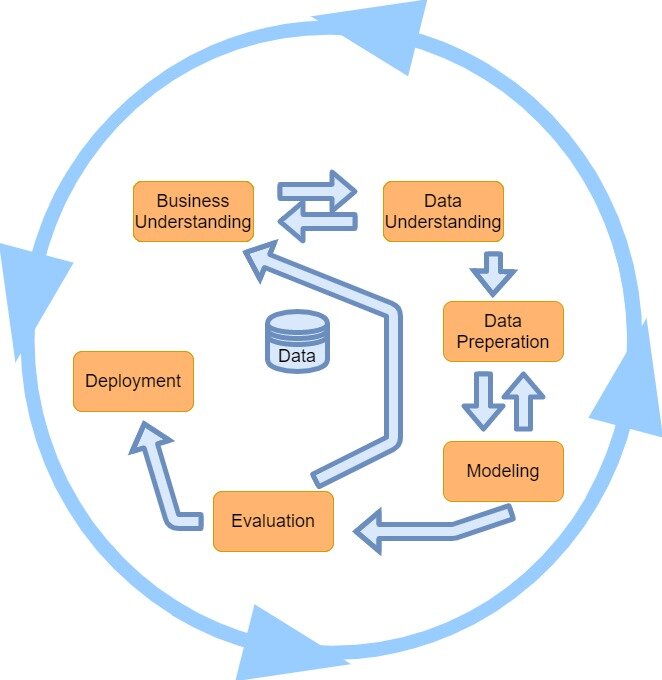
Here are the core stages:
-
Business Understanding: It all starts with a question. What problem are we trying to solve? What goal are we trying to achieve? This step is about defining the objective clearly.
-
Data Understanding: Next, you figure out what data you need to answer your question. You'll explore the data you have, see what's in it, and identify any initial issues.
-
Data Preparation: Raw data is almost always messy. It might have errors, missing values, or inconsistencies. This stage involves cleaning and organizing the data to get it ready for analysis. It's often the most time-consuming part of the process.
-
Modeling: This is where the actual analysis happens. You'll apply statistical models or machine learning algorithms to find patterns, make predictions, and uncover insights. This is where you might use descriptive, predictive, or the other types of analytics.
-
Evaluation: Once you have some results, you need to check if they actually answer the original question. Is the model accurate? Do the findings make sense in the context of the business?
-
Deployment: The work isn't done until the insights are in the hands of people who can use them. This final step involves presenting the findings in a clear way, often through reports or dashboards, so that leaders can make data-driven decisions.
The process is a cycle because the results of one analysis often lead to new questions, starting the lifecycle all over again.
Now that you understand the fundamentals, let's test your knowledge.
What is the primary purpose of data analytics?
A retail company analyzes past sales data to understand why a marketing campaign in a specific region failed. Which type of data analytics are they using?