Introduction to Data Analysis
Introduction to Data Analysis
What Is Data Analysis?
Data analysis is the process of inspecting, cleaning, transforming, and modeling data to discover useful information, draw conclusions, and support decision-making. Think of it as detective work for numbers and facts. You start with a pile of raw, unorganized clues (the data) and, through careful examination, piece together a story that solves a mystery or answers a question.
Why does it matter? Because in nearly every field, from business and healthcare to sports and science, we are surrounded by data. Analyzing this data helps companies understand their customers, allows doctors to find effective treatments, and helps coaches build winning teams. It turns noise into knowledge, allowing us to make informed choices based on evidence rather than just guesswork.
Data analysis is a critical process in transforming raw data into meaningful insights that drive decision-making and strategy.
The Data Analysis Process
While the specific tools and techniques can get complicated, the overall process follows a clear and logical path. It's a structured journey that takes data from its original, messy state to a clean, insightful conclusion. Most data analysis projects follow four key steps.
1. Data Collection This is the starting point. Data collection is the process of gathering raw information from various sources. This could be anything from customer surveys and sales figures to website traffic and scientific experiments. The goal is simply to get all the potentially relevant raw material in one place.
2. Data Cleaning Raw data is rarely perfect. It often contains errors, duplicates, or missing information. The cleaning phase is like tidying up a messy room before you can organize it. This step involves fixing or removing inaccuracies and inconsistencies to ensure the data is reliable and high-quality. A clean dataset is essential for accurate analysis.
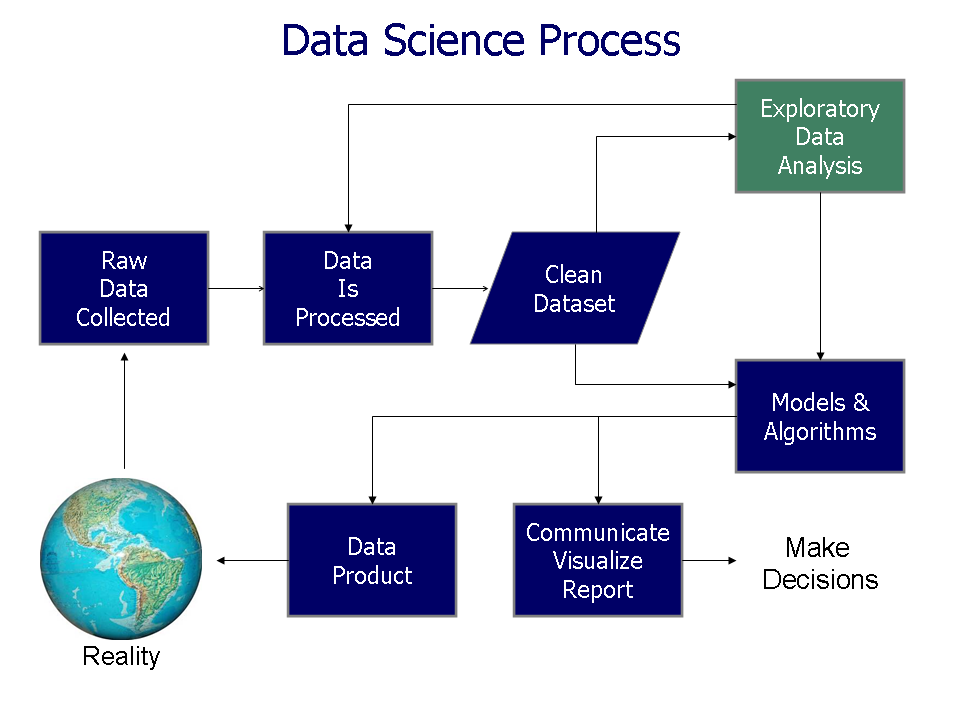
3. Data Processing Once the data is clean, it needs to be organized and structured. This is the processing step, sometimes called data transformation or wrangling. It might involve converting data into a more usable format, like putting all dates in a standard layout or categorizing open-ended survey answers. This stage prepares the data for the main event: the analysis itself.
4. Data Interpretation This is where insights emerge. In the final step, you analyze the processed data to find patterns, trends, and relationships. It involves using statistical techniques, visualization tools, and critical thinking to understand what the data is saying. The goal is to answer the original question and communicate the findings in a clear, understandable way.
Each step builds on the last. High-quality collection and thorough cleaning are the foundation for reliable processing and meaningful interpretation.
Ready to check your understanding of these core concepts?
What is the primary goal of data analysis?
During which phase of data analysis would you focus on removing duplicate records and correcting typos?
This structured process is the backbone of turning simple data points into powerful knowledge.