Introduction to Data Analysis
Introduction to Data Analysis
What Is Data Analysis?
Data analysis is the process of inspecting, cleaning, transforming, and modeling data to discover useful information, inform conclusions, and support decision-making. Think of it as a way to have a conversation with your data. You ask questions, and the data provides answers that can help you understand what's happening, why it's happening, and what might happen next.
Every time you check a weather app to decide if you need a jacket, you're using the results of data analysis. Companies use it to understand customer behavior, scientists use it to find patterns in their experiments, and governments use it to create better policies. The core idea is to turn raw facts and figures into actionable insights.
Four Key Types of Analysis
Data analysis isn't a one-size-fits-all process. Depending on the question you're trying to answer, your approach will fall into one of four main categories.
| Type | Question It Answers | Example |
|---|---|---|
| Descriptive | What happened? | Summarizing a company's monthly sales figures to see total revenue. |
| Diagnostic | Why did it happen? | Investigating why sales dropped in a specific region by looking at local competitor activity. |
| Predictive | What is likely to happen? | Forecasting next quarter's sales based on historical trends and seasonal patterns. |
| Exploratory | What patterns can we find? | Sifting through customer feedback to uncover common themes or unexpected issues. |
Each type of analysis builds on the last. You often start by describing what happened (Descriptive) before you can understand why (Diagnostic) or predict what will happen next (Predictive).
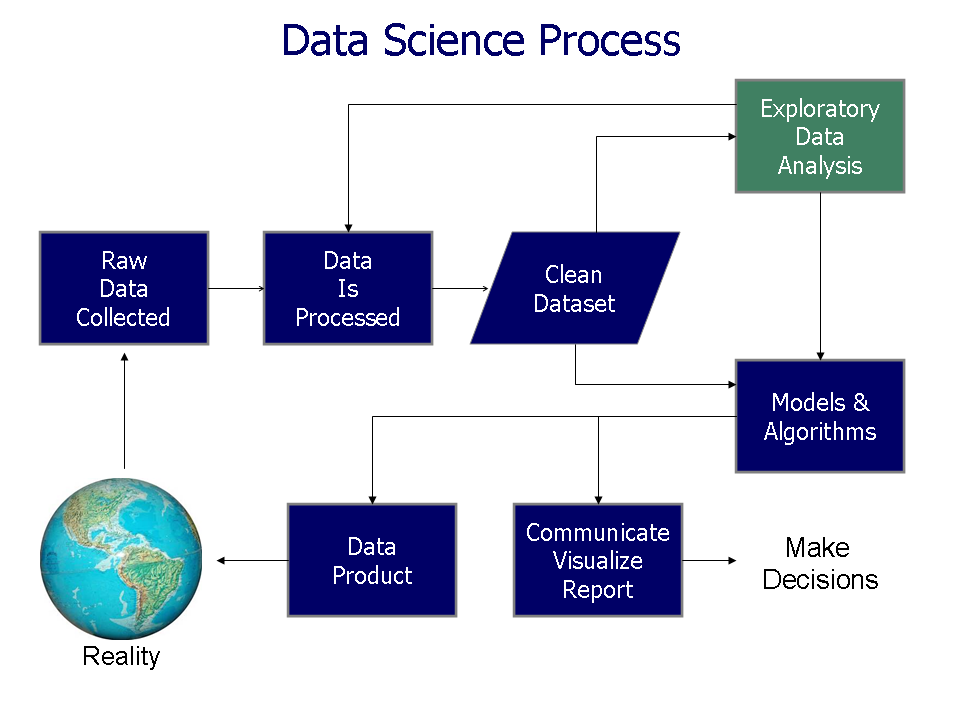
The Data Analysis Process
While every project is unique, most data analysis follows a standard lifecycle. This framework helps ensure that the analysis is thorough, logical, and ultimately useful.
Let's briefly look at each step:
- Ask a Question: It all starts with curiosity. You need to define what problem you're trying to solve or what insight you're looking for. A clear question guides the entire process.
- Collect Data: Once you know your question, you gather the necessary information. This data can come from anywhere: surveys, sales records, website traffic, or public databases.
- Clean Data: Raw data is often messy. It might have errors, duplicates, or missing values. This step involves preparing the data to make it accurate and ready for analysis.
- Analyze Data: This is where you apply statistical techniques and tools to find patterns, correlations, and trends. You might use one of the four types of analysis we discussed earlier.
- Interpret & Share: Finally, you translate your findings into a clear, understandable story. This often involves creating charts or reports to communicate the results to others so they can make informed decisions.
Now, let's test your understanding of these foundational concepts.
What is the primary purpose of data analysis?
An analyst is working with a sales dataset and notices that many entries have incorrect date formats and several records are exact duplicates. They spend time standardizing the dates and removing the duplicates. Which step of the data analysis lifecycle is this?
Understanding these core ideas—what analysis is, its different types, and the general process—provides a solid foundation for exploring the world through data.