Introduction to Cybersecurity
Introduction to Cybersecurity
The Core Principles of Cybersecurity
Cybersecurity is about protecting our digital world. It's not just about complex tools and secret codes. At its heart, it's guided by a few fundamental ideas. These principles are the bedrock of any strong security plan, whether for a global corporation or your personal email account. Understanding them helps you think critically about how to keep information safe.
The CIA Triad
The most fundamental concept in cybersecurity is the CIA Triad. This isn't about intelligence agencies; it's a model for thinking about security goals. It stands for Confidentiality, Integrity, and Availability.
Confidentiality, integrity, and availability—the CIA triad—are the three pillars of information security.
Let's break down each component.
Confidentiality is about keeping secrets. It ensures that data is accessible only to authorized users. Think of it like a sealed envelope. Only the intended recipient should be able to open it and read the letter inside. In the digital world, this means preventing sensitive information—like your credit card number or private messages—from being read by the wrong people.
Integrity means that data is accurate, consistent, and trustworthy. It's about ensuring that information hasn't been tampered with or altered, either accidentally or maliciously. Imagine your bank account balance. You need to trust that the number you see is correct and hasn't been changed without your permission. That's data integrity.
Availability ensures that systems and data are up and running when you need them. If you can't access your own information, it doesn't matter how confidential or accurate it is. An online service that's constantly crashing isn't very useful. Availability is like an ATM; it needs to be working when you need to withdraw cash.
These three goals are often in a delicate balance. Increasing one can sometimes decrease another. For example, making a system extremely confidential with multiple layers of security might make it slower and less available. The key is to find the right balance for the specific data you're trying to protect.
Access and Defenses
Beyond the CIA Triad, two other core strategies guide how we build secure systems: the Principle of Least Privilege and Defense-in-Depth.
Least Privilege
other
A security concept where a user is given the minimum levels of access—or permissions—needed to perform their job functions.
The Principle of Least Privilege is simple: people and programs should only have the bare minimum permissions required to do their job. A cashier doesn't need the keys to the company's executive offices. Similarly, an app that edits your photos doesn't need access to your contacts list.
This principle limits the damage that can be done if an account is compromised. If a hacker gains access to a low-level user account, they won't be able to access the entire system.
Least Privilege is a cybersecurity principle that grants individuals or systems only the minimum level of access needed for their specific tasks, reducing the risk of unauthorized actions and potential security threats.
Finally, there's the strategy of Defense-in-Depth. This idea comes from military strategy, where you wouldn't rely on a single wall to protect a castle. You'd have a moat, a drawbridge, high walls, and guards. If one layer fails, another is there to stop the attacker.
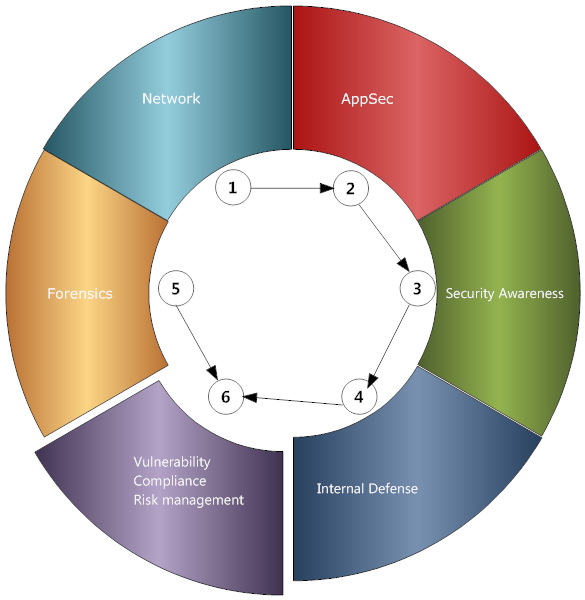
In cybersecurity, this means using multiple, layered security measures. You might have a firewall, antivirus software, strong passwords, and two-factor authentication. No single defense is perfect, but by layering them, you create a much more resilient and secure system. If one control fails, others are in place to continue protecting your assets.
Defense in Depth is a cybersecurity strategy that employs a multi-layered approach to security, incorporating complementary defensive measures across various levels of an IT environment.
Now let's test your knowledge on these foundational concepts.
In the CIA Triad, the 'I' stands for:
A company configures its file server so that employees in the marketing department can only read and write to the 'Marketing' folder, but cannot access the 'Finance' or 'HR' folders. This is an example of which security principle?
These principles—Confidentiality, Integrity, Availability, Least Privilege, and Defense-in-Depth—form the foundation of modern cybersecurity. They provide a framework for making smart decisions about how to protect information in an increasingly connected world.