Introduction to Cybernetics
Introduction to Cybernetics
What is Cybernetics?
At its heart, cybernetics is the science of steering. The word comes from the Greek kybernetes, meaning "steersman" or "governor." It's all about how systems—any systems, from living cells to robots to economies—regulate themselves to achieve goals.
Cybernetics is the study of control and communication in all systems, whether they are living organisms (like a human or an animal) or artificial machines (like a robot or a computer).
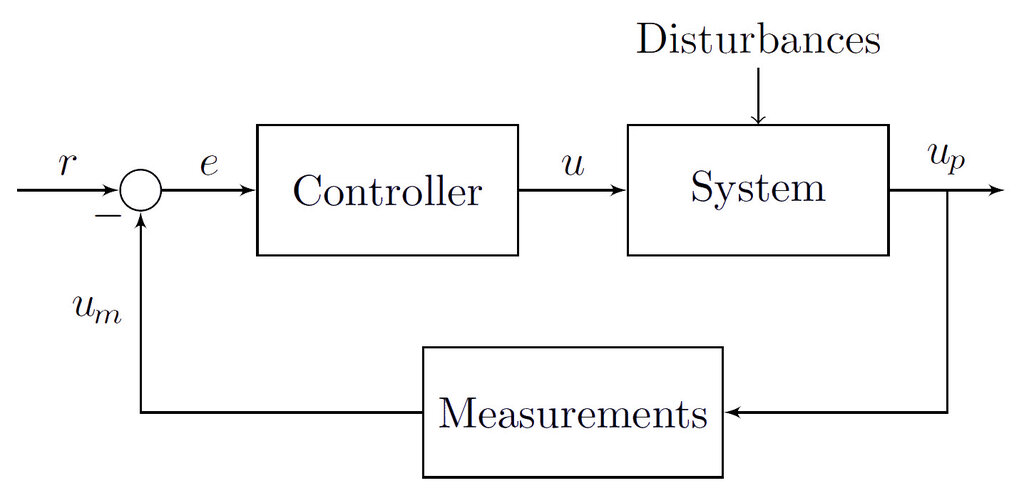
Think about how you pick up a glass of water. You see the glass, your brain calculates the distance, and it sends signals to your arm muscles. As your hand moves, your eyes send feedback to your brain, which makes tiny adjustments to your movement until you successfully grasp the glass. This loop of action, feedback, and correction is the central idea of cybernetics. It's not just about what a system is made of, but about what it does and how it stays on course.
A Brief History
The field of cybernetics was formally established in the aftermath of World War II. During the war, scientists and engineers worked on complex problems like creating anti-aircraft systems that could track and shoot down enemy planes. This required machines that could observe a target, predict its path, and adjust their aim based on new information—a classic cybernetic problem.
A key figure was mathematician Norbert Wiener, who published his book Cybernetics: Or Control and Communication in the Animal and the Machine in 1948. Wiener and his colleagues realized that the principles they used to design self-guiding missiles were remarkably similar to the processes found in biological nervous systems.
This insight led to a series of famous meetings called the Macy Conferences, held between 1946 and 1953. These gatherings brought together an incredibly diverse group of thinkers: mathematicians, engineers, biologists, anthropologists, and psychologists. They all shared a common interest in understanding the patterns of communication and control that governed systems of all kinds. This made cybernetics one of the first truly interdisciplinary fields.
Cybernetics in Action
The principles of cybernetics are all around us, in both the natural and the artificial world.
In biology, your body constantly uses feedback to maintain a stable internal environment, a process called homeostasis. When you get too hot, sensors in your skin send messages to your brain, which then tells your body to sweat. The evaporation of sweat cools you down, providing negative feedback that stops the process once your temperature is back to normal.
In technology, a simple thermostat in your home is a cybernetic system. It measures the room's temperature (feedback), compares it to the desired temperature (the goal), and turns the furnace on or off to correct any difference. More complex examples include aircraft autopilots, which constantly adjust the plane's controls to maintain a steady flight path, and modern AI systems that learn and adapt based on new data.
Cybernetics offers a powerful lens for seeing the world not as a collection of static objects, but as a web of dynamic, goal-oriented systems that are constantly communicating and adapting.
By focusing on these universal principles of control and feedback, cybernetics provides a common language to describe how a wide range of complex systems function and behave.
What is the central concept of cybernetics?
The word "cybernetics" comes from the Greek word kybernetes. What does this word mean?