Introduction to Cryptography
Introduction to Cryptography
What is Cryptography?
At its heart, cryptography is the art of secret communication. The word comes from Greek, meaning "hidden writing." It's a collection of techniques for securing information, making sure that only the intended people can access and understand it.
Think of it like a secret language shared between you and a friend. You can talk openly, but no one else can understand what you're saying.
In the digital world, this is crucial. Every time you shop online, send an email, or log in to a social media account, cryptography works silently in the background to protect your data. It provides the foundation for digital trust. This trust is built on four core principles: confidentiality, integrity, authentication, and non-repudiation.
The Four Pillars of Trust
These four principles work together to create a secure environment for our digital lives. Let's break down what each one means.
Confidentiality: This is about keeping information secret. It ensures that data is only accessible to authorized individuals. Think of it as a digital envelope that keeps prying eyes away from your message.
Integrity: This guarantees that the information has not been altered or tampered with during transmission. You can be confident that the message you receive is the exact same one that was sent.
Authentication: This principle verifies the identity of the person or system you are communicating with. It's how you know you're talking to your bank's website and not a clever imposter.
Non-repudiation: This provides proof that a sender really did send a particular message. It prevents someone from later denying that they sent it, similar to how a signature on a contract is legally binding.
A Quick Trip Through Time
Cryptography isn't a new idea. For thousands of years, people have used codes and ciphers to protect secrets. One of the earliest and most famous examples is the Caesar cipher, used by Julius Caesar to protect his military communications.
The Caesar cipher was simple: just shift each letter of the alphabet forward by a set number of places. If the shift was 3, 'A' would become 'D', 'B' would become 'E', and so on. A message like 'HELLO' would become 'KHOOR'.
While simple ciphers worked for a time, they were easy to break. As technology evolved, so did cryptography. The 20th century saw the invention of complex mechanical devices like Germany's Enigma machine during World War II. Breaking the Enigma code was a monumental task that significantly impacted the war's outcome.
The arrival of computers and the internet changed everything. The need for strong, reliable cryptography exploded, leading to the development of the sophisticated mathematical algorithms that protect our digital world today.
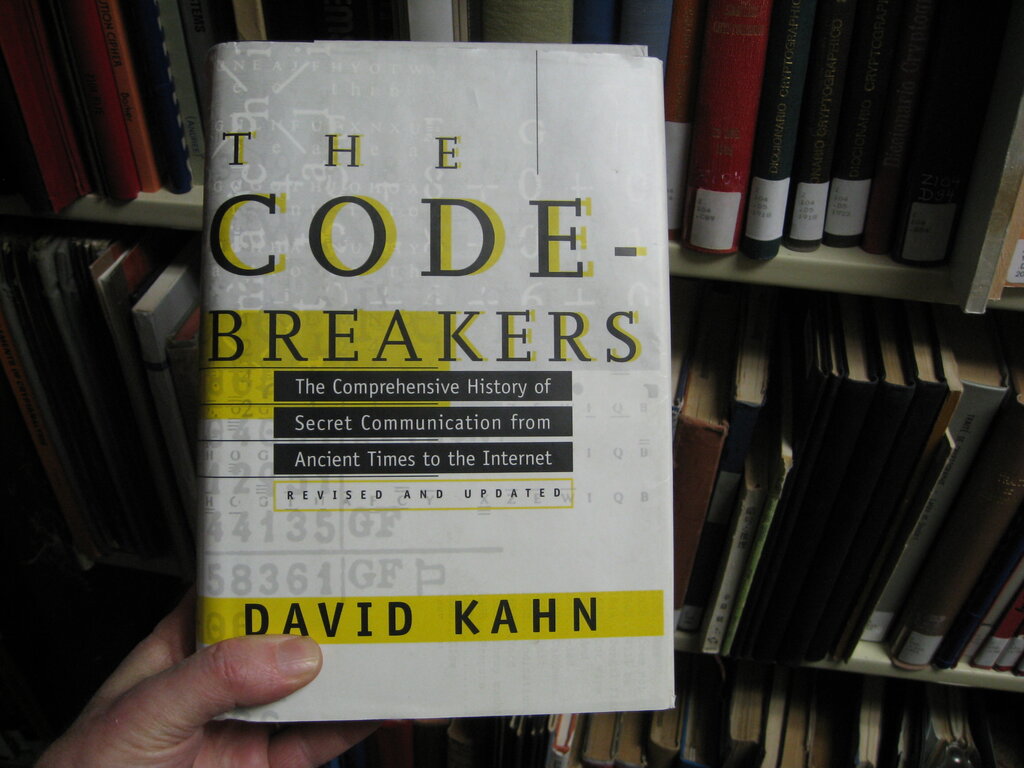
The Basic Toolkit
Modern cryptography relies on a few core concepts. Understanding them is the first step to understanding how digital security works.
Encryption
noun
The process of converting readable information (plaintext) into an unreadable, scrambled format (ciphertext).
Encryption takes your original message, called plaintext, and uses a mathematical algorithm to transform it into ciphertext. The ciphertext should look like random nonsense to anyone who intercepts it.
To turn the ciphertext back into readable plaintext, you need to perform decryption. But how does the right person know how to decrypt it while others don't? That's where keys come in.
A key is a piece of secret information. The encryption algorithm uses the key to scramble the message, and the decryption algorithm uses a key to unscramble it. Without the right key, the ciphertext is useless.
Imagine your message is a package you put in a locked box. Encryption is the act of putting the package in the box and locking it. The key is what you use to lock and unlock the box. Only someone with the correct key can open it and see the contents.
This process of using keys to manage encryption and decryption is called key management. It's one of the most critical aspects of cryptography. After all, even the strongest lock is useless if the key falls into the wrong hands.
Now that you know the fundamental goals and concepts, you're ready to explore the mechanisms that make modern digital security possible.
What is the primary goal of cryptography?
When you receive an email with a digital signature, it provides proof that the sender actually sent the message and cannot deny it later. Which principle does this illustrate?