Introduction to Criminology
Introduction to Criminology
What Is Criminology?
Criminology is the scientific study of crime. It explores why people commit crimes, how society reacts to crime, and how to prevent it. Criminologists look at crime as a social phenomenon, examining everything from the individual psychology of an offender to the societal patterns that might encourage criminal behavior.
criminology
noun
The scientific study of the nature, extent, management, causes, control, consequences, and prevention of criminal behavior, both on individual and social levels.
Think of it as the detective work behind the detective work. While a police officer might investigate a specific robbery, a criminologist asks broader questions: Why are robbery rates higher in some neighborhoods than others? What factors in a person's life might lead them to commit robbery? What are the most effective ways to reduce robberies across a whole city?
A Brief History
For centuries, crime was often explained through a religious or spiritual lens, seen as the work of the devil or a result of moral failing. But during the Enlightenment in the 18th century, thinkers started looking for more rational explanations for human behavior. This shift laid the groundwork for modern criminology.
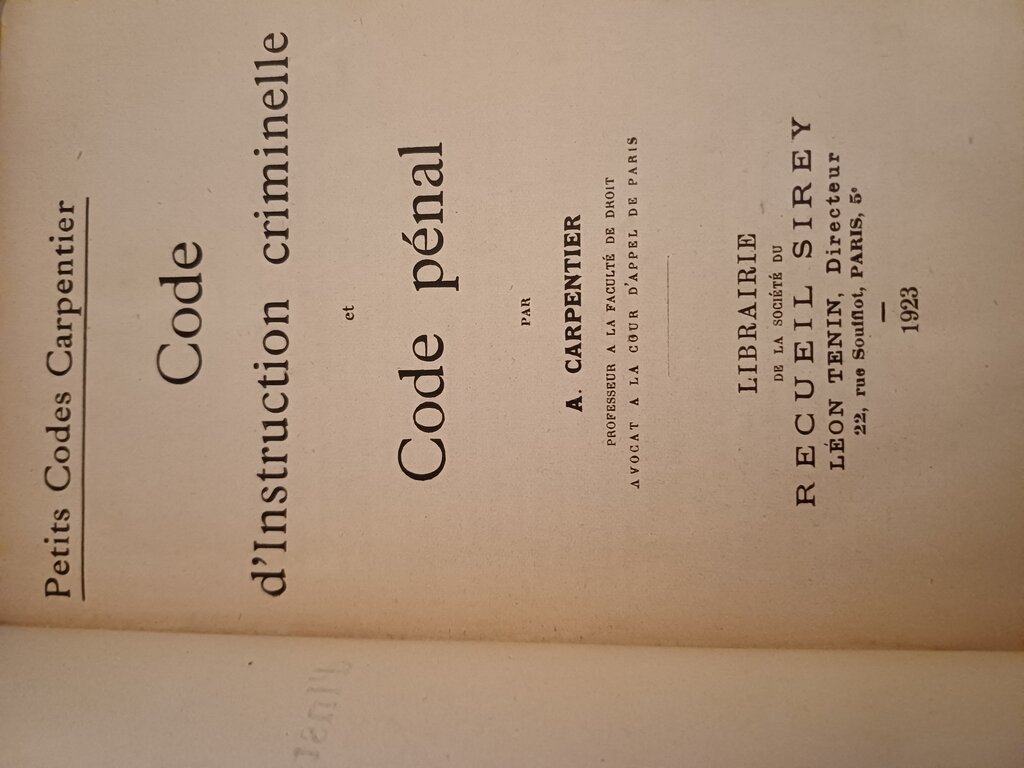
Early pioneers like Cesare Beccaria argued that people commit crimes based on rational choice, weighing the potential pleasure against the pain of punishment. This was a revolutionary idea. Later, in the 19th century, figures like Cesare Lombroso took a more scientific, if now discredited, approach, suggesting that criminality could be identified through physical characteristics. While his methods were flawed, his focus on observation and measurement helped push criminology toward becoming a scientific discipline.
Crime and Deviance
To understand criminology, we need to be clear on two key concepts: crime and deviance. They are related but not the same.
A crime is an act that violates a formal law, one written down and enforced by the state. If you break a criminal law, you can be arrested, prosecuted, and punished.
Deviance, on the other hand, is behavior that violates social norms and expectations. These are the unwritten rules of a society. Deviant behavior might get you strange looks or social disapproval, but it won't necessarily land you in jail.
All crime is a form of deviance, but not all deviance is a crime.
For example, dyeing your hair bright purple might be considered deviant in a conservative office environment, but it's not a crime. Speeding, however, is both deviant (it breaks a social norm of safe driving) and a crime (it violates traffic laws).
Sometimes, the lines blur. What is considered criminal or deviant can change over time and across cultures. Selling alcohol in the United States was a crime during Prohibition but is legal today.
| Concept | Definition | Consequence |
|---|---|---|
| Crime | An act that violates written criminal law. | Formal punishment |
| Deviance | Behavior that violates unwritten social norms. | Informal sanctions |
Criminology vs. Criminal Justice
People often use the terms "criminology" and "criminal justice" interchangeably, but they refer to two distinct fields of study.
Criminology is the academic discipline focused on understanding the nature, causes, and consequences of crime. It's the "why."
Criminal justice refers to the system of institutions—police, courts, and corrections—that respond to crime. It's the "how."
A good analogy is medicine. A criminologist is like a medical researcher studying the causes and patterns of a disease. A criminal justice professional is like the doctor in a hospital, applying established procedures to treat the patients who come through the door.
A criminologist might research the effectiveness of different policing strategies, while a criminal justice professional is the police officer actually implementing one of those strategies on the street. The two fields are deeply connected and inform one another, but their focus is different.

A Field of Many Disciplines
Crime is a complex issue, so no single field has all the answers. Criminology is inherently interdisciplinary, meaning it borrows theories and methods from many other areas of study to get a more complete picture.
Here are a few key contributors:
- Sociology helps us understand how social structures, inequality, and cultural norms can influence crime rates.
- Psychology provides insights into individual behavior, personality traits, and mental processes that might lead to criminal acts.
- Law defines what constitutes a crime and shapes the legal framework for the justice system.
- Economics can explain crime through models of rational choice, where individuals weigh the costs and benefits of illegal activities.
- Biology and Genetics explore potential biological or genetic predispositions that might, in combination with environmental factors, increase the risk of criminal behavior.
By drawing from all these fields, criminology offers a richer, more comprehensive understanding of one of society's most challenging problems.
Which of the following questions best represents the focus of a criminologist?
A person loudly sings opera on a quiet, crowded public bus. According to formal definitions, this behavior is best described as: