Introduction to Criminalistics
Introduction to Criminalistics
What is Criminalistics?
Criminalistics is where science meets the law. It’s the practice of applying scientific methods to recognize, collect, and analyze physical evidence from crime scenes. The goal is to piece together what happened and establish links between a victim, a suspect, and the scene of the crime.
Think of it as the hands-on, laboratory-based side of forensic science. A criminalist might analyze a strand of hair found on a jacket, test a smudge for DNA, or match the striations on a bullet to a specific firearm. Their work provides objective, physical facts that can support or refute witness testimony and help guide investigations.
Criminalistics
noun
The scientific examination and analysis of physical evidence in criminal investigations.
Criminalistics vs. Criminology
Though they sound similar, criminalistics and criminology are two distinct fields. Criminalistics focuses on the what and how of a crime through physical evidence. Criminology, on the other hand, explores the why—it’s the social science that studies the causes of crime, criminal behavior, and the impact of crime on society.
| Criminalistics | Criminology | |
|---|---|---|
| Focus | Physical evidence analysis | Causes and patterns of crime |
| Discipline | Natural Sciences (Biology, Chemistry) | Social Sciences (Sociology, Psychology) |
| Question | How was the crime committed? | Why was the crime committed? |
| Goal | Link evidence to individuals | Understand and prevent criminal behavior |
A criminalist works in a lab analyzing a bloodstain. A criminologist might study statistics to understand why robbery rates are increasing in a particular city. Both are crucial to the justice system, but they approach the problem of crime from very different angles.
A Brief History
The idea of using science to solve crimes isn't new, but its formal development began in the late 19th century. One of the pioneers was Hans Gross, an Austrian prosecutor who is often called the "father of criminalistics." In 1893, he published a groundbreaking book that detailed how scientific disciplines could be used in criminal investigations, effectively creating a new field of study.
Around the same time, others were making key contributions. In France, Alphonse Bertillon developed a system of personal identification based on body measurements. Though eventually replaced by fingerprinting, it was the first scientific system used by police to identify criminals.
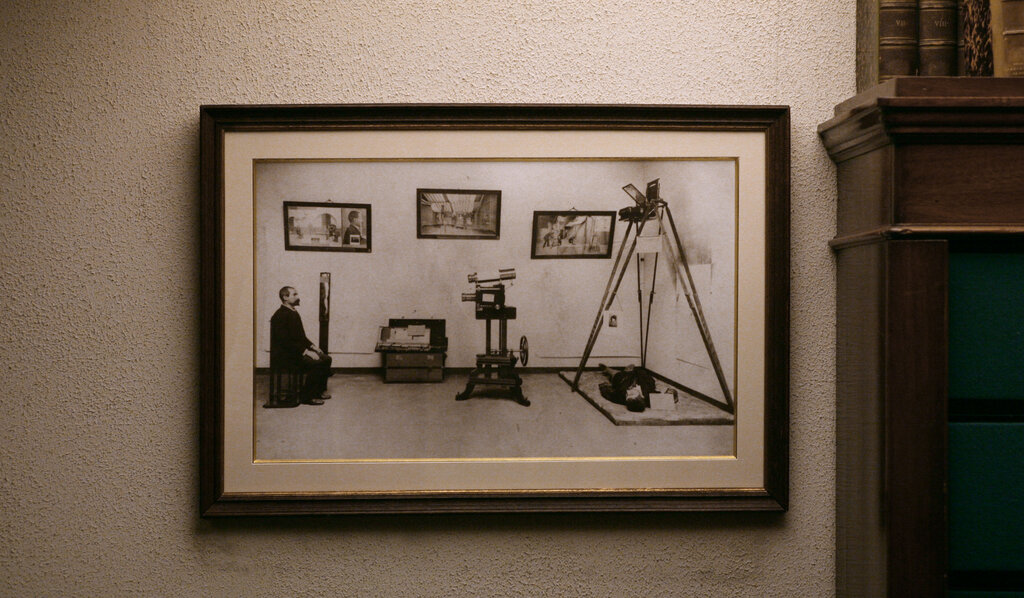
Perhaps one of the most foundational ideas in criminalistics came from another Frenchman, Dr. Edmond Locard. In the early 20th century, he established the first police crime laboratory and formulated a simple but powerful concept that remains a cornerstone of forensic science today.
Every contact leaves a trace. This is Locard's Exchange Principle. It means that whenever two objects come into contact, there is a transfer of material between them.
These early efforts paved the way for the sophisticated techniques used today. From the discovery of DNA profiling to the development of digital forensics, criminalistics has continually evolved, giving investigators more powerful tools to find the truth.
Ready to check your understanding?
What is the primary focus of criminalistics?
Which of the following scenarios best describes the work of a criminalist?
Criminalistics provides the objective, scientific backbone for investigations, turning microscopic traces into powerful evidence in the pursuit of justice.