Introduction to Conversational AI
Introduction to Conversational AI
Talking with Technology
At its heart, conversational AI is technology designed to chat with us. It’s the software that powers chatbots and virtual assistants, allowing them to understand what we say or type and respond in a surprisingly human-like way. Instead of clicking buttons or navigating menus, you can just ask a question or give a command in plain English.
Conversational AI is a branch of artificial intelligence (AI) that uses natural language processing (NLP) to allow humans to have a context-driven dialogue with machines.
Think of it like a recipe with two main ingredients. The first is a way to understand language, and the second is a way to generate a sensible reply. Together, these components create an experience that feels less like using a machine and more like having a conversation.
From Clicks to Conversations
How we interact with computers has changed dramatically over the years. Early computers required users to type precise, rigid commands. If you made a typo, the computer wouldn't understand. This was the era of the Command-Line Interface (CLI).
Then came the Graphical User Interface (GUI), which introduced windows, icons, menus, and pointers—the system most of us still use today. It made computers much more accessible by allowing us to point and click instead of memorizing commands.
Now, we're moving into the age of the Conversational User Interface (CUI). This new interface lets us use our most natural form of communication: language. We can speak to our phones, message a company's chatbot, or ask a smart speaker to play a song. The goal is to make technology feel seamless and intuitive.
The Brains Behind the Chat
So, how does a computer learn to understand language? The magic happens through two key fields of AI: Natural Language Processing (NLP) and Machine Learning (ML).
Natural Language Processing
noun
A field of artificial intelligence that helps computers understand, interpret, and generate human language.
NLP gives machines the ability to read text, hear speech, and make sense of it. It breaks our language down, figures out the grammar, identifies the key topics, and even tries to understand the sentiment or emotion behind the words.
Machine Learning is the other crucial part. Instead of being programmed with rigid rules, ML algorithms learn from vast amounts of data. For conversational AI, this means analyzing countless real-life conversations. By seeing how people ask questions and how others respond, the AI learns to identify patterns and predict what a good response would be. The more data it processes, the smarter and more natural it becomes.
In short, NLP helps the AI understand the what of our words, while ML helps it learn how to respond appropriately.
Conversational AI in Action
You've likely interacted with conversational AI without even realizing it. It's becoming a part of our daily lives in many ways.
- Virtual Assistants: Tools like Siri, Alexa, and Google Assistant use conversational AI to answer questions, set reminders, and control smart home devices.
- Customer Service Chatbots: Many companies now have chatbots on their websites to provide 24/7 support. They can answer common questions, help you track an order, or connect you with a human agent if needed.
- Healthcare: AI-powered bots can help patients schedule appointments or get answers to basic health questions, freeing up medical staff for more complex issues.
- E-commerce: Online shopping bots can act as personal shoppers, recommending products based on your preferences and previous purchases.
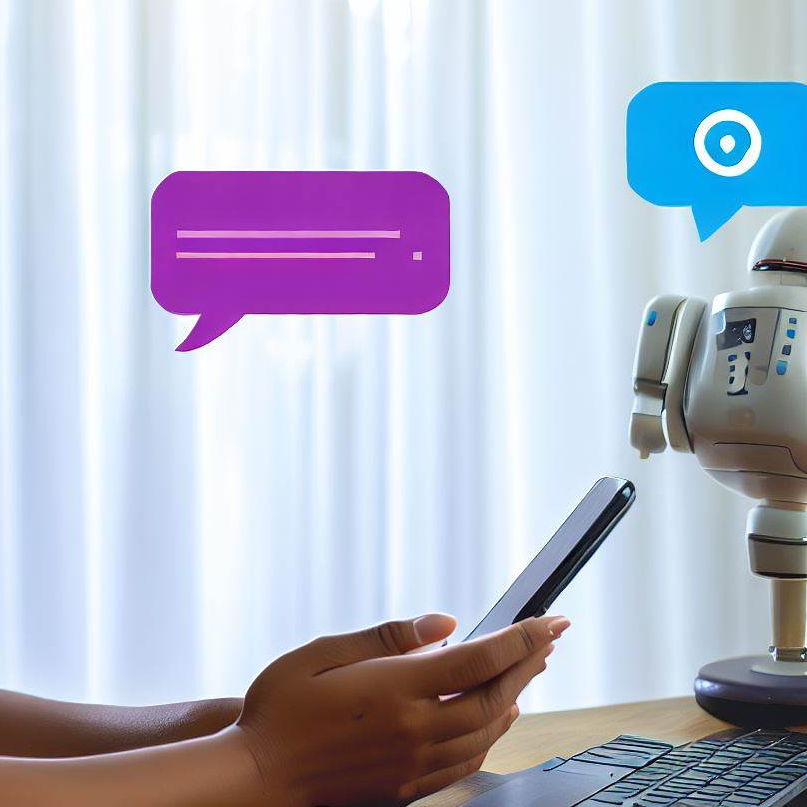
These tools are designed to make technology more efficient and user-friendly. By allowing us to communicate in our own words, conversational AI removes barriers and makes information and services more accessible to everyone.
Ready to test your knowledge?
What is the primary goal of conversational AI?
Which two technologies are the core components that enable conversational AI?
By understanding these fundamentals, you can better appreciate the technology that allows us to have a simple chat with our devices.