Introduction to Concrete
Concrete Basics
The World's Most Used Material
Look around. Chances are you can see concrete right now. It's in sidewalks, buildings, bridges, and dams. Concrete is the most widely used human-made material on the planet, and for good reason. It’s strong, durable, and can be molded into almost any shape.
But what exactly is it? At its core, concrete is a composite material made from a few simple ingredients. When mixed, they transform from a semi-liquid slurry into a material with the hardness of rock.
“Concrete” is a mixture of Portland Cement, Aggregate (sand & rocks), and Water
The Recipe for Rock
Making concrete is a bit like baking, but you need to get the ingredients just right. Each component plays a critical role.
Cement
noun
A fine, soft, powdery substance, made from a mixture of elements that are found in natural materials such as limestone, clay, and sand. When mixed with water, it acts as the binder or glue in concrete.
Think of cement as the active ingredient. It’s the powder that, when hydrated, binds everything else together.
Next are the aggregates. These are the inert, granular materials like sand, gravel, or crushed stone that make up the bulk of the concrete. They provide volume and strength. Sand fills the small voids between the larger gravel or stone, creating a dense, solid mass.
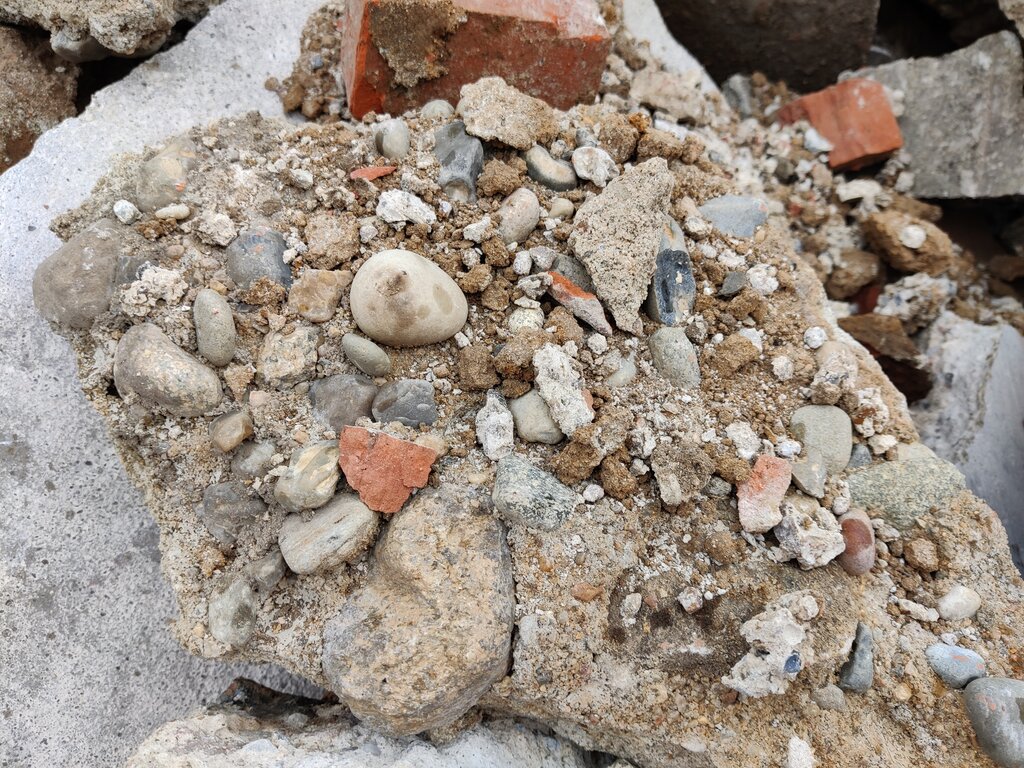
Finally, there's water. Water is the catalyst. It triggers a chemical reaction with the cement that allows it to harden and form a durable matrix around the aggregates.
The Magic of Hydration
Concrete doesn't harden by simply drying out like mud does. It hardens through a chemical process called hydration. When water is added to cement, the molecules begin to react and form new, interlocking crystals. These crystals grow and mesh together, binding the aggregates into a solid, stone-like mass.
This process takes time. Concrete gains most of its strength in the first month, but it can continue to cure and get stronger for years. That's why keeping fresh concrete moist is so important, especially in the first week. If it dries out too quickly, the hydration process stops, and the concrete won't reach its full potential strength.
The Water-Cement Ratio
The single most important factor determining the strength and durability of concrete is the water-cement ratio (w/c). This is simply the weight of the water divided by the weight of the cement in the mix.
A lower w/c ratio leads to stronger, more durable concrete. Why? With less water, the cement particles are packed closer together, resulting in a denser network of crystals after hydration. However, you still need enough water to make the concrete workable—that is, fluid enough to be placed, compacted, and finished properly.
Finding the right balance is key. Too much water creates weak, porous concrete. Too little makes it stiff and difficult to work with.
| Water-Cement Ratio | Concrete Strength | Workability |
|---|---|---|
| Low (e.g., 0.40) | High | Low |
| High (e.g., 0.60) | Low | High |
Special Ingredients: Admixtures
While the three basic ingredients make concrete, sometimes we need to tweak the recipe. This is where admixtures come in. Admixtures are chemicals added to the mix right before or during mixing to modify its properties.
Some common types include:
- Accelerators: These speed up the hydration process, causing the concrete to harden faster. They are useful in cold weather to prevent freezing.
- Retarders: The opposite of accelerators, these slow down hydration. They're used in hot climates or for complex pours to give workers more time.
- Air-Entraining Agents: These create billions of microscopic air bubbles in the concrete. The bubbles provide space for water to expand when it freezes, greatly improving the concrete's resistance to freeze-thaw damage.
- Water Reducers (Superplasticizers): These increase the workability of concrete without adding more water. This allows for a low water-cement ratio while keeping the mix fluid and easy to place.
By understanding these fundamental components and processes, engineers can design concrete mixes for almost any environment or application, from a simple sidewalk to a massive skyscraper.
Ready to test your knowledge? Let's see what you've learned about the fundamentals of concrete.
What are the three essential components that make up basic concrete?
True or False: Concrete hardens and gains strength by drying out, similar to how mud hardens.
With these basics down, you now have a solid foundation for understanding this essential building material.