Introduction to Computers
What Is a Computer
The Thinking Machine
At its heart, a computer is a machine that follows instructions. Think of it as an incredibly fast and obedient assistant that works with information, or data. It takes in data, works on it, and then gives you a result.
A computer is an electronic device that processes data.
This simple idea powers almost everything around us. Whether you're sending a text message, watching a movie, or just checking the weather, a computer is doing the work behind the scenes. All these different tasks are built on four basic functions.
The Four Basic Jobs
Every computer, from a massive supercomputer to the tiny chip in your smartwatch, performs four fundamental jobs: input, processing, storage, and output. This cycle is how a computer turns raw data into something useful.
Let's break down these jobs with a simple example: writing an email.
- Input: You type a message on your keyboard and click "send" with your mouse. That's input. You are giving the computer data.
- Processing: The computer's brain, the processor, takes that text and the send command. It figures out who the email is for and prepares to send it over the internet.
- Output: The message you typed appears on your screen. That's output. When your friend receives the email, it appearing on their screen is also output.
- Storage: When you send the email, a copy is likely saved in your "Sent" folder. That's storage. The computer is holding onto that information for you to access later.
From Gears to Gigabytes
The idea of a calculating machine isn't new. For centuries, people used devices like the abacus. In the 1800s, inventors like Charles Babbage designed mechanical machines with gears and levers to perform calculations. But these were a far cry from today's devices.
The real revolution began with electricity. Early electronic computers, built in the 1940s, were massive. They filled entire rooms and used thousands of fragile vacuum tubes to process information.
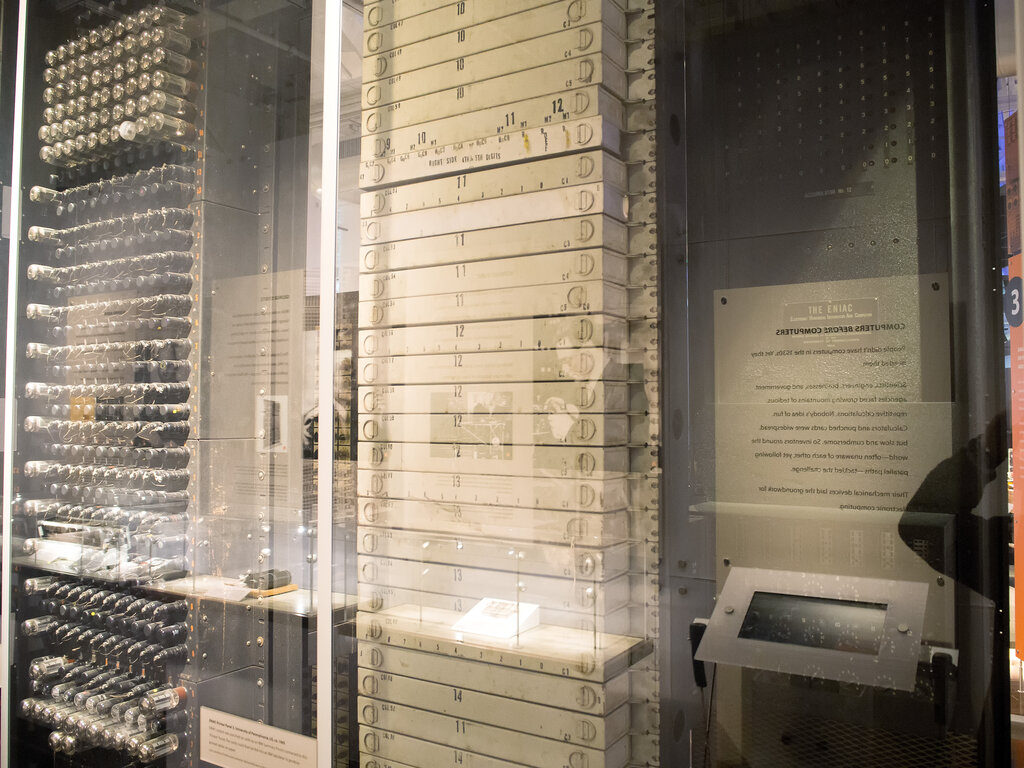
The invention of the transistor and later the microchip changed everything. These tiny components allowed engineers to shrink computers from the size of a room to the size of a desk, and eventually, to something that fits in your pocket. This miniaturization made computers cheaper, more powerful, and accessible to everyone.
Changing Daily Life
It’s hard to imagine a day without computers. They are not just on our desks anymore. They are in our phones, cars, kitchen appliances, and televisions. They manage power grids, help doctors diagnose illnesses, and connect billions of people around the globe.
Computers have fundamentally changed how we communicate, work, learn, and play. They've put vast libraries of information at our fingertips, created new industries, and allowed us to solve problems that were once thought impossible. From navigating a new city with a map on your phone to streaming a movie on demand, these thinking machines are woven into the fabric of modern life.
What are the four fundamental functions that every computer performs?
When you type a message on your keyboard, you are performing which core function?
These core ideas form the foundation of how all digital technology works.