Introduction to Computer Systems
Introduction to Computers
What Makes a Computer a Computer?
At its core, a computer is a machine that processes information. You give it instructions, and it carries them out. It's a powerful tool because it does this with incredible speed and precision. But what really sets computers apart are a few key characteristics.
Computers are defined by their ability to perform tasks with speed, accuracy, and reliability. They can store vast amounts of information and handle a wide variety of jobs without getting tired or bored.
Think about it. A computer can calculate millions of numbers in a second without a single error. It can repeat a task thousands of times and produce the exact same result each time. It can store entire libraries of books in a tiny physical space. And the same device you use to send an email can also be used to edit a video, design a building, or play a game. This versatility is one of a computer's most amazing traits.
A Quick Trip Through Time
Computers didn't just appear overnight. Their history is a fascinating story of shrinking technology and expanding power. The earliest ideas for programmable machines were purely mechanical, with gears and levers, imagined by inventors like Charles Babbage in the 1800s.
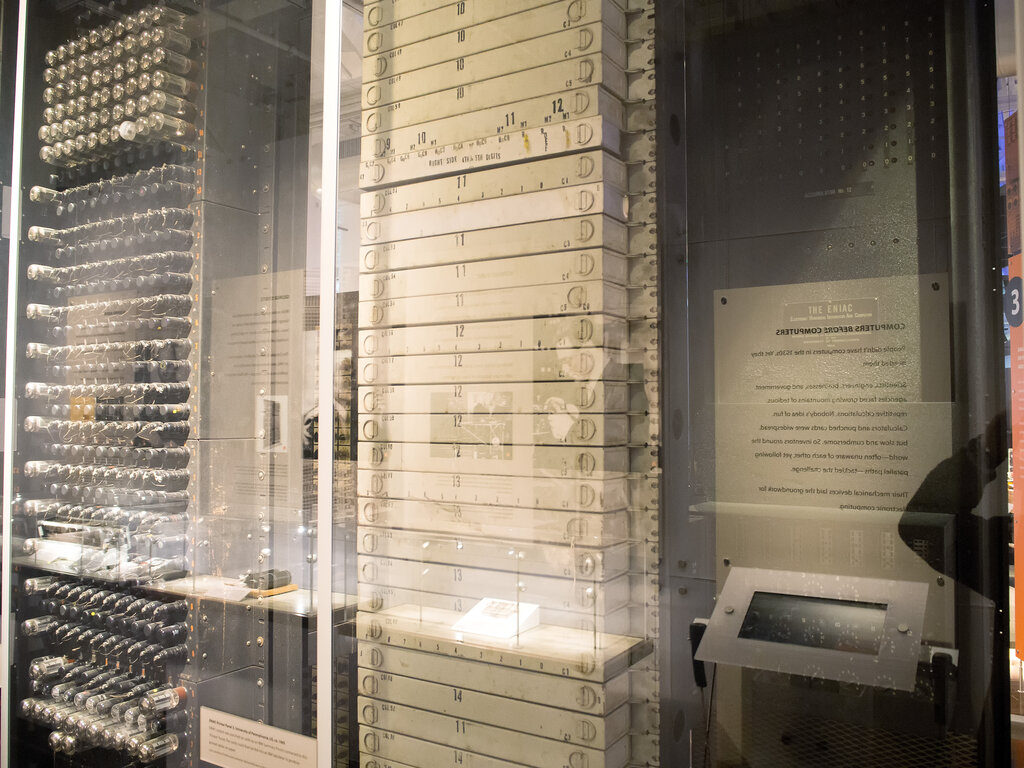
The first electronic computers arrived in the 1940s. These were massive machines, filling entire rooms and using thousands of fragile vacuum tubes for their circuits. They were revolutionary for their time but were slow, expensive, and constantly breaking down.
The real game-changer was the invention of the transistor in the 1950s, followed by the integrated circuit, or microchip, in the 1960s. These tiny silicon chips could hold thousands, and eventually millions, of transistors. Computers became dramatically smaller, faster, cheaper, and more reliable.
This miniaturization paved the way for the personal computer (PC) in the 1970s and 1980s. For the first time, computers were small enough and affordable enough to find a place on our desks and in our homes.
The Computer Family
Not all computers are created equal. They come in different sizes and with different capabilities, designed for specific tasks. While we're most familiar with personal computers, they are just one part of a larger family.
| Type | Description | Primary Use |
|---|---|---|
| Personal Computer | A small computer intended for an individual user, like a desktop or laptop. | General tasks: web browsing, word processing, gaming. |
| Mainframe | A large, powerful computer capable of supporting hundreds or thousands of users. | Large-scale transaction processing for banks and airlines. |
| Supercomputer | The fastest and most powerful type of computer. | Complex scientific calculations like weather forecasting. |
Your smartphone is also a powerful computer that fits in your pocket. Beyond these, specialized computers are embedded in countless other devices, from cars and coffee makers to medical equipment, quietly working behind the scenes.
The Four Basic Jobs
No matter what kind of computer you're using, it performs four fundamental operations: input, processing, storage, and output. This simple cycle is the basis for everything a computer does.
Here's how it works:
- Input: You provide data to the computer. This could be you typing on a keyboard, clicking a mouse, or speaking into a microphone.
- Processing: The computer's brain, the central processing unit (CPU), takes that data and follows instructions to manipulate it. This is where the actual 'work' happens, like calculating numbers or sorting a list.
- Storage: The computer saves the information. This can be temporary, in its short-term memory (RAM), or permanent, on a hard drive. Storage allows the computer to retrieve and use data later.
- Output: The computer shows you the result of its processing. This could be text appearing on your screen, a document printing, or sound playing through speakers.
Every action you take on a computer, from opening a file to watching a video, involves this input-process-output-storage cycle happening over and over at lightning speed.
Understanding these core ideas—what a computer is, where it came from, and its basic functions—is the first step to understanding the digital world we live in.