Introduction to Computer Networking
Introduction to Computer Networks
What Is a Computer Network?
At its heart, a computer network is a group of devices connected together. Think of it like a conversation. For two people to talk, they need to be connected by sound waves traveling through the air. For two computers to talk, they need to be connected by a physical cable or a wireless signal like Wi-Fi.
Computer networking refers to the practice of connecting multiple computing devices to exchange data and share resources.
This connection allows them to share information and resources. To understand how this works, we need a few basic terms.
Node
noun
Any device on a network that can send, receive, or forward information.
Nodes are the individual participants in the network conversation.
Link
noun
The communication pathway that connects two or more nodes.
Finally, the whole point of connecting nodes with links is to send information back and forth.
Data Transmission
noun
The process of sending digital information from one point to another.
Why Bother Networking?
Connecting devices opens up a world of possibilities. The main purpose of networking is to share things. This sharing falls into a few key categories.
First, there's resource sharing. In an office, instead of buying a printer for every single employee, you can connect one printer to the network. Now, everyone can print from their own computer to that single, shared device. The same goes for sharing a single internet connection among all the devices in your home.
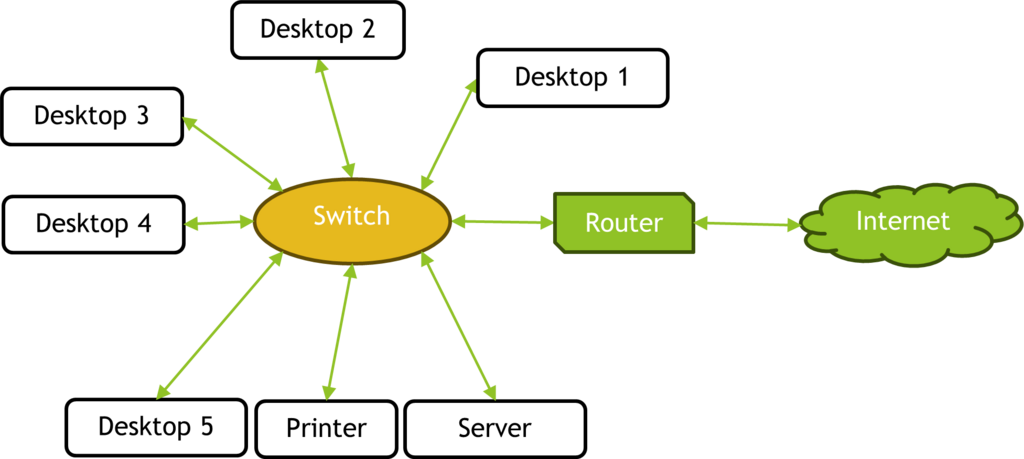
Second, networks enable powerful communication. Email, instant messaging, and video calls all rely on networks to send messages from one person to another, whether they're across the room or across the globe.
Finally, networking is the backbone of collaboration. When you and a colleague edit the same document online, you're using a network to see each other's changes in real time. This ability to work together on shared files has changed how we learn and work.
Networks Are Everywhere
You interact with computer networks constantly, often without even thinking about it. Your home Wi-Fi is a small, personal network. The computer lab at school is another. The checkout system at the grocery store that connects the scanner to the payment terminal is a network, too.
The most famous example, of course, is the internet. The internet is a global network of networks, connecting billions of nodes all over the world. When you visit a website, your computer sends a request through a vast series of links and nodes to a server, which then sends the website's data back to you.
From sharing a family photo to powering global finance, networks are the invisible infrastructure that makes our modern world possible. Understanding these basic concepts is the first step to seeing how it all works.