Introduction to Complexity Theory
Introduction to Complexity Theory
Beyond Simple Systems
Many things in the world are straightforward. If you push a box, it moves. If you flip a switch, a light turns on. The relationship between cause and effect is direct and predictable. We can call these simple or linear systems. But what about the stock market, a traffic jam, or an ant colony? These are different. They are examples of complex systems.
A complex system is a system composed of many individual parts or agents that interact with each other. The key is that these interactions are not simple or linear. The behavior of the whole system is not just the sum of its parts. Pushing on one part of a complex system might cause a surprising effect somewhere else entirely, or no effect at all.
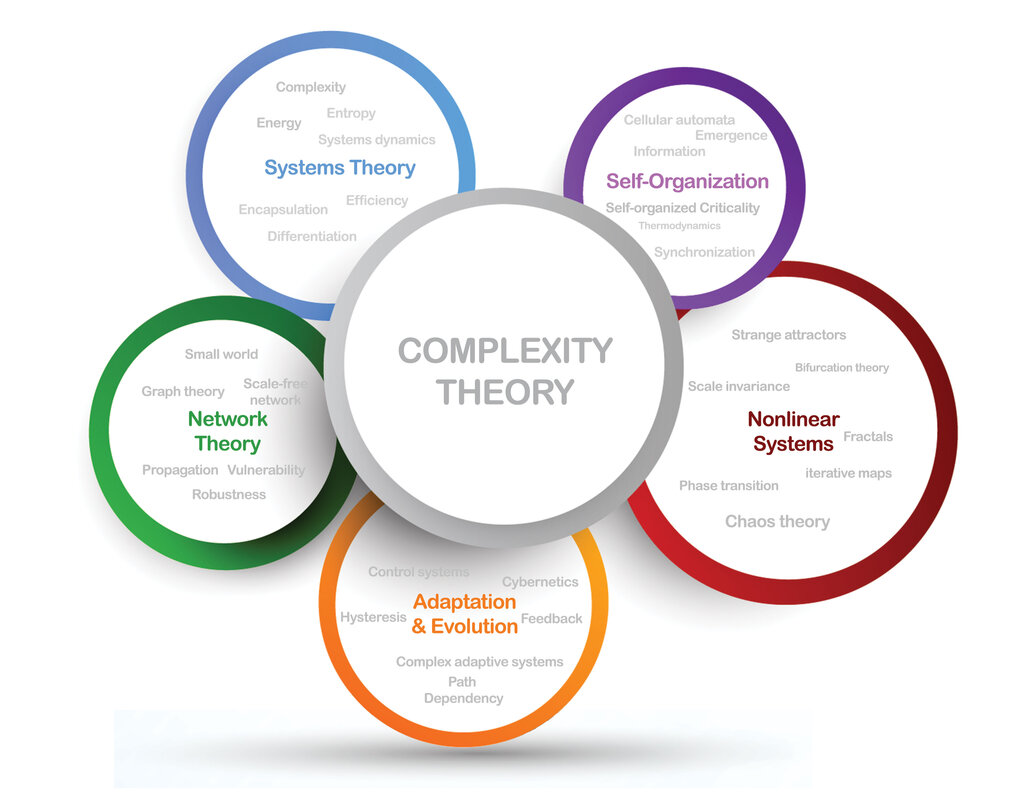
Studying complexity helps us understand many fields. In biology, it explains how a flock of birds can move as one without a leader. In economics, it sheds light on why markets crash. In social sciences, it helps us see how trends or opinions can spread through a population. These systems share some fundamental characteristics.
Emergence and Self-Organization
One of the most fascinating aspects of complex systems is emergence. This is when a system shows large-scale behaviors and patterns that are not present in its individual components. The individual parts are not programmed to create these patterns; they arise naturally from the local interactions.
Think of a single ant. It follows simple rules, like following a chemical trail or carrying a piece of food. But a colony of ants can build complex nests, find the shortest path to food, and defend its territory. This colony-level intelligence is an emergent property.
This leads directly to the idea of self-organization. No one is in charge. There is no central controller telling all the parts what to do. The system organizes itself from the bottom up. The interactions between the components create the overall structure and behavior.
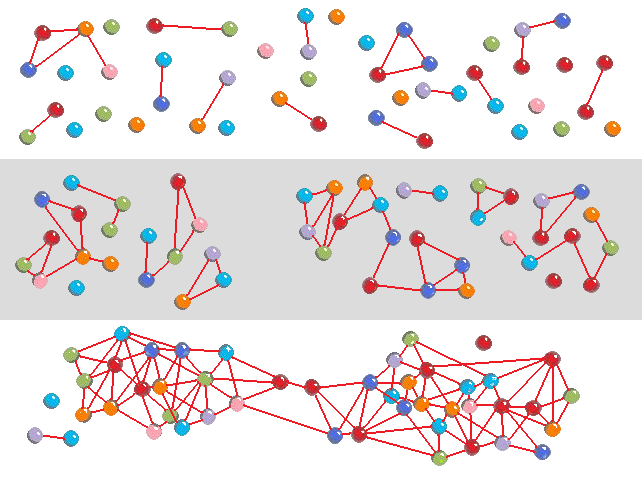
Snowflakes are another classic example. No two are alike, yet they all form intricate, six-sided patterns. There is no blueprint. The pattern emerges as water molecules, following the basic laws of physics, crystallize and connect with one another under specific temperature and humidity conditions.
The Role of Feedback
How do these interactions lead to such interesting behavior? The answer often lies in feedback loops. A feedback loop is a process where the output of an action is routed back to influence the next action. It’s a circle of cause and effect.
There are two main types of feedback loops:
-
Reinforcing (or positive) feedback: This type of loop amplifies change, leading to exponential growth or decline. A classic example is a microphone held too close to a speaker. The sound from the speaker enters the microphone, gets amplified, comes out of the speaker even louder, and repeats, creating a loud squeal.
-
Balancing (or negative) feedback: This type of loop counteracts change, stabilizing a system and keeping it in equilibrium. A thermostat is a perfect example. When the room gets too hot, the thermostat turns the heat off. When it gets too cold, it turns the heat back on. This keeps the temperature relatively stable.
Complex systems are full of these interacting loops. It is this web of feedback, not a central command, that governs the system's behavior, allowing it to adapt, evolve, and produce the emergent patterns we see all around us.
Time to check your understanding of these foundational ideas.
Which of the following best describes a complex system?
The intricate, six-sided pattern of a snowflake forming from individual water molecules is a classic example of:
Understanding these core concepts—complex systems, emergence, self-organization, and feedback loops—provides a powerful new lens for viewing the world.