Introduction to Coding
Introduction to Programming
Telling Computers What to Do
At its heart, programming is simply the act of giving instructions to a computer. Think of a computer as an incredibly powerful, fast, and obedient assistant that takes everything you say literally. It can perform millions of calculations in the blink of an eye, but it has no common sense. It will do exactly what you tell it to do, nothing more and nothing less.
These instructions, bundled together, are called a program. The process of writing them is called programming or coding. We write these instructions using special languages that bridge the gap between human language and the binary 1s and 0s that a computer's hardware understands.
Programming is the tool we use to solve problems with computers. The core skill isn't just writing code, but thinking logically and breaking down large problems into small, manageable steps.
The Language of Modern Life
Programming is the invisible engine running the modern world. When you check the weather on your phone, you're using a program. When you stream a movie, buy something online, or use a navigation app to avoid traffic, you're interacting with complex software built by programmers.
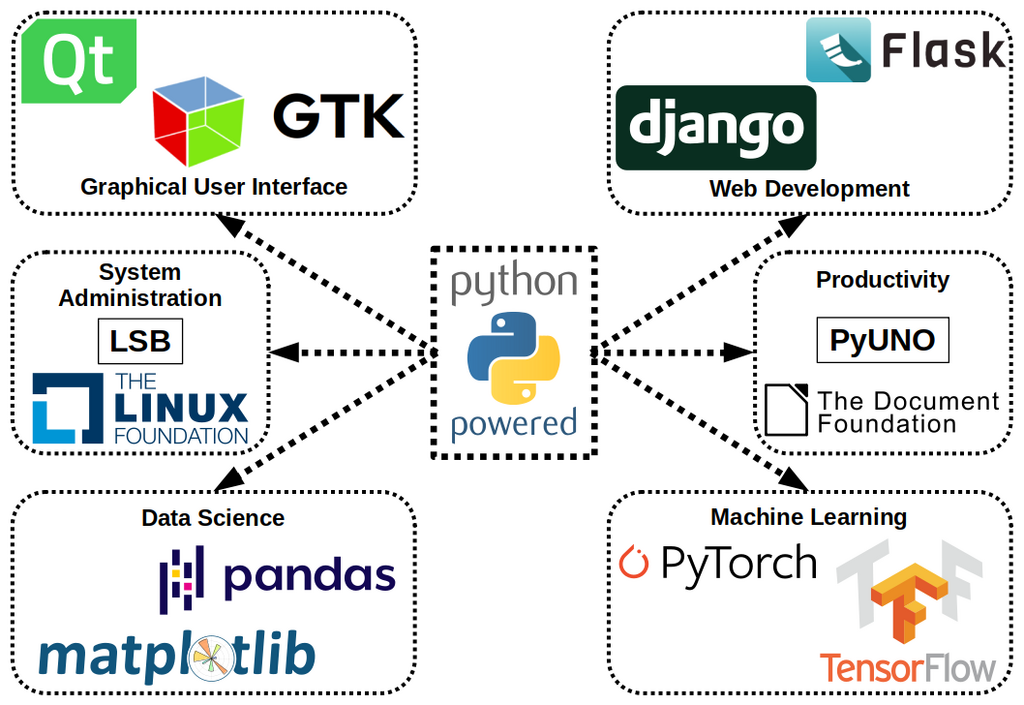
This goes far beyond personal gadgets. Programming is essential in nearly every field:
- Science and Medicine: Researchers write programs to simulate complex systems, from the formation of galaxies to the way a new drug might interact with human cells.
- Entertainment: The stunning visual effects in movies and the immersive worlds of video games are all crafted with code.
- Finance: Algorithms execute trades on the stock market in fractions of a second and help banks detect fraudulent transactions.
- Art and Design: Artists use code to create generative art, and architects use software to design stronger, more efficient buildings.
A World of Languages
Just as humans speak many different languages, there are thousands of programming languages. There's no single "best" one; the right choice depends on the task at hand. It's like a toolbox: you wouldn't use a hammer to turn a screw.
Some languages are general-purpose, while others are designed for very specific jobs. A language used to build a mobile app is different from one used to analyze scientific data or control a robot.
| Language | Common Uses |
|---|---|
| Python | Data analysis, artificial intelligence, web development, automation |
| JavaScript | Making websites interactive, building web applications |
| C++ | High-performance applications like video games and operating systems |
| Swift | Building apps for Apple's iOS and macOS |
The good news is that the core concepts of programming, like logic, variables, and loops, are transferable. Once you learn one language, picking up a second one becomes much easier. The goal is to learn how to think like a programmer, a skill that transcends any single language.
The first step to becoming a successful computer programmer is to have a sound knowledge of the fundamentals.
Ready to test your understanding of these core ideas?
At its most fundamental level, what is programming?
A computer will do exactly what you tell it to do, nothing more and nothing less, because it lacks common sense.