Introduction to Coding Principles
Introduction to Programming
What is Programming?
At its core, programming is the act of giving a computer a set of instructions to perform a specific task. Think of it like writing a recipe. A recipe lists ingredients and step-by-step directions for a chef to follow. If the recipe is clear and correct, you get a delicious cake. If it’s confusing or has a mistake, you might end up with a burnt mess.
A computer program is a recipe for a computer. The programmer writes the instructions, and the computer follows them precisely. These instructions can do anything from adding two numbers together to powering a social media app or guiding a spacecraft to Mars. The purpose of programming is to automate tasks, solve problems, and create the software and applications that run our world.
How Computers Think
Computers seem incredibly smart, but they're not. They are, however, incredibly obedient and fast. They do exactly what they're told, without guessing or making assumptions. Their native language is very simple, consisting of just two symbols: 0 and 1. This is called binary code, or machine code.
Every instruction a computer carries out, from displaying a photo to playing music, is ultimately broken down into a massive sequence of these ones and zeros. Each '1' or '0' represents an 'on' or 'off' state for a tiny electronic switch called a transistor inside the computer's processor. As you can imagine, writing a recipe using only 'on' and 'off' would be tedious and nearly impossible for a human.
The Role of Programming Languages
This is where programming languages come in. They act as a bridge, allowing us to write instructions in a way that is much closer to human language. A programming language provides a set of words, symbols, and rules (called syntax) that we can use to build our instructions logically.
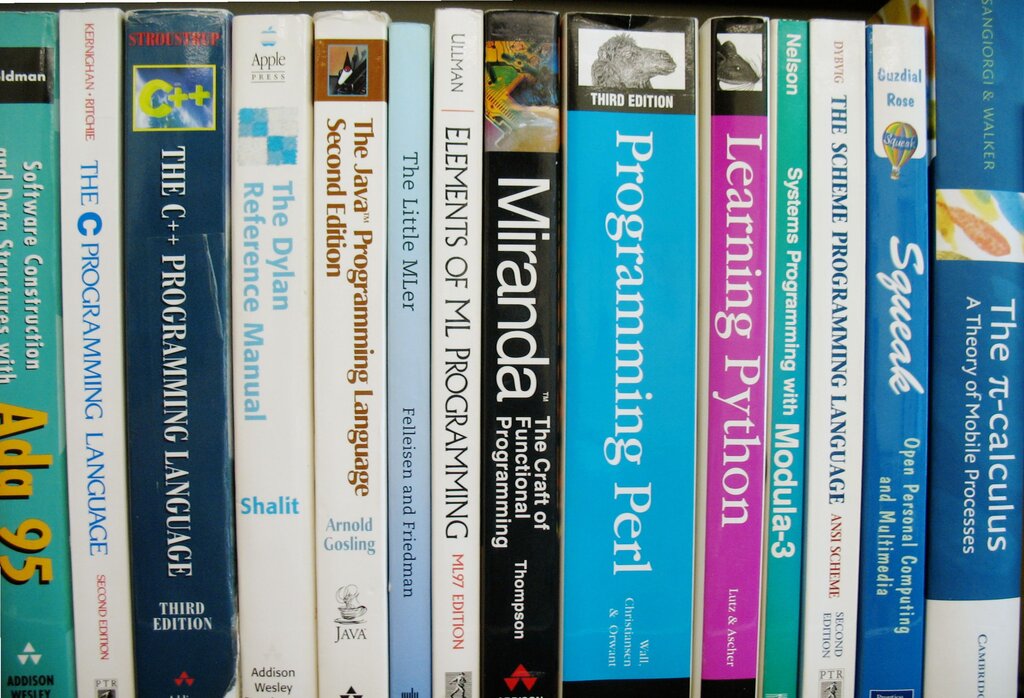
Once we write our program in a language like Python, Java, or C++, it needs to be translated into the binary machine code the computer understands. This translation is done by special programs called compilers or interpreters. They read our code, check it for errors, and convert it into the ones and zeros the processor can execute.
A programming language is a tool that allows a human to communicate instructions to a machine.
The Building Blocks of a Program
While every programming language looks different, they almost all share a few fundamental concepts. These are the basic building blocks you'll use to construct your programs.
| Concept | Analogy | Description |
|---|---|---|
| Variables | Labeled Jars | A variable is a container for storing a piece of information, like a number, a word, or a list. You give it a name so you can refer to it later. |
| Data Types | Jar Contents | This tells the computer what kind of information a variable holds, such as an integer (whole number), a string (text), or a boolean (true/false). |
| Control Structures | A Fork in the Road | These instructions control the flow of the program. They allow the program to make decisions (if a condition is true, then do something) or repeat actions (a loop). |
| Functions | A Mini-Recipe | A function is a named block of code that performs a specific task. You can "call" a function whenever you need that task done, saving you from rewriting the same code over and over. |
By combining these simple building blocks, you can create complex and powerful programs. Learning to program is about learning how to think logically and break down large problems into smaller, manageable steps that a computer can execute.
Now, let's test your understanding of these core concepts.
What is the fundamental purpose of programming?
A computer's native language, known as machine code, is composed of only two symbols: 0 and 1.
Understanding these ideas provides the foundation for learning any specific programming language. The syntax may change, but the underlying logic remains the same.