Introduction to Coding
Introduction to Programming
What Is Programming, Really?
Imagine you have a personal assistant who is incredibly fast and powerful, but also completely literal. It does exactly what you say, no more, no less. If you tell it to “make a sandwich,” it will stand there waiting, because you haven’t told it where the bread is, what to put inside, or how to assemble it.
That assistant is a computer. Programming is the art of giving a computer a set of precise, step-by-step instructions to accomplish a task. Since computers don’t understand English or any other human language, we use special languages called programming languages to communicate with them.
At its heart, programming isn't about technology; it's about problem-solving. You see a problem, and you design a logical, step-by-step solution that a computer can execute.
Thinking Like a Programmer
Before you can write a single line of code, you need to know how to think like a programmer. This approach is often called computational thinking. It’s a framework for breaking down large, complex problems into smaller, more manageable parts. It’s a skill that’s useful in everyday life, not just in coding.
Computational thinking consists of four key techniques:
1. Decomposition: This is the act of breaking a big, complicated problem into smaller, more manageable sub-problems. If you wanted to build a car, you wouldn't start by trying to build the whole thing at once. You'd break it down into building the engine, the chassis, the wheels, and the electronics.
2. Pattern Recognition: Once a problem is broken down, you look for similarities or patterns among the sub-problems. Do some steps repeat? Do different parts share common features? Recognizing these patterns can make your solution much more efficient.
3. Abstraction: Abstraction is about focusing on the essential details while ignoring the irrelevant ones. When you drive a car, you only need to know how to use the steering wheel, pedals, and gear stick. You don't need to understand the inner workings of the combustion engine to get from point A to point B. In programming, abstraction means creating simple models of complex systems.
4. Algorithm Design: This is the final step where you develop a step-by-step plan to solve each of the smaller problems. This plan is your algorithm.
algorithm
noun
A finite sequence of well-defined, computer-implementable instructions, typically to solve a class of problems or to perform a computation.
For example, a simple algorithm for your literal assistant to make a peanut butter and jelly sandwich would look like this:
- Get two slices of bread.
- Open the peanut butter jar.
- Use a knife to spread peanut butter on one slice of bread.
- Clean the knife.
- Open the jelly jar.
- Use the knife to spread jelly on the other slice of bread.
- Place the two slices of bread together with the spreads facing inward.
Every step is clear, simple, and in the correct order. This is the essence of programming logic.
A World of Languages
Just as there are many human languages, there are thousands of programming languages. Why so many? Because different languages are designed to solve different types of problems effectively.
Some languages, like JavaScript, are the foundation of interactive websites. Others, like Swift, are used to build apps for iPhones. Languages like Python are incredibly versatile and are used for everything from web development and data science to artificial intelligence.
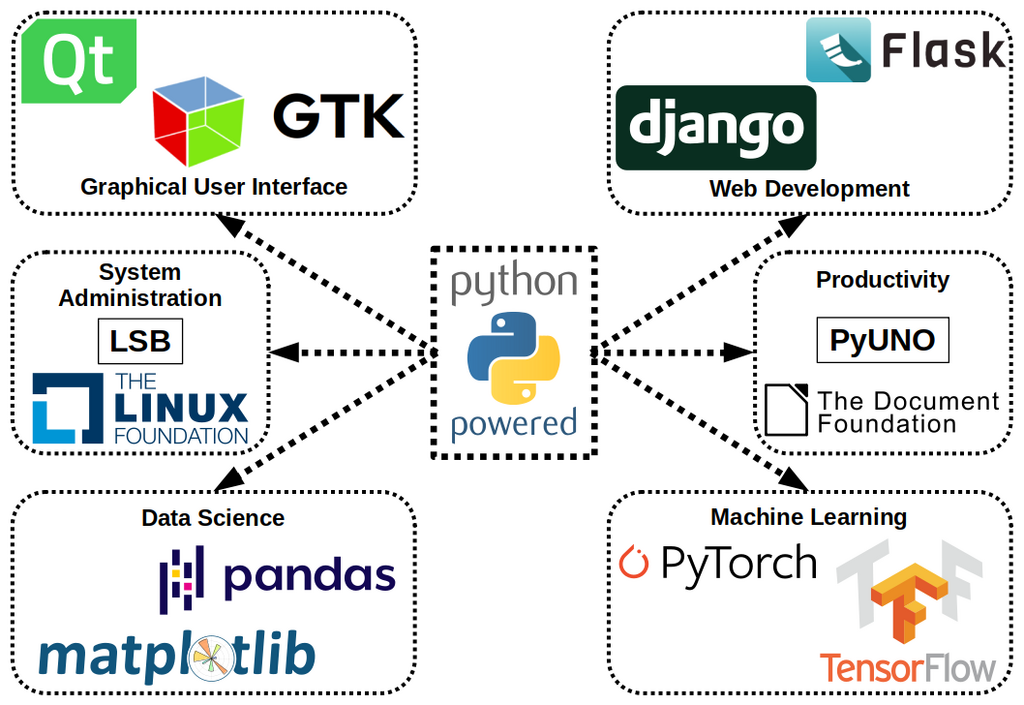
The good news is that you don't need to learn them all. Most programmers become experts in a few languages that suit their needs. More importantly, the principles of computational thinking are universal. Once you learn how to decompose problems, recognize patterns, abstract details, and design algorithms, you can apply those skills to any programming language you choose to learn.
The specific words and grammar—the syntax—will change, but the underlying logic remains the same.
Let's review the core ideas we've covered.
Now, test your understanding of these foundational concepts.
Why must instructions for a computer be extremely precise and detailed?
You are tasked with cleaning a messy house. Which of the following actions best demonstrates the computational thinking technique of decomposition?
With this foundation in place, you're ready to start exploring a specific programming language. You've learned the most important part: how to think.