Introduction to Coding Fundamentals
Introduction to Programming
What is Code?
Think of code as a recipe for a computer. Just like a recipe gives a chef step-by-step instructions to bake a cake, code gives a computer step-by-step instructions to perform a task. These instructions can be simple, like adding two numbers, or incredibly complex, like running a social media platform or guiding a spacecraft.
At its core, code is just a list of commands. Each command tells the computer to do one specific thing. When you string these commands together, you create a program. Every app on your phone, every website you visit, and every video game you play is built from millions of lines of code, all working together to create a seamless experience.
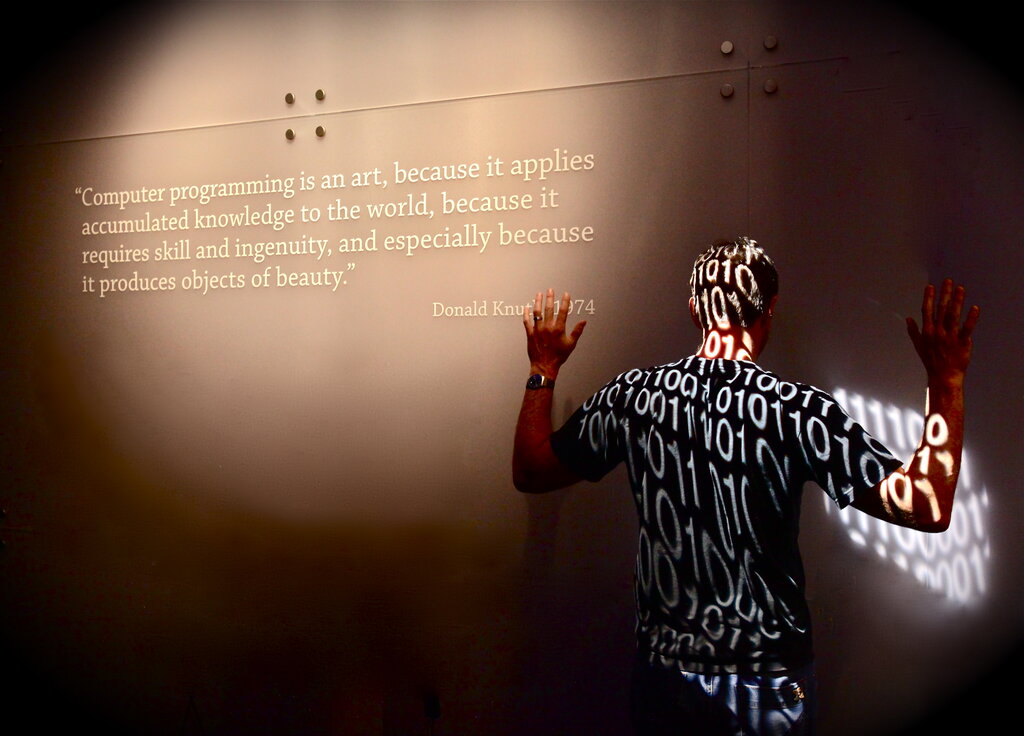
Speaking the Computer's Language
Computers don't understand English or any other human language. They operate on a much simpler level, using electricity to represent two states: on and off. This is represented by binary code, which is just a series of 1s (on) and 0s (off). Writing instructions directly in binary would be incredibly tedious and difficult for humans.
This is where programming languages come in. They act as a bridge, allowing us to write instructions in a way that's much closer to human language. A programming language has its own vocabulary (keywords) and grammar (syntax) that we can learn. Once we write our instructions, a special program called a compiler or an interpreter translates them into the binary code the computer can actually understand and execute.
There are hundreds of programming languages, each with its own strengths. Some, like Python, are known for being easy to learn. Others, like C++, are used for high-performance applications like video games. The choice of language depends on the task at hand, but they all share the same fundamental purpose: turning human ideas into computer actions.
From Instructions to Action
Writing code is the first step. You type your instructions into a text file, often using a special editor that helps you by color-coding your text to make it more readable. This file is called your source code.
But source code on its own doesn't do anything. You need to execute or run it. This is the moment the compiler or interpreter does its job, translating your source code into machine code and telling the computer's central processing unit (CPU) to follow the instructions. The first program many people learn to write is one that simply displays the text "Hello, World!" on the screen.
// This is an example in a generic "pseudo-code"
// It shows the basic command to display text

FUNCTION main
  PRINT "Hello, World!"
END FUNCTION
This simple example shows the basic idea. You write a command (PRINT) and give it some data ("Hello, World!"). The computer then executes that command and produces the expected result. All programming, no matter how complex, is built upon this fundamental process of writing and executing instructions.
What is the best analogy for code, as described in the text?
What is the fundamental language that computers use to operate, representing 'on' and 'off' states?