Introduction to Coding
Introduction to Programming
What Is Programming?
At its heart, programming is simply telling a computer what to do. Think of a computer as an incredibly powerful but very literal assistant. It can perform complex calculations in a blink, but it can't understand vague requests. It needs a precise, step-by-step list of instructions.
Programming is the art of writing those instructions. These instructions, collectively known as a program or code, guide the computer to perform a specific task. This could be anything from displaying a button on a website, calculating a company's monthly payroll, or controlling the navigation system of a spacecraft.
The goal of programming is to solve human problems by translating our intentions into a language a computer can understand and execute.
Every app on your phone, every website you visit, and every video game you play is powered by code written by programmers. They break down large problems into smaller, logical steps and write instructions for each one. This process combines creativity, logic, and problem-solving.
Languages for Computers
We can't just write instructions for a computer in English or Spanish. Computers operate on a fundamental level using binary code—a series of 1s and 0s that represent electrical on and off states. Writing complex programs directly in binary is practically impossible for humans.
This is where programming languages come in. They act as a bridge between human language and machine code. A programming language provides a set of rules and keywords that we can use to write instructions in a more readable format. Just as humans have many languages like English, Mandarin, and Arabic, there are hundreds of programming languages, each with its own strengths. Some popular examples include Python, JavaScript, and C++.
Different languages are suited for different tasks. A language used to build a fast-paced video game might be different from one used to analyze scientific data. But they all share the same fundamental purpose: to translate human logic into machine instructions.
From Code to Action
So, how does a program actually run? The process generally involves three main steps: writing, translating, and executing.
-
Writing: A programmer writes the instructions, called source code, using a chosen programming language. This is typically done in a text editor or a more specialized tool called an Integrated Development Environment (IDE).
-
Translating: The source code is converted into machine code. This is done by a special program called either a compiler or an interpreter. A compiler translates the entire program at once, creating a separate executable file. An interpreter, on the other hand, translates and runs the code one line at a time.
-
Executing: The computer's central processing unit (CPU) reads the machine code and performs the instructed tasks.
A long-standing tradition for anyone learning a new language is to write a program that simply displays the text "Hello, World!" on the screen. It's a simple first step that confirms everything is working correctly.
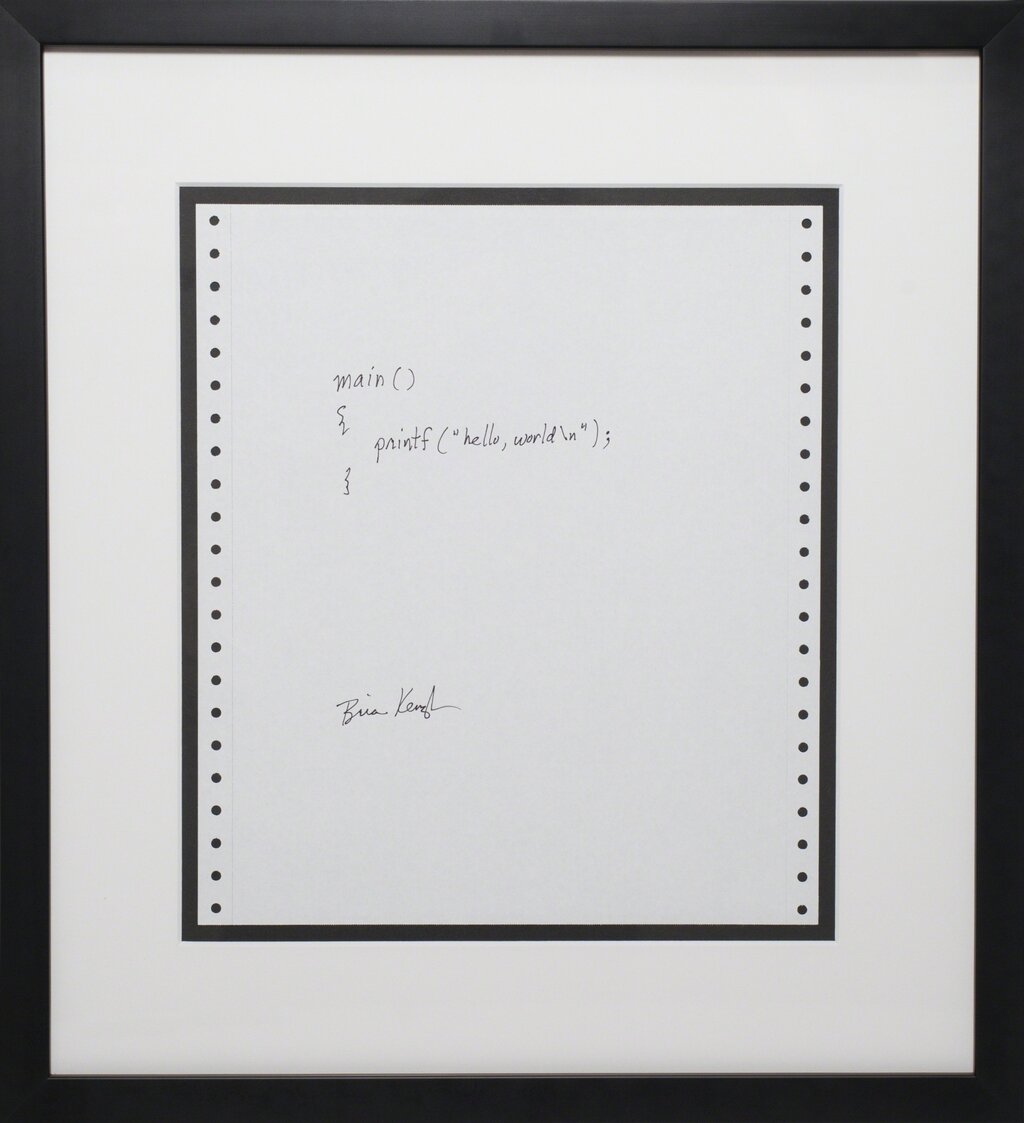
While the exact syntax varies between languages, the logic is the same: instruct the computer to print a specific string of text. In a language like Python, the code is remarkably straightforward.
# This line is a comment, which the computer ignores.
# It's just a note for humans reading the code.

# This command tells the computer to display whatever is in the parentheses.
print("Hello, World!")
When this program is executed, the computer follows the instruction and outputs Hello, World!. Every complex piece of software is built from these simple, fundamental building blocks of logic and instruction.
Time to check your understanding of these foundational ideas.
What is the primary purpose of a programming language?
The human-readable instructions a programmer writes in a language like Python or JavaScript are known as __________.
This is just the beginning. By understanding what programming is and how it works, you've taken the first step toward creating your own software.