Introduction to Coding
Introduction to Programming
What Is Programming?
At its heart, programming is simply giving instructions to a computer. Imagine you're trying to explain how to make a peanut butter and jelly sandwich to someone who takes everything you say literally. You couldn't just say "make a sandwich." You'd have to break it down into tiny, specific steps:
- Pick up two slices of bread.
- Place them on a plate.
- Open the jar of peanut butter.
- Pick up a knife.
- Scoop some peanut butter with the knife.
- Spread the peanut butter on one slice of bread.
And so on. Computers are like that very literal friend. They don't understand intention or context; they only follow the exact instructions they're given. Programming is the art of writing those instructions.
Programming
noun
The process of creating a set of instructions that tell a computer how to perform a specific task.
We use programming to solve problems and automate tasks. Every app on your phone, every website you visit, and every video game you play is built with code. These instructions, written by programmers, tell your devices how to function, from displaying text on the screen to connecting with people across the world.
Speaking the Same Language
You can't give instructions to a computer in plain English. Computers have their own native language, which consists of only two symbols: 1 and 0. This is called binary code. Trying to write complex software directly in binary would be incredibly difficult and slow for humans.
This is where programming languages come in. They act as a bridge, allowing us to write instructions in a way that's much closer to human language. There are hundreds of different programming languages, each designed for different purposes.
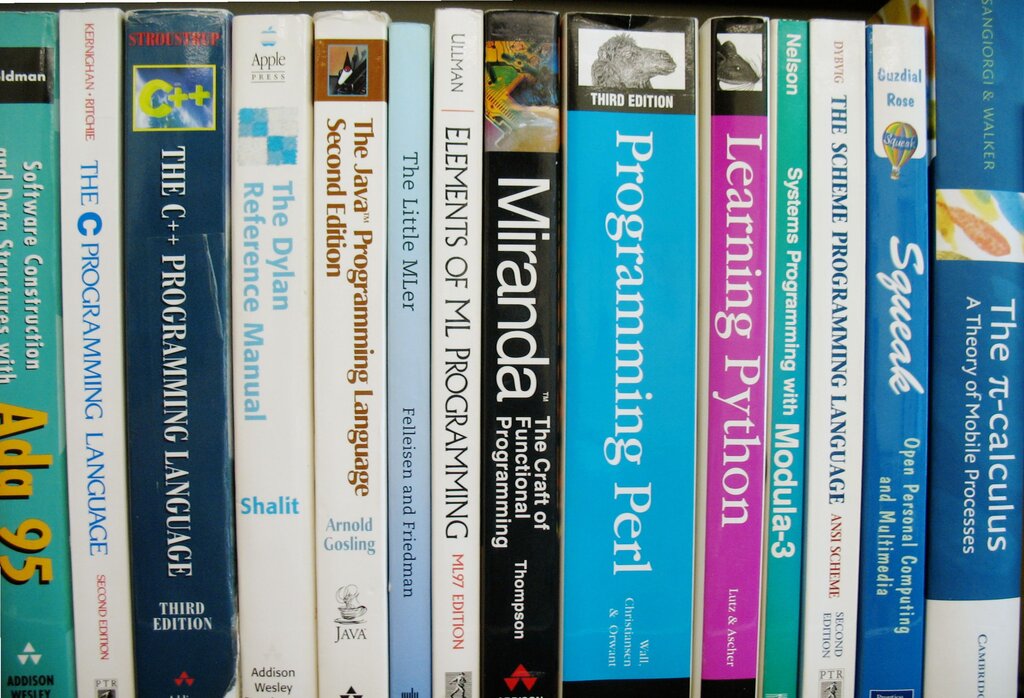
For example, Python is popular for data analysis and artificial intelligence because its syntax is clean and readable. JavaScript is the language of the web, powering interactive elements on nearly every website. C++ is often used for high-performance applications like video games and operating systems. You don't need to know them all; the key is to choose the right language for the job you want to do.
From Human to Machine
So, how does the code we write in a language like Python get translated into the 1s and 0s a computer understands? This translation is handled by special programs called compilers and interpreters.
A compiler reads your entire program at once, translates it all into machine code, and creates a new, standalone executable file. You then run this file to make the program work. It’s like translating a whole book from French to English and then giving the finished English version to a reader.
An interpreter, on the other hand, translates and runs your code one line at a time. It reads a line, translates it, the computer executes it, and then the interpreter moves to the next line. This is more like having a live interpreter translating a French speech into English for an audience sentence by sentence.
Both compilers and interpreters achieve the same goal: they turn human-readable code into machine-executable instructions. The method is just different.
Understanding these basic concepts is the first step on the journey of learning to code. It's not about memorizing syntax, but about learning how to think logically and break down big problems into small, manageable instructions.
Now, let's test what you've learned.
What is the primary role of a programming language?
A program that translates an entire block of code into a standalone executable file before it is run is called a(n) ____.
With these fundamentals in place, you're ready to start exploring how these instructions are structured.