Introduction to Cloud Computing
Introduction to Cloud Computing
What Is the Cloud?
Think about the photos on your phone. Years ago, if your phone ran out of space, you had to delete photos or transfer them to a physical hard drive. Today, you can just sync them to a service like Google Photos or iCloud. Your photos are saved on someone else's computers, and you can access them from anywhere with an internet connection.
Cloud computing applies this same idea to the world of business and technology. Instead of buying and managing their own physical computer servers, companies can rent computing power, storage, and software from a cloud provider like Amazon Web Services (AWS), Microsoft Azure, or Google Cloud.
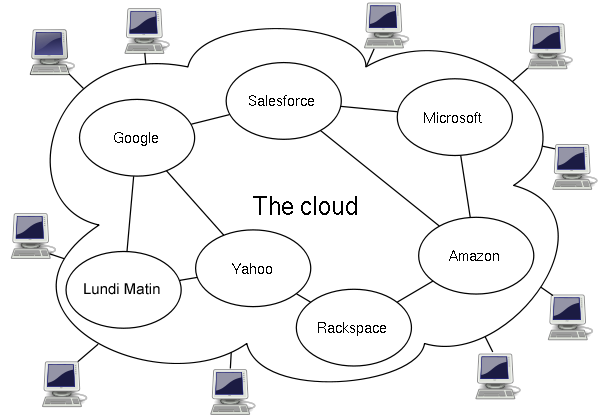
Cloud computing is the delivery of computing services (servers, storage, databases, networking, software, and more) over the internet (the cloud), offering faster innovation, flexible resources, and economies of scale.
The “cloud” is really just a network of massive data centers, packed with powerful servers, spread all over the world. When you use a cloud service, you're tapping into this global infrastructure. This means you don't have to worry about buying hardware, maintaining it, or planning for future capacity. The cloud provider handles all of that for you.
The Key Characteristics
What makes a service true “cloud computing”? It’s not just about using the internet. A handful of key characteristics define how the cloud works. Understanding them helps explain why it's so powerful.
Let's break these down.
On-Demand Self-Service: You can provision computing resources like server time or network storage automatically, without requiring human interaction with the service provider. Think of it like a vending machine for computing power.
Broad Network Access: Services are available over the network and can be accessed through standard mechanisms by all kinds of devices, such as mobile phones, tablets, laptops, and workstations.
Resource Pooling: The provider's computing resources are pooled to serve multiple consumers using a multi-tenant model. Different physical and virtual resources are dynamically assigned and reassigned according to demand. You generally have no control or knowledge over the exact location of the provided resources.
Rapid Elasticity: You can scale your resources up or down quickly, and in some cases, automatically. To the consumer, the capabilities available for provisioning often appear to be unlimited and can be purchased in any quantity at any time.
Measured Service: Cloud systems automatically control and optimize resource use by leveraging a metering capability. Resource usage can be monitored, controlled, and reported, providing transparency for both the provider and the consumer. You only pay for what you use, like an electricity bill.
Why Bother with the Cloud?
These characteristics lead to some significant benefits for businesses, which is why cloud adoption has exploded.
Imagine an online store. On most days, it might only need a couple of servers to handle shoppers. But on Black Friday, it needs hundreds of servers to keep the site from crashing under the massive load of traffic.
In the pre-cloud world, that store would have to buy and maintain hundreds of servers all year long, even though most of them would sit idle for 364 days. That's incredibly expensive and wasteful.
With the cloud, the store can use just a few servers for most of the year and then instantly scale up to hundreds for the Black Friday rush. Once the sale is over, it scales right back down. This flexibility is a game-changer.
| Benefit | Description |
|---|---|
| Cost Savings | Pay only for what you use, avoiding the large upfront cost of buying and managing your own hardware. |
| Scalability & Elasticity | Easily increase or decrease your computing resources to match business demand. |
| Agility & Speed | Provision new resources in minutes, allowing teams to develop and launch applications much faster. |
| Global Reach | Deploy applications in multiple geographic regions around the world with just a few clicks to reduce latency for users. |
| Performance & Reliability | Cloud providers offer a reliable infrastructure that is regularly updated with the latest generation of hardware. |
By offloading the management of IT infrastructure, businesses can stop worrying about running data centers and focus on what they do best: building products and serving their customers. This shift from owning hardware to renting services is the core idea of cloud computing.
What is the core concept of cloud computing?
A retail website experiences a massive surge in traffic only on Black Friday. Which characteristic of cloud computing is most relevant to handling this situation cost-effectively?