Introduction to Circuit Design
Electricity Basics
The Language of Circuits
To understand electronics, we first need to get comfortable with the three core concepts that describe how electricity behaves: voltage, current, and resistance. The easiest way to think about them is to imagine water flowing through pipes.
Voltage is Pressure
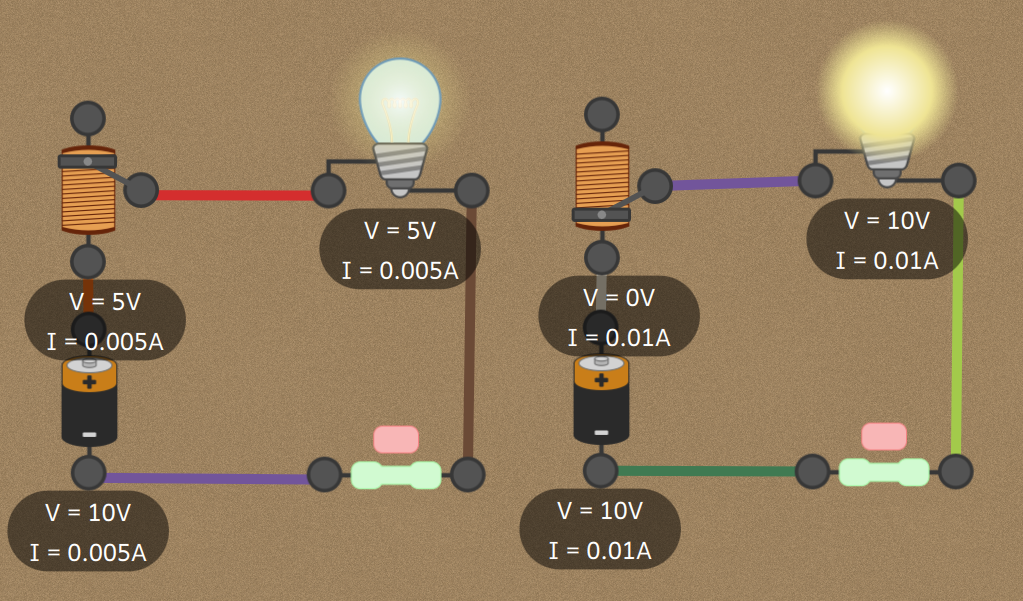
Voltage is the electrical pressure or force that pushes electrons through a circuit. Just as water pressure pushes water through a hose, voltage pushes electric charge. A higher voltage means a stronger push.
Think of a water tower. A tall tower creates more pressure at the bottom than a short one. Similarly, a 9-volt battery provides more electrical "pressure" than a 1.5-volt battery.
Volt
noun
The standard unit of measurement for voltage, representing electrical potential difference or pressure.
More voltage can push more current, resulting in more work getting done, like making a light bulb shine brighter.
Current is Flow
Current is the rate at which electric charge flows through a conductor, like a wire. It's the electrical equivalent of the amount of water flowing through a pipe per second.
A small trickle of water is a low flow rate, while a fire hose has a very high flow rate. In the same way, a small current might power a tiny LED, while a large current is needed to start a car.
Ampere
noun
The standard unit of electric current, often shortened to "amp." It measures the amount of electric charge passing a point per unit of time.
Resistance is Friction
Resistance is a measure of how much a material opposes the flow of electric current. It's like friction for electricity. In our water analogy, resistance is like a narrow, clogged section of pipe that restricts the water flow.
Materials like copper have very low resistance, which is why they're used for wires. They let current pass easily. Materials like rubber have very high resistance, so they're used as insulators to stop the flow of current.
Ohm
noun
The standard unit of electrical resistance. A higher ohm value means more opposition to current flow.
Every component in a circuit, from a simple wire to a complex microchip, has some amount of resistance.
Putting It Together Power
Electrical power is the rate at which electrical energy is used to do work, like creating light or heat. It depends on both the pressure (voltage) and the flow (current). To get a lot of power, you need a combination of strong pressure and high flow.
A gentle stream (low voltage, low current) doesn't have much power. But a powerful waterfall (high voltage, high current) can generate a lot of energy. We calculate power by multiplying voltage and current.
Here, is power, is voltage, and is the standard symbol for current.
Watt
noun
The standard unit of power. It measures the rate of energy transfer.
These three concepts—voltage, current, and resistance—are the foundation for everything else in electronics. Let's see if you've got them.
In the analogy of water flowing through pipes, what does electrical voltage represent?
What is electrical current?
Understanding these basic properties of electricity is the first step toward analyzing and building your own circuits.