Introduction to Chinese Civilization
Geography and Early Civilizations
The Lay of the Land
China's early history was shaped by its geography. To the southwest, the massive Himalayan mountains created a formidable barrier. To the north, the vast Gobi Desert made travel difficult. And to the east, the Pacific Ocean stretched out, separating the land from other major civilizations.
This relative isolation allowed a distinct culture to develop with fewer outside influences than other ancient societies. For thousands of years, people in this region saw their home as the center of the civilized world, surrounded by less developed “barbarians.” This perspective gave rise to the name Zhōngguó (中国), often translated as the “Middle Kingdom.”
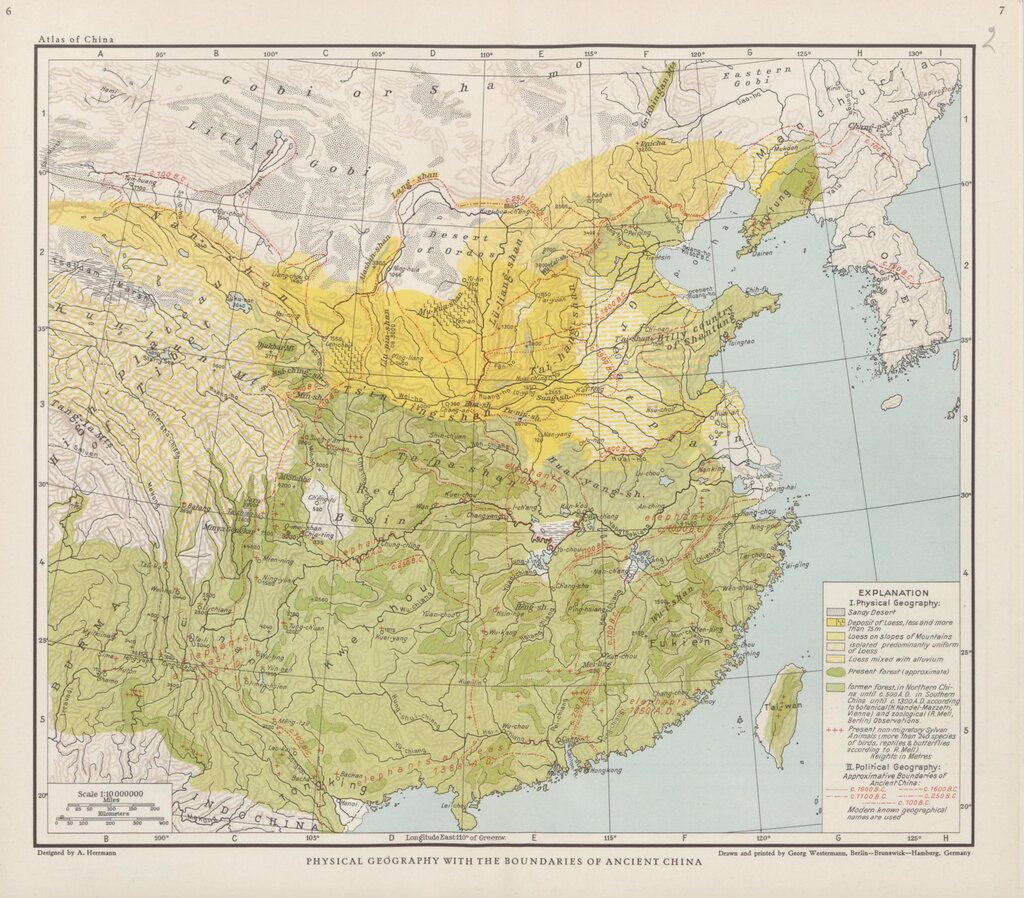
Civilization first blossomed in the fertile basin of the Huang He, or Yellow River. The river gets its name from the fine, yellow, wind-blown soil called loess that blankets the region. When the river floods, it deposits this incredibly fertile silt, creating ideal conditions for agriculture.
But the Yellow River was also unpredictable and prone to catastrophic floods, earning it the nickname “China’s Sorrow.” Early inhabitants had to learn to cooperate and manage the river's waters to survive and prosper, a challenge that spurred the development of early engineering and social organization.
The First Dynasties
According to traditional Chinese history, the first dynasty to emerge was the Xia. It was said to be founded by a hero named Yu the Great, who succeeded in taming the Yellow River’s floods by organizing the construction of canals. While many stories about the Xia exist, archaeologists have yet to find conclusive evidence of its existence. For now, it remains a legendary, foundational period.
The Shang dynasty is the first for which we have solid proof. Archaeologists have uncovered cities, tombs, and, most importantly, thousands of oracle bones. These were turtle shells and animal bones used for divination. Priests would carve questions into a bone, heat it until it cracked, and then interpret the cracks to find answers from the gods or ancestors. The inscriptions on these bones are the earliest known form of Chinese writing, giving us a direct window into Shang society.
dynasty
noun
A sequence of rulers from the same family, stock, or group.
The Shang were eventually overthrown by the Zhou, who established the longest-ruling dynasty in China's history. To justify their conquest, the Zhou introduced a powerful idea: the Mandate of Heaven. This concept stated that the ruler, or “Son of Heaven,” was given the right to rule by the gods. This was not a permanent right. If a ruler became corrupt or incompetent, or if natural disasters suggested divine displeasure, the people had the right to rebel. The successful overthrow of a dynasty was seen as proof that the old ruler had lost the Mandate and the new one had gained it.
Mandate of Heaven
Building Blocks of Culture
These early dynasties laid the cultural and technological groundwork for China. The Shang and Zhou periods are famous for their mastery of bronze casting. Artisans created incredibly intricate bronze vessels for rituals, feasts, and burials. These objects weren't just functional; they were symbols of power and status, decorated with complex patterns and mythological creatures.
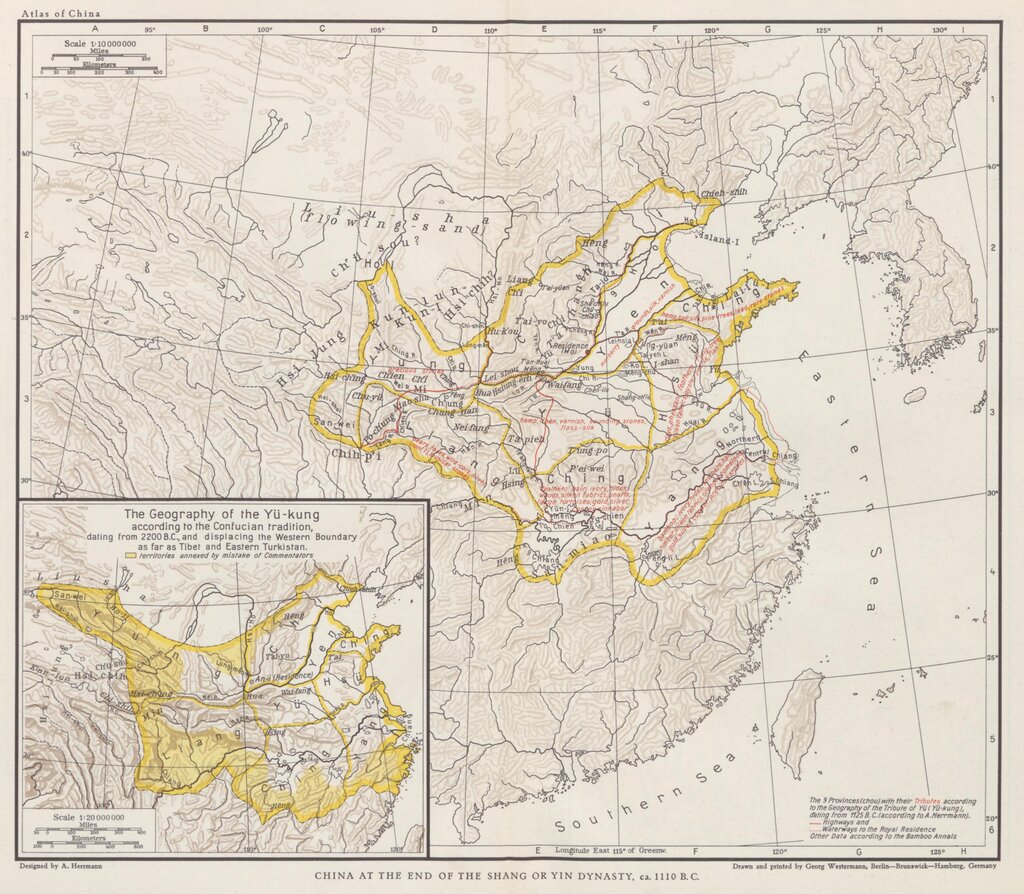
In addition to writing and bronze work, these early periods saw advancements in agriculture, including irrigation techniques and the use of iron tools by the end of the Zhou period. The political and social structures developed under the Shang and Zhou, centered on a ruling king and a network of local lords, set the stage for the more centralized empires that would follow. The idea of the Mandate of Heaven, in particular, would remain a core principle of Chinese political thought for thousands of years.
Why did the ancient Chinese refer to their land as the "Middle Kingdom" (Zhōngguó)?
The Yellow River (Huang He) was nicknamed "China's Sorrow" because its unpredictable floods were catastrophic, but it was also the cradle of Chinese civilization because it...