Introduction to Chess
Chess Basics
The Board and Pieces
Chess is played on a square board with 64 squares, arranged in an 8x8 grid of alternating colors. The board has a coordinate system to identify each square. The vertical columns are called files (labeled 'a' through 'h'), and the horizontal rows are called ranks (labeled '1' through '8'). When setting up, each player should have a light-colored square on their bottom-right corner.
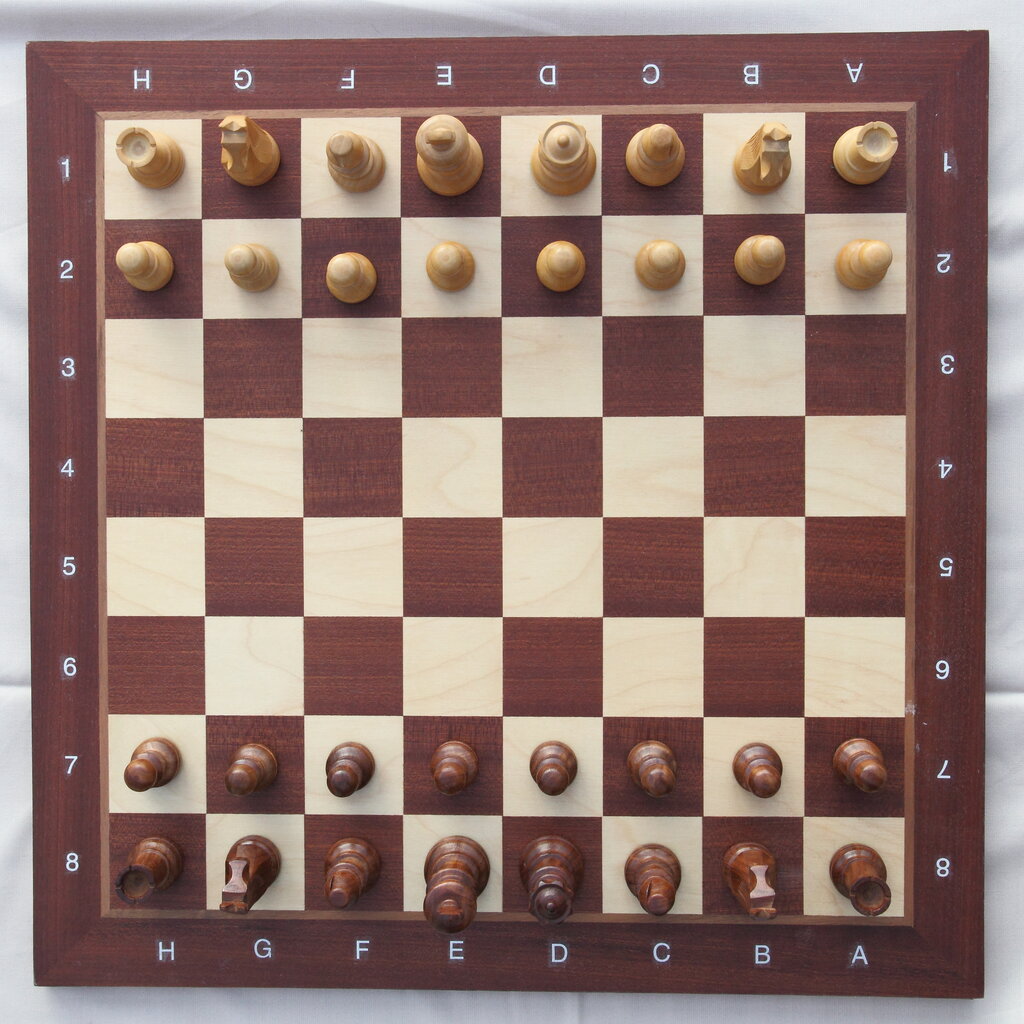
Each player starts with an army of 16 pieces: one king, one queen, two rooks, two bishops, two knights, and eight pawns. Let's look at how each piece moves.
The Pawn
The pawn is the most numerous piece, but it has the most complex rules of movement. Pawns move forward one square at a time. However, on its very first move, a pawn has the option to move forward two squares instead of one.
Pawns are unique in how they capture. While they move straight forward, they capture one square diagonally forward. They cannot capture pieces directly in front of them.
If a pawn reaches the opposite end of the board (the 8th rank for White, or the 1st rank for Black), it gets a promotion! It can become a queen, rook, bishop, or knight. This is often a game-changing moment.
The Major Pieces
Next up are the more powerful pieces, starting with the rook.
Rook
noun
Moves any number of vacant squares horizontally or vertically. It moves in straight lines, like a plus sign.
The knight is the only piece that can jump over other pieces.
Knight
noun
Moves in an 'L' shape: two squares in one direction (horizontally or vertically), and then one square perpendicular to that. It always lands on a square of the opposite color from where it started.
The bishop moves diagonally.
Bishop
noun
Moves any number of vacant squares diagonally. Each player starts with two bishops: one on a light square and one on a dark square. They remain on their starting color for the entire game.
The queen is the most powerful piece on the board.
Queen
noun
Combines the powers of the rook and the bishop. It can move any number of vacant squares horizontally, vertically, or diagonally.
Finally, we have the most important piece: the king.
King
noun
Moves one square in any direction: horizontally, vertically, or diagonally. The king is the most valuable piece, but also one of the weakest in terms of movement.
The Goal of the Game
The object of chess isn't to capture all the opponent's pieces, though that often happens. The goal is to checkmate the opponent's king.
First, let's define check. This is when a king is under attack by an opponent's piece. The attacking player can announce "check," but it's not required. When your king is in check, you must get out of it on your next move. There are three ways to do this:
- Move the king to a safe square.
- Block the check with another piece.
- Capture the piece that is giving check.
If a king is in check and there is no legal move to get out of it, that's checkmate. The game ends, and the player who delivered the checkmate wins.
Checkmate: The king is attacked (in check), and there is no way to escape.
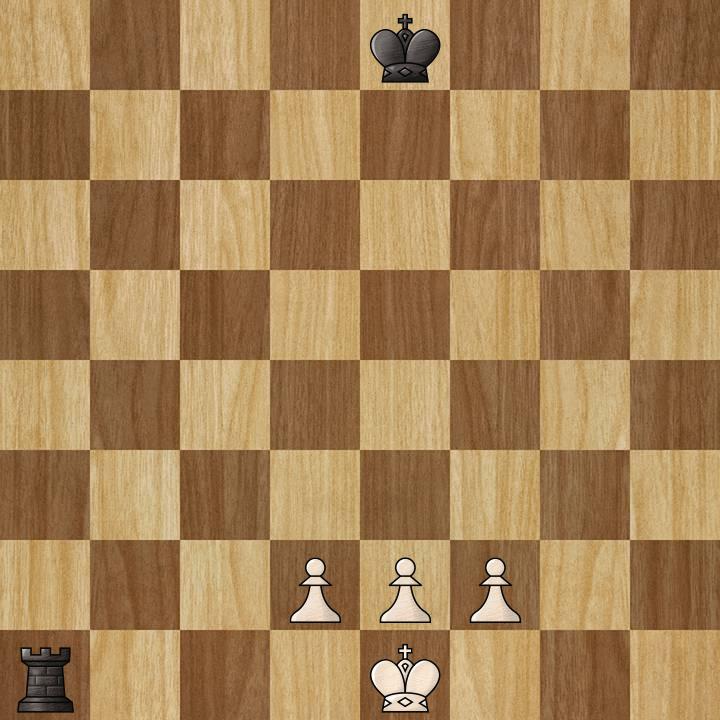
There's one other way a game can end: a draw. The most common type of draw is a stalemate. This happens when a player whose turn it is has no legal moves, and their king is not in check. The game is immediately a draw, and each player gets half a point.
Stalemate: The player has no legal moves, and their king is not in check.
Ready to test your knowledge of the basics? Let's see what you've learned.
What is the ultimate goal of a game of chess?
How does a pawn capture an opponent's piece?
And that's it! You now know the board, the pieces, and the ultimate goal of chess. The next step is to play.