Introduction to Chemistry
Introduction to Matter
What Is Matter?
Look around you. The chair you're sitting on, the water you drink, and even the air you breathe are all made of matter. In simple terms, matter is anything that has mass and takes up space. Mass is the amount of "stuff" in an object, and taking up space means it has volume.
Matter
noun
Anything that has mass and occupies space (volume).
It’s easy to see that a rock has mass and volume. It’s heavier than a feather and it certainly takes up space. But what about air? You can’t see it, but you can feel it when the wind blows. If you blow up a balloon, you are filling it with air, giving it volume. That trapped air also has mass. Everything physical is matter.
The States of Matter
Matter usually exists in one of three common states on Earth: solid, liquid, or gas. The state depends on how the tiny particles that make up the matter are arranged and how they move.
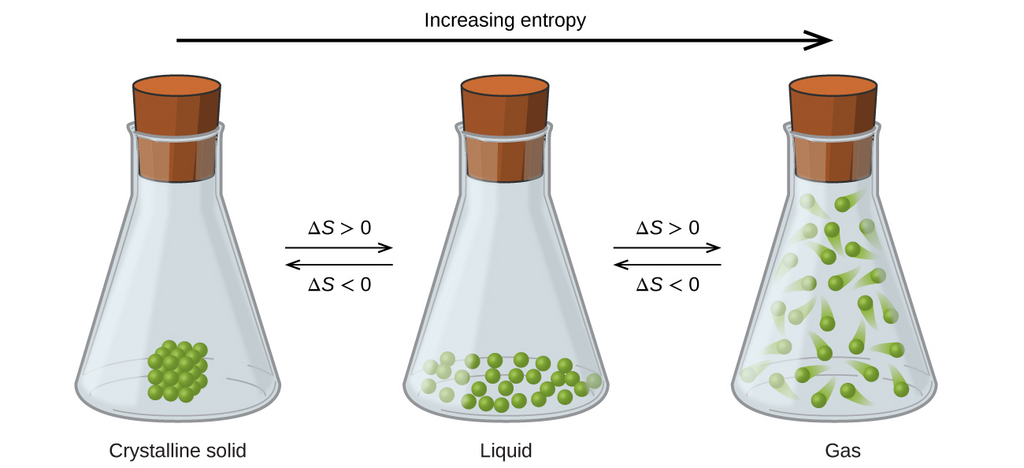
A solid, like an ice cube, has a definite shape and a fixed volume. Its particles are packed tightly together in a fixed pattern. They vibrate but don't move around.
A liquid, like water, has a fixed volume but takes the shape of its container. Its particles are close together but can slide past one another.
A gas, like steam, has no fixed shape or volume. It expands to fill whatever container it's in. Its particles are far apart and move around randomly and rapidly.
The main difference between states is the freedom of their particles to move.
There's also a fourth, less common state of matter on Earth called plasma. It's a gas that has been energized so much that its particles have broken apart. While rare in our daily lives (think lightning and neon signs), plasma is the most abundant state of matter in the universe. The sun and other stars are giant balls of hot plasma.
Sorting Out Matter
Chemists love to organize things. We can classify all matter into two main categories: pure substances and mixtures.
A pure substance consists of only one type of element or one type of compound. It has a definite chemical and physical makeup. For example, pure water is always , and pure iron is always just iron atoms.
Pure substances can be broken down further into elements and compounds.
An element is the simplest form of matter. It cannot be broken down into simpler substances by chemical means. The periodic table lists all known elements, like oxygen (O), carbon (C), and gold (Au).
A compound is a substance made of two or more different elements chemically bonded together in a fixed ratio. Water () is a compound made of hydrogen and oxygen in a 2:1 ratio. Unlike elements, compounds can be broken down into simpler substances.
A mixture, on the other hand, contains two or more substances that are physically mixed but not chemically combined. Each substance in a mixture keeps its own identity and properties. Mixtures have variable compositions. You can mix a little salt in water or a lot of salt in water.
There are two types of mixtures.
| Type | Description | Example |
|---|---|---|
| Homogeneous | A mixture that is uniform throughout. You can't see the different parts. | Saltwater, air, brass |
| Heterogeneous | A mixture that is not uniform. You can see the different components. | Sand and water, salad, oil and vinegar |
Describing Matter
When we study matter, we describe it using its properties. These properties fall into two categories: physical and chemical.
A physical property is a characteristic that can be observed or measured without changing the substance's chemical identity. Think about color, density, melting point, or hardness. You can measure the boiling point of water without turning it into something other than water.
A chemical property describes how a substance can change into a new substance. These properties are only observable during a chemical reaction. Examples include flammability (how easily something burns), toxicity, or reactivity with acid. To see that wood is flammable, you have to burn it, which changes it into ash, carbon dioxide, and other substances.
Understanding these fundamental classifications and properties is the first step in exploring the world of chemistry.
What two properties define matter?
A substance is observed to have no fixed shape and no fixed volume. It expands to completely fill its container. Which state of matter is it in?