Introduction to Chemistry
Introduction to Matter
What Is Matter?
Everything around you is made of matter. The book you're reading, the air you're breathing, and the water you drink are all examples of matter. So, what is it? Matter is simply anything that has mass and takes up space.
Mass is a measure of how much "stuff" is in an object. It's not the same as weight, which is the force of gravity on an object. An astronaut has the same mass on Earth as they do on the Moon, but their weight is much less on the Moon because of the weaker gravity. The amount of space something occupies is called its volume.
In short, if you can put it in a box and it has mass, it's matter.
The Three Main States
Matter usually exists in one of three states: solid, liquid, or gas. The state of a substance depends on how its tiny particles—atoms and molecules—are arranged and how they move.
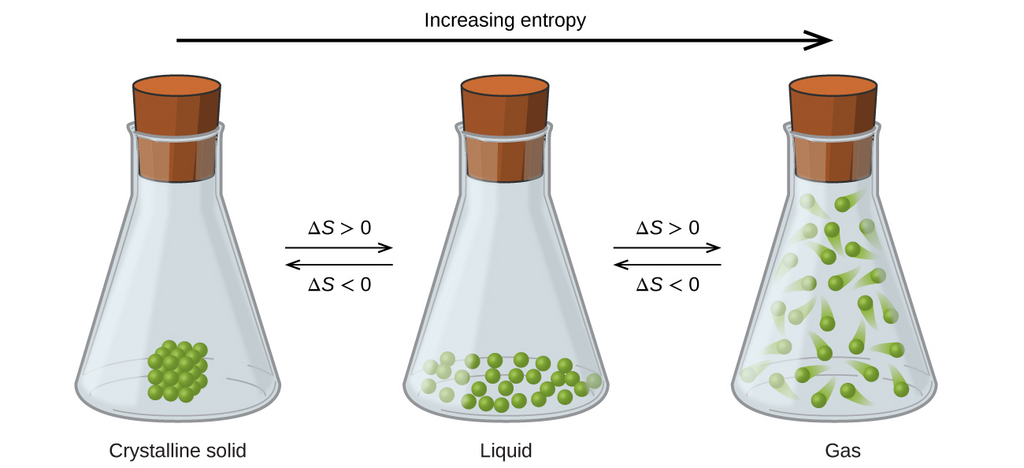
Solids have a definite shape and a definite volume. The particles in a solid are packed tightly together in a fixed pattern. They are constantly vibrating, but they don't move from place to place. Think of an ice cube; it holds its shape whether it's in a cup or on a plate.
Liquids have a definite volume but no definite shape. They take the shape of whatever container they are in. The particles in a liquid are close together but can slide past one another. This is why water flows and can be poured.
Gases have no definite shape and no definite volume. They expand to fill any container they're put into. The particles in a gas are far apart and move around quickly and randomly. The air around us is a mix of gases that fills every corner of the room.
| State | Shape | Volume |
|---|---|---|
| Solid | Definite | Definite |
| Liquid | Takes shape of container | Definite |
| Gas | Takes shape of container | Fills entire container |
Changing States
Matter can change from one state to another when energy, usually in the form of heat, is added or removed. These changes are called phase transitions.
When you heat an ice cube, it melts into water. That’s a solid turning into a liquid. If you keep heating the water, it will boil and turn into steam, which is a gas. This is called evaporation.
If you cool down that steam, it will turn back into liquid water, a process called condensation. You see this when water droplets form on a cold glass. And if you put liquid water in a freezer, it turns back into solid ice. This is freezing.
Pure Substances vs. Mixtures
All matter can also be classified into two broad categories: pure substances and mixtures.
A pure substance consists of only one type of element or one type of compound. It has definite chemical and physical properties. Pure water, sugar, and table salt are all examples of pure substances.
A mixture is a combination of two or more substances that are physically combined but not chemically bonded. The substances in a mixture keep their own original properties. For example, if you mix sand and sugar, you still have sand and you still have sugar.

Mixtures can be further broken down into two types.
Homogeneous mixtures are uniform throughout. That means the different components are evenly distributed and cannot be seen individually. Salt dissolved in water is a homogeneous mixture because you can't see the individual salt particles. Air is another example; it's a mix of nitrogen, oxygen, and other gases that appears as a single substance.
Heterogeneous mixtures are not uniform. You can see the individual components. A salad is a classic example. You can easily pick out the lettuce, tomatoes, and cucumbers. Another example is sand in water; the sand settles at the bottom, and the mixture is clearly not the same everywhere.
What are the two fundamental properties that define matter?
A substance has a definite volume but takes the shape of its container. Which state of matter is it in?
Understanding these basic concepts of matter is the first step into the world of chemistry. It helps us make sense of the physical world and how different materials interact.