Introduction to Chemistry
Introduction to Matter
What Is Matter?
Look around you. The chair you're sitting on, the water you drink, and even the air you breathe are all made of matter. In simple terms, matter is anything that has mass and takes up space. Mass is the amount of "stuff" in an object, while the space it takes up is its volume.
Everything you can physically touch is matter. It's the physical substance of the universe.
The Four States
Matter usually exists in one of four states, or phases: solid, liquid, gas, and plasma. The state of a substance depends on factors like temperature and pressure. Think about water. When it's cold, it's a solid (ice). Warm it up, and it becomes a liquid. Heat it more, and it turns into a gas (steam).
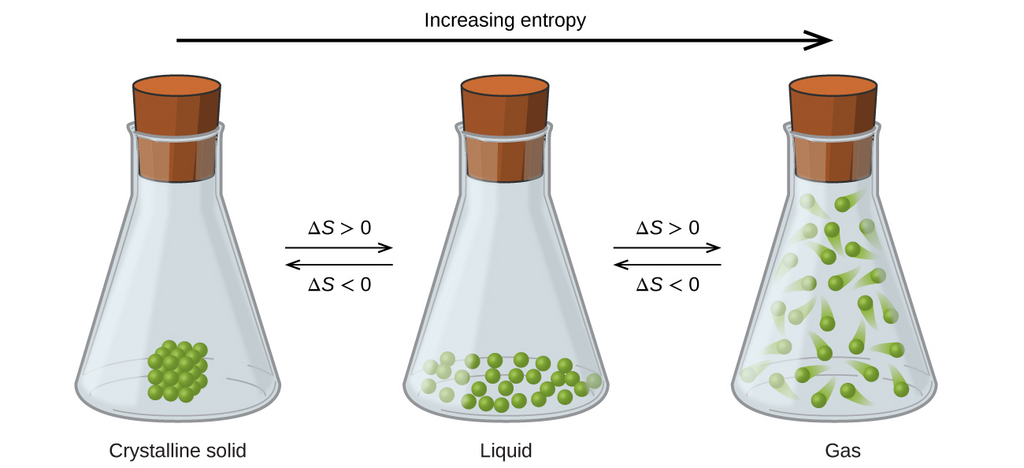
Here's a breakdown of the common states:
-
Solids have a definite shape and a definite volume. The particles in a solid are packed tightly together in a fixed arrangement, so they can only vibrate in place.
-
Liquids have a definite volume but no definite shape. They take the shape of whatever container they are in. The particles are close together but can slide past one another.
-
Gases have no definite shape and no definite volume. They expand to fill any container they occupy. The particles are far apart and move around randomly and quickly.
The fourth state, plasma, is less common on Earth but is the most abundant state of matter in the universe. Stars are made of plasma. It's a gas that has been heated to extremely high temperatures, causing its particles to become electrically charged.
Sorting It All Out
Chemists classify matter into two broad categories: pure substances and mixtures. This helps them understand and predict how different materials will behave.
A pure substance consists of only one type of particle. It has a constant chemical composition and distinct properties. Pure substances can be either elements or compounds.
-
An element is the simplest form of matter. It cannot be broken down into simpler substances by chemical means. Examples include oxygen (O), iron (Fe), and gold (Au).
-
A compound is formed when two or more elements are chemically bonded together in a fixed ratio. Water () is a compound made of hydrogen and oxygen. Table salt (NaCl) is a compound of sodium and chlorine. The properties of a compound are unique and different from its constituent elements.
A mixture is a combination of two or more substances that are not chemically bonded. Each substance in a mixture retains its own chemical identity and properties. Mixtures can be separated by physical means, like filtering or evaporation. There are two types of mixtures:
Homogeneous mixtures have a uniform composition throughout. You can't see the individual components. Saltwater is a good example. Once the salt dissolves, you can't distinguish it from the water. Air and brass are also homogeneous mixtures.
Heterogeneous mixtures do not have a uniform composition. You can see the different parts. Think of a salad—you can easily see the lettuce, tomatoes, and cucumbers. Sand in water is another example; the sand settles at the bottom.
| Category | Description | Example |
|---|---|---|
| Element | Simplest form of matter. | Copper (Cu) |
| Compound | Elements chemically bonded. | Sugar () |
| Homogeneous Mixture | Uniform composition. | Vinegar |
| Heterogeneous Mixture | Non-uniform composition. | Oil and Water |
Let's check your understanding of these fundamental concepts.
What are the two fundamental properties that define matter?
A substance is observed to take the shape of its container, but it does not expand to fill the entire volume. What is its state?
Understanding matter, its states, and how it's classified is the first step in exploring the world of chemistry. These basic ideas provide the foundation for nearly everything else you will learn.