Introduction to Chemistry
Introduction to Matter
What is Matter?
Look around you. The chair you're sitting on, the water you drink, and the air you breathe are all made of matter. It’s the “stuff” that makes up everything in the universe. But what does that really mean?
Matter is defined as anything that occupies space and has mass.
Let's break that down. Mass is a measure of how much “stuff” is in an object. A bowling ball has more mass than a balloon. Occupying space means an object has volume. The bowling ball and the balloon both take up space, so they both have volume.
Everything from a tiny grain of sand to a giant star is matter. The only things that aren't matter are forms of energy, like light or heat.
The Four States
Matter usually exists in one of four states, or phases. The state of a substance depends on factors like temperature and pressure. The three you're most familiar with are solid, liquid, and gas.
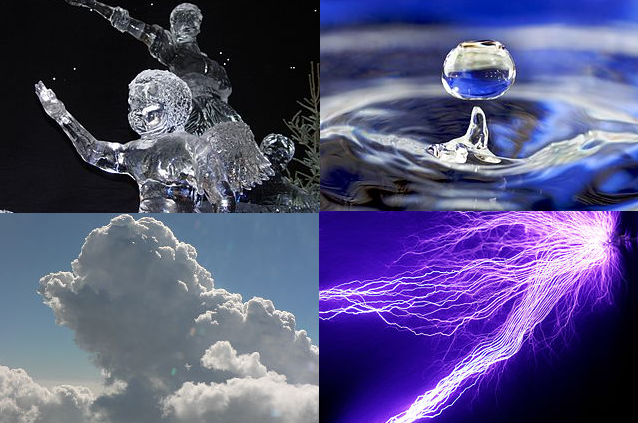
Think about water. When it's frozen, it's a solid (ice). When it's heated, it becomes a liquid. Heat it more, and it turns into a gas (steam). The difference between these states comes down to how the particles inside are behaving.
Solids have a definite shape and a definite volume. Their particles are packed tightly together in a fixed arrangement, vibrating in place but not moving around.
Liquids have a definite volume but take the shape of their container. Their particles are still close together but can slide past one another.
Gases have no definite shape or volume. They expand to fill any container they're in. Their particles are far apart and move around randomly and quickly.
There's also a fourth state: plasma. It's the most abundant state of matter in the universe, making up stars like our sun. Plasma is a superheated gas where the particles have so much energy that they break apart into charged ions and electrons. On Earth, you can see plasma in lightning and the aurora borealis.
Pure Substances vs. Mixtures
Scientists classify matter into two broad categories: pure substances and mixtures. The key difference is consistency. A pure substance has a uniform and definite composition, while a mixture is a physical combination of two or more substances.
A pure substance is made of only one type of particle. It can be an element or a compound.
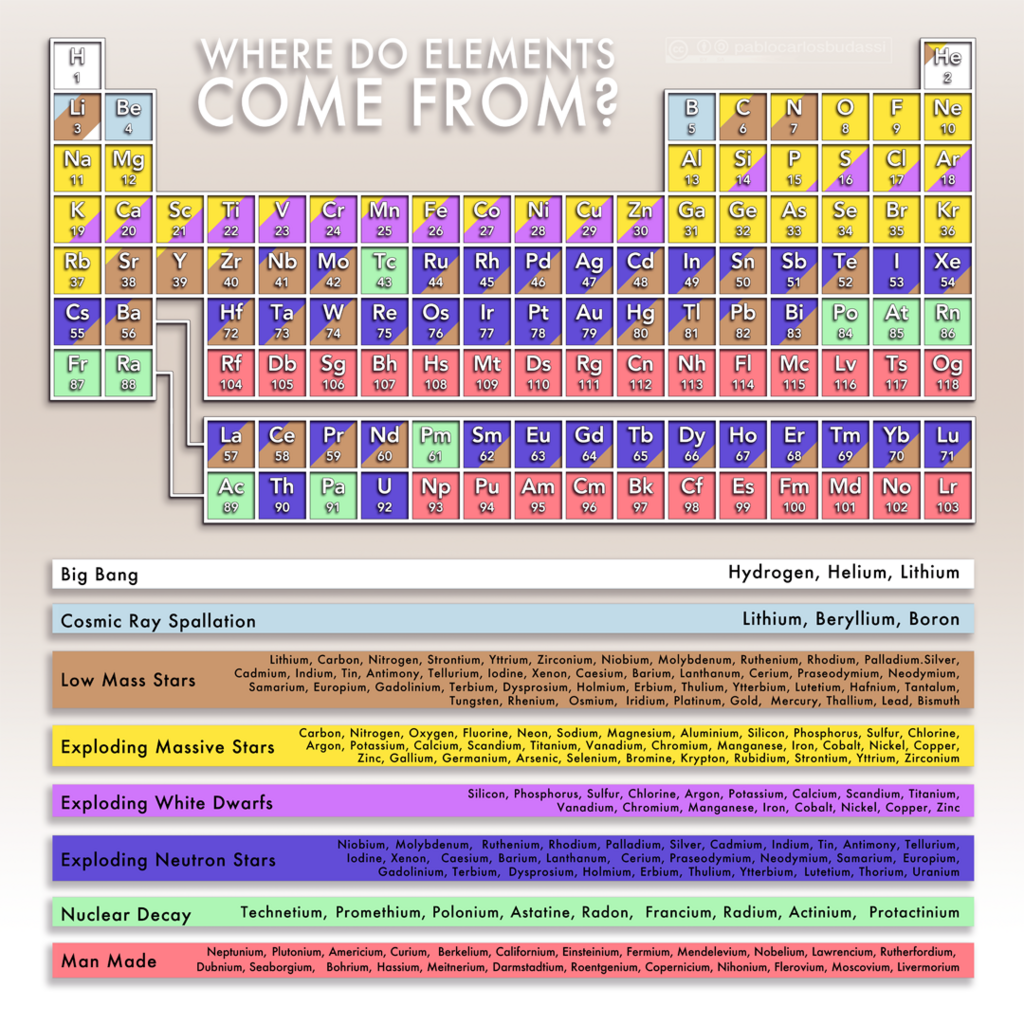
An element is the simplest form of matter and cannot be broken down into anything simpler by chemical means. Examples include oxygen (O), iron (Fe), and gold (Au). All the elements are organized on the periodic table.
A compound is formed when two or more elements are chemically bonded together in a fixed ratio. Water (H₂O) is a compound made of hydrogen and oxygen. Table salt (NaCl) is a compound of sodium and chlorine. The properties of a compound are unique and different from its constituent elements.
A mixture contains two or more substances that are physically mixed but not chemically bonded. They can be separated by physical means, like filtering or evaporation.
A homogeneous mixture is uniform throughout. You can't see the different parts. Salt dissolved in water is a homogeneous mixture. Air is another example, a mix of nitrogen, oxygen, and other gases.
A heterogeneous mixture is not uniform. You can easily see the different components. Think of a salad, sand in water, or a chocolate chip cookie. Each bite is a little different.
The key takeaway is that in a compound, substances are chemically bonded in a fixed ratio, while in a mixture, they are just physically combined in any ratio.
Now, let's test your understanding of these fundamental concepts.
What are the two fundamental properties that define matter?
A substance has particles that are far apart and move randomly to fill any container they are in. Which state of matter does this describe?