Introduction to Catalan Language
Catalan Alphabet and Pronunciation
The Catalan Alphabet
The Catalan alphabet uses the same 26 letters as the English alphabet, so it will look very familiar. Pronunciation is where things get interesting. Most letters have consistent sounds, making it a relatively phonetic language to learn. Once you know the rules, you can sound out words with confidence.
The letters are: A, B, C, D, E, F, G, H, I, J, K, L, M, N, O, P, Q, R, S, T, U, V, W, X, Y, Z. The letters K, W, and Y are rare and mainly appear in foreign words.
Unique Sounds
Catalan has a few special characters and letter combinations, called digraphs, that create unique sounds. Mastering these is a key step toward sounding natural.
ce trencada
noun
The letter 'ç' is called the 'ce trencada' (broken C). It always makes a soft 's' sound, like in the English word 'song', regardless of the vowel that follows.
Next are the digraphs. These are pairs of letters that represent a single sound.
| Digraph | Sound | Example Word | Meaning |
|---|---|---|---|
| ll | Like 'lli' in 'million' | llibre | book |
| ny | Like 'ni' in 'onion' | Catalunya | Catalonia |
| ix | Like 'sh' in 'show' | caixa | box |
| ig | Like 'tch' in 'watch' | puig | hill |
Vowels and Consonants
Catalan has seven vowel sounds squeezed into the five letters a, e, i, o, u. While 'a', 'i', and 'u' are straightforward, 'e' and 'o' can each be pronounced in two ways: open or closed. The difference is subtle but important. Think of the 'e' in 'pet' (open) versus the 'a' in 'gate' (closed), or the 'o' in 'cot' (open) versus the 'o' in 'boat' (closed).
| Vowel | Sound | Example |
|---|---|---|
| a | like the 'a' in father | casa (house) |
| e | Closed: like the 'a' in gate | elefant (elephant) |
| Open: like the 'e' in pet | cel (sky) | |
| i | like the 'ee' in see | amic (friend) |
| o | Closed: like the 'o' in boat | sol (sun) |
| Open: like the 'o' in cot | porta (door) | |
| u | like the 'oo' in moon | lluna (moon) |
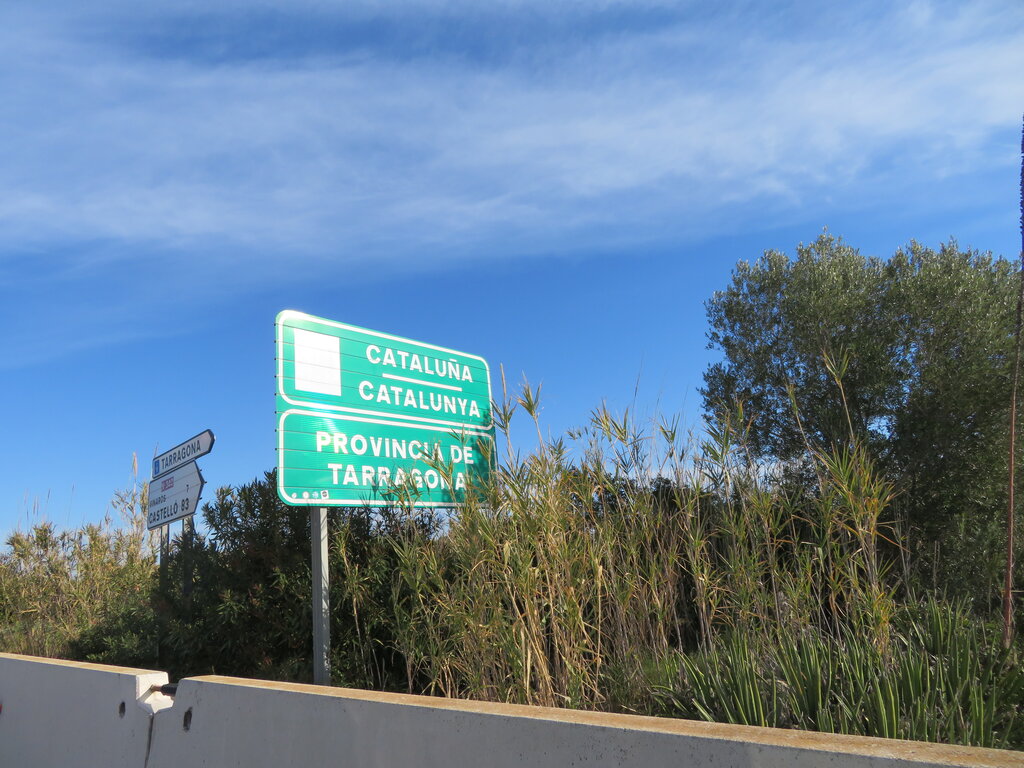
Consonants are generally predictable, but 'c' and 'g' change their sound depending on the vowel that follows them. This pattern is also found in other Romance languages like Spanish and French.
- C is hard (like 'k') before 'a', 'o', 'u', or a consonant. It's soft (like 's') before 'e' or 'i'.
- G is hard (like 'g' in 'go') before 'a', 'o', 'u', or a consonant. Before 'e' or 'i', it sounds like the 's' in 'pleasure' or the 'j' in the French 'je'.
Hard C: cotxe (car), cub (bucket) Soft C: cel (sky), cinc (five) Hard G: gat (cat), gran (big) Soft G: gel (ice), girar (to turn)
Stress and Accents
Knowing which syllable to stress is vital for clear pronunciation. In Catalan, the rules are quite regular. If a word ends in a vowel, a vowel followed by 's', or the combinations '-en' or '-in', the stress falls on the second-to-last syllable. For words ending in any other consonant, the stress is on the final syllable.
Exemple (Example) is stressed on the second-to-last syllable (e-XEM-ple). Cantar (To sing) is stressed on the last syllable (can-TAR).
So what are accent marks for? They signal an exception to these rules. If the stress falls on a syllable that isn't the default, an accent mark is placed over that vowel. Accent marks can also tell you whether an 'e' or 'o' is open or closed.
- The grave accent (`) on 'e' and 'o' indicates an open vowel sound: cafè (coffee).
- The acute accent (´) on 'e' and 'o' indicates a closed vowel sound: camí (path).
For 'a', 'i', and 'u', the accent mark only indicates stress, not a change in sound. The grave accent (`) is used on 'a', while the acute accent (´) is used on 'i' and 'u'.
Let's test what you've learned about the sounds of Catalan.
True or False: The Catalan alphabet uses the exact same 26 letters as the English alphabet, with no additions or special characters like 'ñ'.
In Catalan, how is the letter 'C' pronounced when it comes before the vowels 'e' or 'i'?
With these foundations, you're ready to start reading and speaking Catalan words.