Introduction to Carpentry
Introduction to Carpentry
The Craft of Wood
At its heart, carpentry is the art of shaping wood. It's one of the oldest skilled trades, involving cutting, working, and joining timber to create everything from the frame of a house to a delicate piece of furniture. While many people think of construction sites, carpentry's scope is vast, covering any project where wood is the primary material.
Carpentry
noun
The skilled trade and craft in which the primary work performed is the cutting, shaping, and installation of building materials during the construction of buildings, ships, timber bridges, concrete formwork, etc.
This craft blends physical skill with mental problem-solving. A carpenter must visualize a finished product from a set of plans, measure materials with precision, and understand how different pieces fit together to form a strong and stable whole.
A Brief History
Woodworking is as old as humanity itself. Early humans used wood to create shelters, tools, and weapons. As civilizations grew, so did the sophistication of their carpentry. The ancient Egyptians, for example, crafted intricate furniture and chariots, many of which have survived for thousands of years. Their techniques for joining wood without metal fasteners were remarkable.
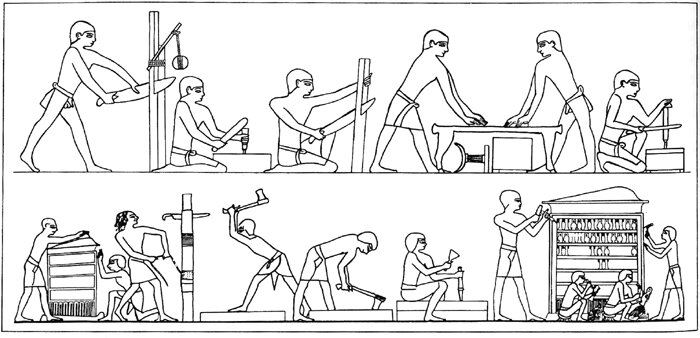
Throughout history, carpenters have been essential community members, building the homes, ships, and structures that allowed societies to thrive. The tools and techniques evolved slowly over centuries, but the core principles remained the same: understand the material and shape it with purpose. The Industrial Revolution brought power tools, which sped up the work but didn't replace the need for a carpenter's skill and knowledge.
Roles and Responsibilities
A modern carpenter's job is more than just cutting wood. Their responsibilities often begin with interpreting blueprints or drawings to understand the project's scope. From there, they plan the steps needed, selecting materials and taking precise measurements.
Their daily tasks might include cutting and shaping wood, steel, and other materials. They assemble and join components, checking their work to ensure it's level, square, and dimensionally accurate. It's a role that requires a keen eye for detail and the ability to adapt when challenges arise.
A good carpenter doesn't just follow plans; they solve puzzles in three dimensions, turning abstract designs into tangible structures.
Carpentry is often divided into two main categories, each requiring a different focus and skill set.
| Type | Focus | Examples |
|---|---|---|
| Rough Carpentry | Structural work, strength, and framing | Building skeletons of houses, roofing, formwork |
| Finish Carpentry | Aesthetics, detail, and precision | Trim, molding, cabinets, stairs, flooring |
Rough carpenters build the bones of a structure. Their work is essential for the building's stability, but it's usually covered up by walls and other materials. Speed and structural integrity are key.
Finish carpenters, on the other hand, handle the details you see and interact with every day. Their work requires immense precision and a focus on creating a clean, polished look. This is where craftsmanship is most visible.
Ready to check your understanding?
Which of the following tasks would most likely be handled by a finish carpenter?
According to the text, what is the core principle that has remained constant in carpentry throughout history?
Understanding these fundamental concepts provides a solid base. From here, we can begin to explore the specific tools and techniques that bring the craft of carpentry to life.