Introduction to Cantonese
Introduction to Cantonese
What is Cantonese?
Cantonese is a language spoken by over 85 million people worldwide. While often grouped under the umbrella of "Chinese," it's as different from Mandarin as Spanish is from Portuguese. If you know one, you won't automatically understand the other when you hear it spoken.
Cantonese
noun
A variety of the Chinese language that originated in the city of Guangzhou (formerly known as Canton) and the surrounding areas in southeastern China.
The name "Cantonese" comes from Canton, the former Western name for the city of Guangzhou in southern China's Guangdong province. The language itself is often called 廣東話 (Gwóngdūng wá) by its speakers, which literally means "Guangdong speech."
One of the most fascinating aspects of Cantonese is its connection to ancient Chinese. Many linguists believe it preserves features of older forms of the language, making it a window into China's rich literary and cultural past. Its spoken form has nine tones, which gives it a distinct, musical quality compared to Mandarin's four.
Where It's Spoken
The heartland of Cantonese is the Pearl River Delta, a bustling economic region in southern China. It's the official language of Hong Kong and Macau and the lingua franca of Guangdong province.
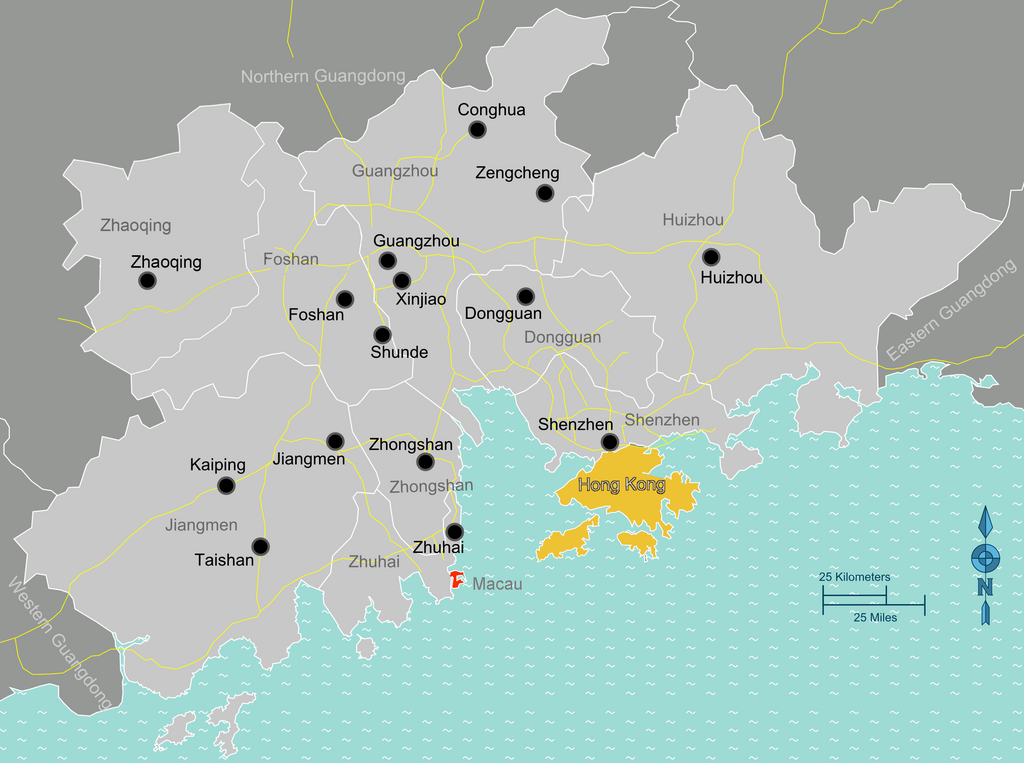
But its reach extends far beyond China. For centuries, people from Guangdong were the primary emigrants from China, creating Cantonese-speaking communities all over the world. Today, you'll hear Cantonese spoken in Chinatowns from San Francisco to London, and it remains a major language in parts of Malaysia, Vietnam, and Singapore. This global diaspora has made Cantonese a truly international language.
A Language of Culture
Cantonese is more than just a way to communicate; it’s a powerhouse of culture. During the late 20th century, Hong Kong became a global hub for entertainment, and Cantonese was the language of its cultural exports.
From Bruce Lee's action films to the vibrant sounds of Cantopop music, Cantonese has made its mark on the world stage.
This cultural footprint is a key part of the language's identity. Learning Cantonese opens up a world of classic cinema, influential music, and a unique culinary tradition. It's the language of dim sum (點心, dím sām) and the lively, dynamic spirit of cities like Hong Kong.
By learning Cantonese, you're not just learning a new set of words; you're connecting with a rich history and a vibrant, living culture that spans the globe.