Introduction to Calculus
Understanding Functions
The Function Machine
Imagine a machine. You put something in, it does something to it, and something new comes out. Put in a 2, get out a 4. Put in a 3, get out a 6. This machine seems to be doubling whatever you give it. That's the core idea of a function.
A function is a rule that takes an input and produces exactly one output.
The key phrase here is exactly one output. If you put a 3 into our doubling machine, it can't spit out a 6 one time and a 7 the next. It has to be consistent. Every input has a single, predictable output. This reliability is what makes functions so powerful in mathematics and beyond.
Domain and Range
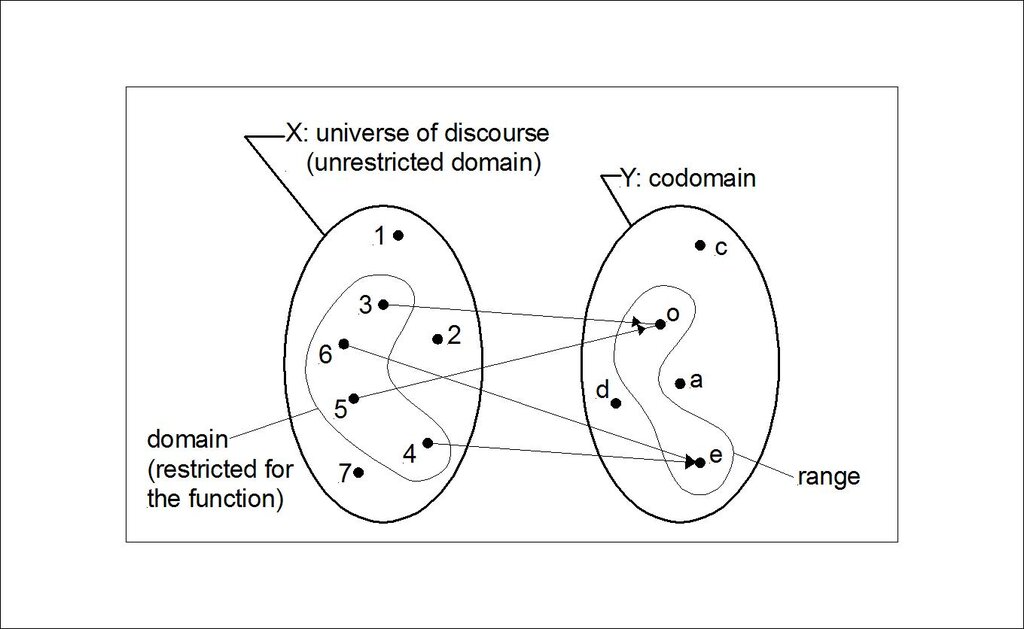
Every function has two important sets of values associated with it: its domain and its range.
Domain
noun
The set of all possible inputs a function can accept.
Think of the domain as the machine's instruction manual for what it's allowed to work on. A machine designed to juice oranges can't accept a coconut. The domain for the juicer is 'oranges'. For a function like , the domain is all real numbers except for zero, because you can't divide by zero.
Range
noun
The set of all possible outputs a function can produce.
The range is what the machine can actually create. If our doubling machine, , only accepts positive integers (its domain), then its range will be all positive even integers. It can't produce a 7, or a -4, or 3.14.
A Gallery of Functions
Functions come in many shapes and sizes. Once you can recognize a few common types, you'll start to see them everywhere. Let's look at their algebraic forms and what they look like on a graph.
A function's graph is a visual story of the relationship between its inputs (the x-axis) and its outputs (the y-axis).
An easy way to check if a graph represents a function is the Vertical Line Test. If you can draw a vertical line anywhere on the graph that crosses the curve more than once, it is not a function. This is because one input (x-value) would have multiple outputs (y-values), which breaks our main rule.
Linear Functions
These are the simplest functions, producing straight lines when graphed. Their general form is . The variable represents the slope (how steep the line is), and is the y-intercept (where the line crosses the vertical axis).
Quadratic Functions
Written as , these functions create a U-shaped curve called a parabola. The parabola opens upwards if is positive and downwards if is negative. They model things like the path of a thrown ball.
Polynomial Functions
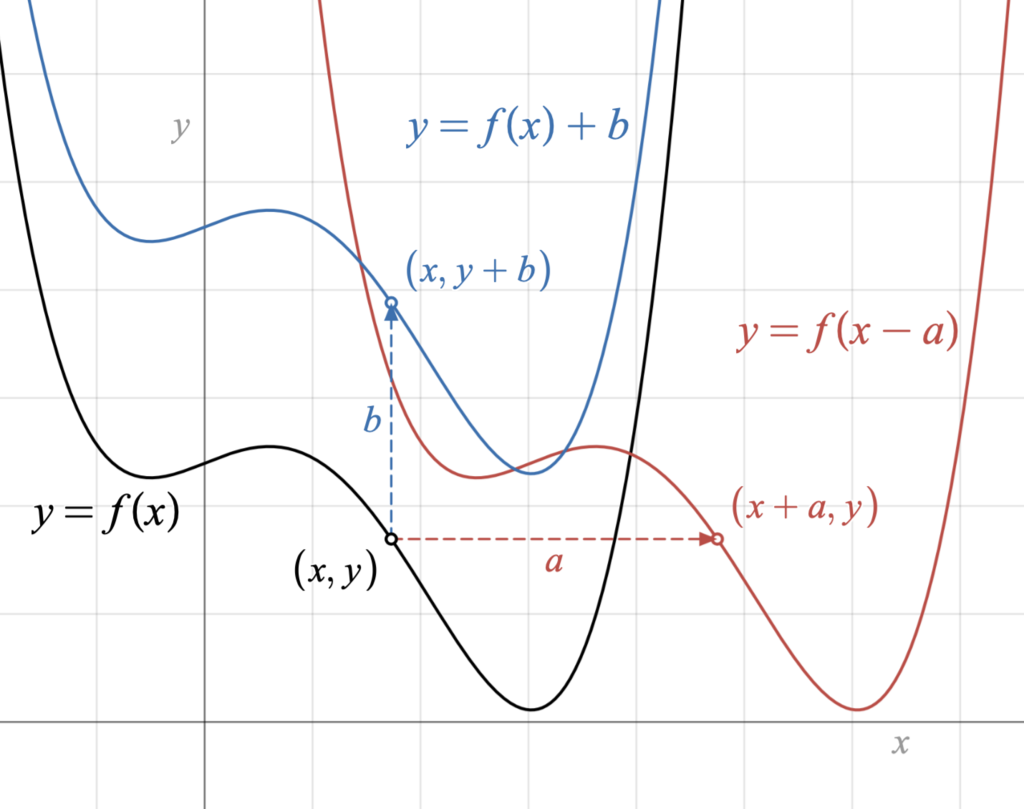
These are a broader category that includes linear and quadratic functions. A polynomial function is of the form . They create smooth, continuous curves that can have various twists and turns.
Rational Functions
These are fractions of polynomials, like . Their graphs are interesting because they can have asymptotes—lines that the curve gets closer and closer to but never touches. This often happens where the denominator would be zero.
Exponential Functions
In the form , where the input is the exponent, these functions model rapid growth or decay. Think of population growth or radioactive decay. Their graphs start flat and then shoot up (or down) dramatically.
Logarithmic Functions
These are the inverses of exponential functions, written as . They answer the question, "what exponent do we need to raise to in order to get ?" Logarithmic functions grow very slowly and are useful for measuring things with a wide range of values, like earthquakes (Richter scale) or sound (decibels).
Let's review the key terms we've covered.
Ready to check your understanding?
Which of the following statements is the most fundamental rule that defines a function?
What is the domain of the function ?
Understanding these basic function types is a crucial first step. As you move into calculus, you'll learn how to analyze their rates of change and the areas underneath their curves.