Introduction to Business
Introduction to Business
What Is a Business?
At its core, a business is an organization that provides goods or services to customers. The fundamental goal is usually to generate a profit, which is the money left over after all expenses are paid. But businesses do more than just make money. They solve problems, meet needs, and create jobs, playing a vital role in our communities and the economy.
Think of your favorite coffee shop. It provides a product (coffee) and a service (a place to meet or work). In doing so, it employs baristas, pays rent to a landlord, and buys beans from suppliers. It's a small ecosystem built around a simple transaction.
This exchange of value is the heartbeat of every business, whether it's a giant tech company or a single person selling handmade jewelry online.
Structuring a Business
Not all businesses are set up the same way. The legal structure a founder chooses affects everything from taxes to personal liability. There are four common types.
Sole Proprietorship
noun
A business owned and run by one person. There is no legal distinction between the owner and the business.
This is the simplest structure. The owner is personally responsible for all business debts. It's easy to set up but offers no personal liability protection.
Partnership
noun
A business owned by two or more people. The partners share the profits and are typically both responsible for its debts.
Partnerships allow owners to combine resources and expertise. However, just like with a sole proprietorship, partners are generally personally liable for business debts, sometimes including those created by their other partners.
Corporation
noun
A legal entity that is separate and distinct from its owners. Corporations can be taxed, can be sued, and can enter into contractual agreements.
The key advantage here is liability protection. The owners (shareholders) are not personally responsible for the company's debts. This structure is more complex and costly to set up and maintain.
Limited Liability Company (LLC)
noun
A business structure that combines the pass-through taxation of a partnership or sole proprietorship with the limited liability of a corporation.
An LLC is a popular hybrid option. It provides the liability protection of a corporation without the complexity of double taxation, where both the corporation and its shareholders are taxed.
| Structure | Ownership | Personal Liability | Best For |
|---|---|---|---|
| Sole Proprietorship | One Person | Unlimited | Freelancers, single founders |
| Partnership | Two or More | Unlimited | Multiple owners, professional groups |
| Corporation | Shareholders | None | Established companies, high-risk ventures |
| LLC | One or More | None | Small businesses wanting protection |
The Core Functions
No matter the size or type, nearly every business manages four primary functions. Think of them as the four cylinders of an engine. All must work together for the business to move forward.
1. Production / Operations: This is the "how." It's about creating the actual product or delivering the service. For a car company, this is the factory floor. For a software company, it's the team of programmers writing code. The goal of operations is to be efficient and maintain quality.
2. Marketing: This is the "who" and "why." Marketing identifies who the customers are, what they need, and how to reach them. It includes everything from advertising and social media to pricing and branding. Without marketing, even the best product might go unnoticed.
3. Finance: This function manages the money. It involves tracking revenue and expenses, creating budgets, and securing funding for growth. Financial health is critical for survival, and this department keeps a pulse on the company's profitability.
4. Human Resources (HR): Businesses are powered by people. HR is responsible for recruiting, hiring, training, and supporting employees. A strong HR department helps build a positive company culture and ensures the business has the right talent to succeed.
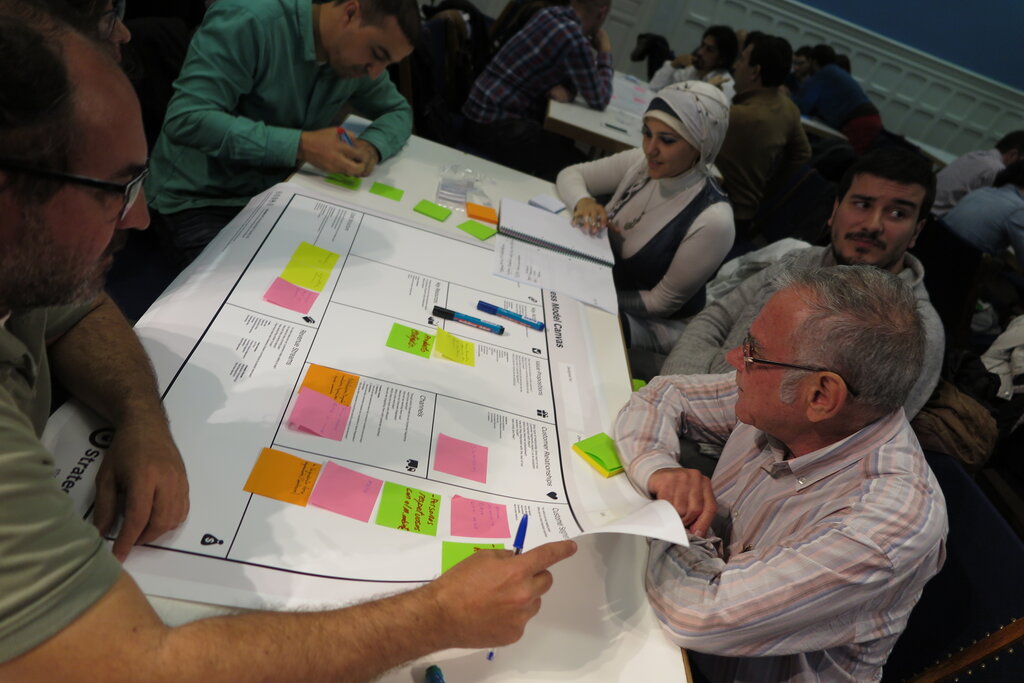
These functions don't operate in silos. Marketing needs information from finance to set advertising budgets. Operations needs HR to hire skilled workers. They are all interconnected, working together to achieve the overall business goals.
Ready to check your understanding? Let's see what you've learned about the fundamentals of business.
What is the primary goal of most for-profit businesses?
A freelance graphic designer starts a business on their own. They want the simplest legal structure and are comfortable with the personal financial risk. Which business structure is the best fit?
Understanding these basic building blocks—what a business is, its legal forms, and its core functions—provides a solid foundation for exploring the more complex world of commerce.