Introduction to Building AI Agents
Introduction to AI Agents
What Is an AI Agent?
At its core, an AI agent is something that acts. It's an autonomous entity that perceives its environment through sensors and acts upon that environment through actuators. Think of it as a decision-maker that takes in information and produces an action to achieve a specific goal.
An agent perceives its environment and acts upon it.
This definition is broad. A simple thermostat is an agent. It senses the room's temperature (perception) and turns the furnace on or off (action) to maintain a target temperature (goal). In the world of AI, agents are far more sophisticated, but the underlying principle is the same. They are the doers in an AI system.
How Agents Interact with the World
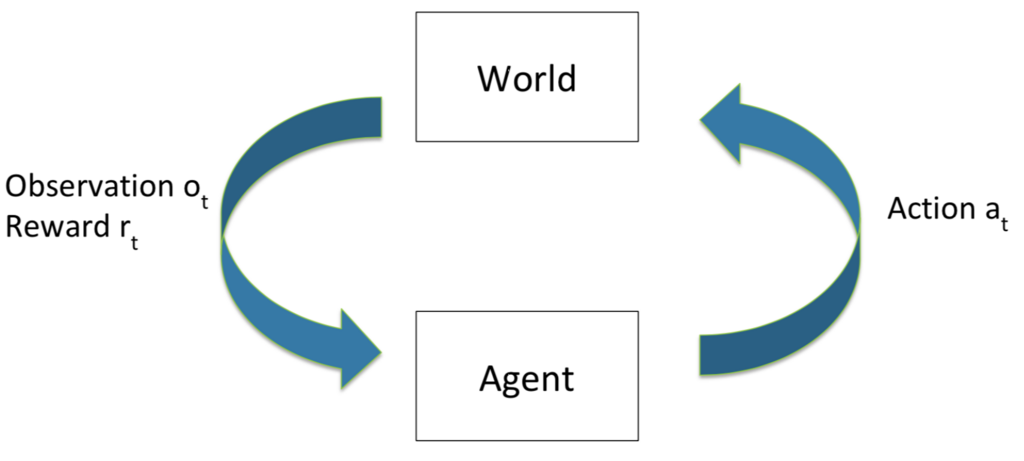
Every agent operates in a continuous loop. It observes its surroundings, thinks about what to do, and then does it. This is known as the agent-environment interaction model.
An agent uses sensors to gather information about its environment. This input is called a percept. For a self-driving car, percepts could include camera images, GPS data, and radar signals.
The agent then processes these percepts to make a decision. The decision results in an action, which is carried out by actuators. For the car, actuators are the steering wheel, accelerator, and brakes.
How an agent decides which action to take is what makes it intelligent. This internal logic defines what kind of agent it is.
A Family of Agents
AI agents aren't all the same. They range from very simple to incredibly complex, based on how they make decisions. We can classify them into a few main types, each building on the last.
1. Simple Reflex Agents These are the most basic agents. They work on a simple condition-action rule, like "if X, then do Y." They don't consider the past; they only react to the current percept. An automated vacuum that changes direction when its bumper hits a wall is a simple reflex agent.
2. Model-Based Reflex Agents These agents are a step up. They maintain an internal model or state of the world. This model helps them understand how the world works and keeps track of things they can't see right now. They use this internal state, along with the current percept, to make a decision.
For example, a self-driving car needs to know which lane it's in even if the lane markings are temporarily obscured. Its internal model tracks its position, helping it make better decisions than a simple reflex agent could.
3. Goal-Based Agents Instead of just reacting, goal-based agents have specific goals they want to achieve. They consider different sequences of actions and choose the one that will lead them to their goal. If you ask a navigation app for the route to a coffee shop, it acts as a goal-based agent. It plans a path from your current location to the destination (the goal).
4. Utility-Based Agents Sometimes, reaching a goal isn't enough. There might be multiple ways to get there, some better than others. Utility-based agents aim for the best outcome. They have a utility function that measures how "happy" or satisfied the agent is with a particular state.
Our navigation app might be a utility-based agent. It doesn't just find a route; it finds the fastest route, or the one with the least traffic. It weighs different paths and chooses the one with the highest utility (in this case, the shortest travel time).
5. Learning Agents Learning agents can improve their performance over time. They start with some initial knowledge and are able to adapt through experience. The agent has a "learning element" that analyzes feedback on its actions and modifies its decision-making components to perform better in the future.
A chess-playing AI is a learning agent. After each game, it analyzes what went right and wrong, adjusting its strategy to become a stronger player. This ability to learn and adapt is what makes modern AI so powerful.
What is the fundamental role of an AI agent?
In a self-driving car, the steering wheel, accelerator, and brakes are examples of which component?
Understanding these agent types is the first step in seeing how AI systems can perceive, reason, and act in the world around them.