Introduction to Biblical Hebrew
Hebrew Alphabet
The Hebrew Aleph-Bet
The Hebrew alphabet, or aleph-bet, is the foundation of the language. It consists of 22 letters, and unlike the English alphabet, all of them are consonants. This type of writing system is called an abjad. Another key difference is that Hebrew is written and read from right to left—the opposite of English.
Don't worry about vowels just yet. For now, focus on the shapes and sounds of these 22 core letters.
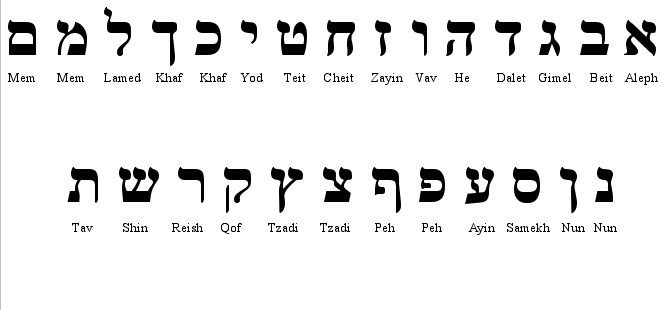
Each letter has a name, a shape, and a sound. Some sounds will be familiar, while others might be new. Let's look at all of them together.
| Letter | Name | Sound |
|---|---|---|
| א | Aleph | Silent (carries a vowel) |
| ב | Bet | B / V |
| ג | Gimel | G (as in 'go') |
| ד | Dalet | D |
| ה | Heh | H |
| ו | Vav | V (or W) |
| ז | Zayin | Z |
| ח | Chet | Ch (like in 'Bach') |
| ט | Tet | T |
| י | Yod | Y (as in 'yes') |
| כ | Kaf | K / Ch |
| ל | Lamed | L |
| מ | Mem | M |
| נ | Nun | N |
| ס | Samekh | S |
| ע | Ayin | Silent (a throaty sound) |
| פ | Peh | P / F |
| צ | Tzadi | Tz (like in 'pizza') |
| ק | Qof | K (a deeper 'k' sound) |
| ר | Resh | R |
| ש | Shin | Sh / S |
| ת | Tav | T |
Letters That Change Shape
Five Hebrew letters have a special final form, called a sofit form. This means they look different when they are the very last letter in a word. The sound of the letter doesn't change, only its shape.
Think of it like the letter 's' in English cursive—it's written differently at the end of a word. The five letters with final forms are Kaf, Mem, Nun, Peh, and Tzadi.
| Letter | Name | Standard Form | Final Form (Sofit) |
|---|---|---|---|
| כ | Kaf | כ | ך |
| מ | Mem | מ | ם |
| נ | Nun | נ | ן |
| פ | Peh | פ | ף |
| צ | Tzadi | צ | ץ |
Look for these final forms at the ends of words. Noticing them is a key step in learning to read.
Vowels in Disguise
You might be wondering: if there are no vowel letters, how do you know how to pronounce anything? While a full system of vowel marks exists (which we'll ignore for now), ancient Hebrew used a clever trick. Certain consonants could also be used to indicate long vowel sounds.
These helper consonants are called matres lectionis, a Latin phrase meaning "mothers of reading," because they help you read the words. Four letters in particular often act as vowels.
Matres Lectionis
noun
Consonants that are used to indicate vowel sounds in an abjad writing system.
Here are the main ones:
- Aleph (א): Usually silent, but can indicate an 'a' or 'e' sound.
- Heh (ה): At the end of a word, it often signals an 'ah' or 'eh' vowel sound.
- Vav (ו): Can stand for a long 'o' (as in 'boat') or 'u' (as in 'flute') sound.
- Yod (י): Often represents a long 'i' (as in 'machine') or 'e' (as in 'they') sound.
Recognizing these "vowels in disguise" is the first step toward reading Hebrew without the formal vowel markings. It requires context and practice, but your brain will quickly learn to see the patterns.
Let's review the letters before trying a quiz.
Now, test your knowledge.
A writing system like Hebrew, which consists primarily of consonants, is known as what?
How many letters in the Hebrew alphabet have a special final form (sofit)?
Great work. Getting comfortable with the aleph-bet is the biggest and most important step. Keep practicing, and you'll be reading in no time.