Introduction to Beekeeping Essentials
Bee Anatomy
A Bee's Three-Part Body
Like all insects, a honey bee's body is divided into three distinct sections: the head, the thorax, and the abdomen. Each part has its own set of specialized tools and organs that help the bee survive and do its job.
The Head and Senses
A bee's head is the control center, packed with complex sensory organs. They have five eyes in total. Two large compound eyes, made of thousands of tiny lenses, are excellent at detecting motion and patterns, which helps them navigate and find flowers. Three smaller eyes, called ocelli, are arranged in a triangle on top of the head. They don't form images but are sensitive to light levels, helping the bee with orientation during flight.
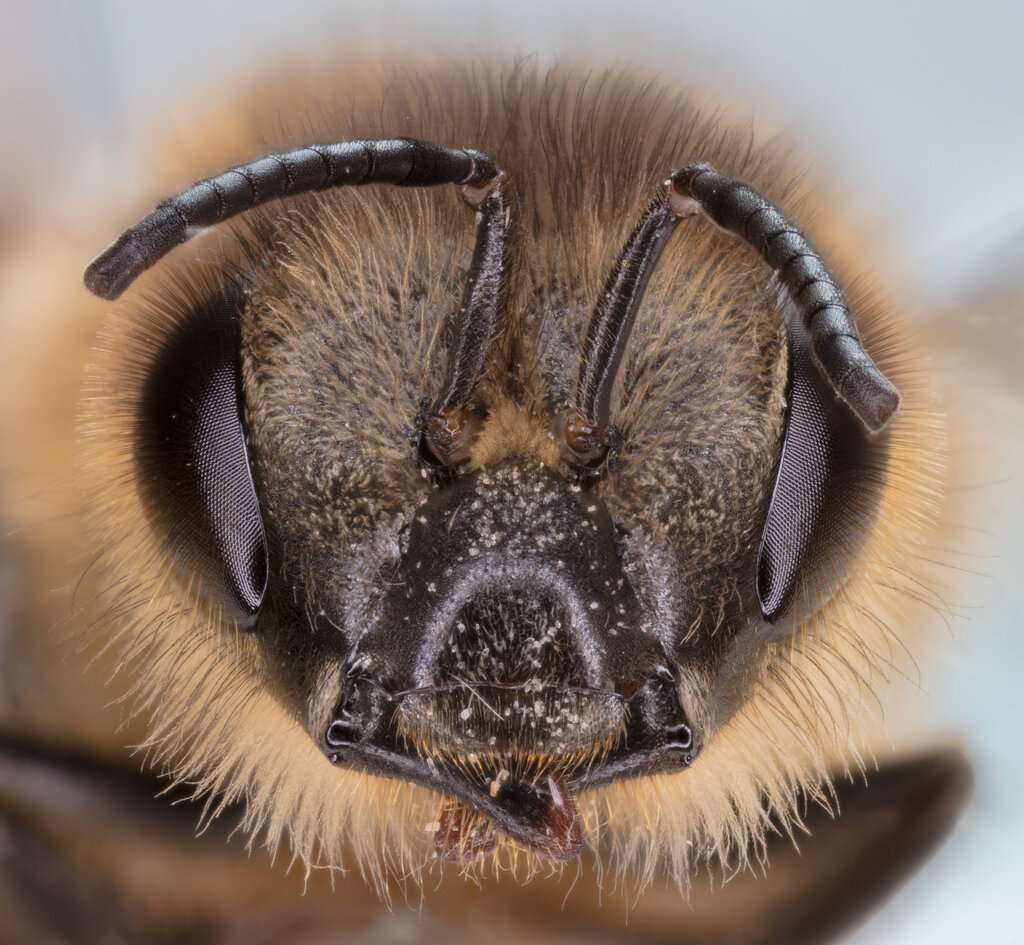
A bee's two antennae are vital. They function as a nose, tongue, and fingertips all in one, allowing the bee to smell nectar, taste sugar, feel textures, and even communicate with other bees inside the dark hive through touch.
The mouthparts are also highly specialized. A bee has a pair of strong, jaw-like mandibles for chewing wax and pollen, and a long, straw-like tongue called a proboscis for sucking up nectar and water.
The Thorax and Abdomen
The thorax is the bee's engine room. It's the middle section where the three pairs of legs and two pairs of wings attach. The powerful flight muscles are housed here, enabling the bee to fly miles in search of food. The wings are hooked together during flight to act as one large surface, but they can be unhooked when the bee is at rest.
A worker bee’s hind legs are specially adapted with stiff hairs that form a “pollen basket,” used to pack and carry pollen back to the hive.
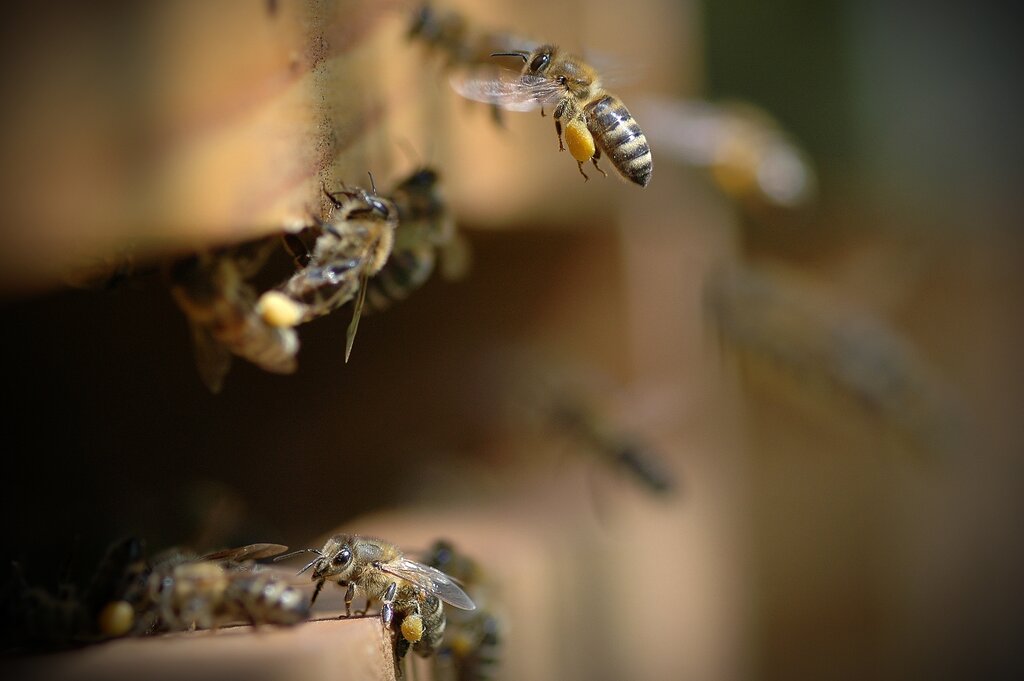
The abdomen is the final section. It contains the digestive tract, reproductive organs, and, in female bees, the stinger. The stinger is a modified ovipositor, or egg-laying tube. Because it's barbed, it gets stuck in the victim, and the bee dies after stinging a mammal.
Internally, a bee's systems are efficient. Their digestive system processes nectar into honey in a special stomach called the crop. They have an open circulatory system where a fluid called hemolymph bathes the organs directly, pushed around by a simple tube-like heart. The nervous system is decentralized, with nerve centers, or ganglia, located in each body segment.
Anatomy of a Caste
While all honey bees share this basic anatomy, there are distinct differences between the three castes: the queen, workers, and drones.
| Caste | Key Anatomical Features |
|---|---|
| Queen | Long, tapered abdomen for egg-laying; smooth, barbless stinger; larger overall body size. |
| Worker | Barbed stinger; pollen baskets on hind legs; specialized glands for producing wax and royal jelly. |
| Drone | Huge compound eyes that meet at the top of the head for spotting queens in flight; no stinger; stockier build. |
The drone's massive eyes are a great example of form following function. His sole purpose is to mate with a queen high in the air, so superior vision gives him an advantage.
Similarly, the worker's body is a perfect toolkit for her many jobs, from foraging for nectar to building wax comb and defending the hive. The queen's anatomy is optimized entirely for her role as the colony's single egg-layer.
Which of the three main body sections of a honey bee contains its powerful flight muscles, wings, and legs?
How many eyes does a honey bee have in total?
Understanding these anatomical details helps us appreciate the incredible specialization within a honey bee colony.