Introduction to Becoming an Electrician
Electrical Theory
The Language of Circuits
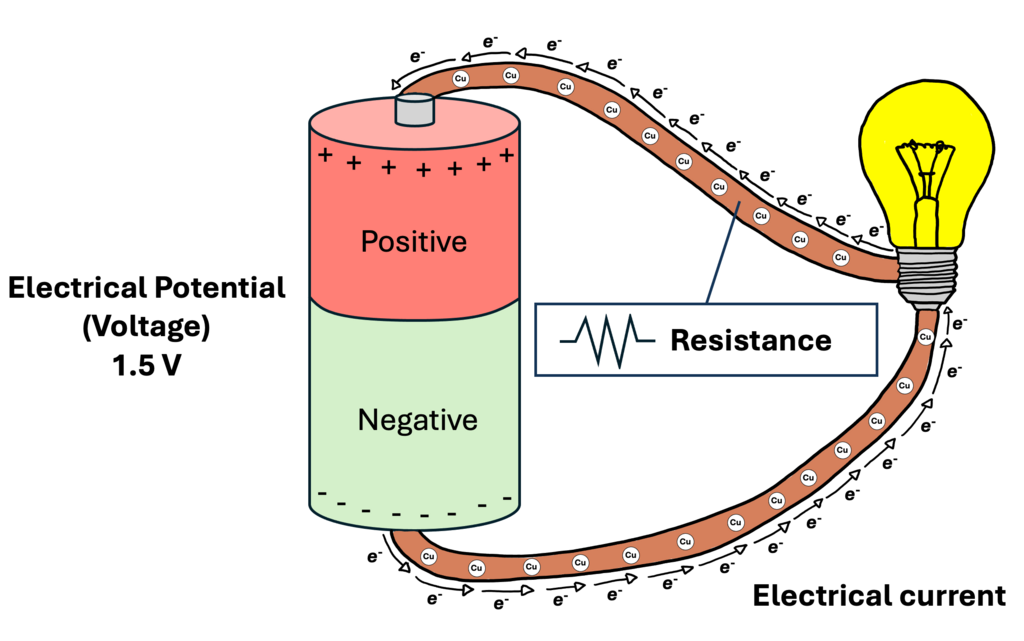
To work with electricity, you first need to understand its three most basic ingredients: voltage, current, and resistance. Think of electricity flowing through a wire like water flowing through a pipe. This simple analogy helps make these invisible concepts tangible.
Voltage is the pressure pushing the water. Current is the flow rate of the water. Resistance is the pipe's narrowness, slowing the flow.
Let's look at each one more closely.
Voltage
noun
The difference in electric potential energy between two points in a circuit. It's the 'push' that causes electric charge to move.
Voltage is measured in volts (V). A higher voltage means a stronger push. A 9-volt battery provides a stronger push than a 1.5-volt battery. In our water analogy, a high-pressure water pump is like a high-voltage source.
Current
noun
The rate at which electric charge flows past a point in a circuit.
Current is measured in amperes (A), often called "amps." It's a measure of how much charge is moving through the wire per second. In our analogy, this is like measuring how many gallons of water flow past a point in the pipe each minute.
Resistance
noun
A measure of the opposition to current flow in an electrical circuit.
Resistance is measured in ohms (Ω). Every component in a circuit, including the wires themselves, has some resistance. This opposition slows down the flow of current, just like a narrow, rusty pipe would slow down water flow. Conductors like copper have very low resistance, while insulators like rubber have very high resistance.
Ohm's Law
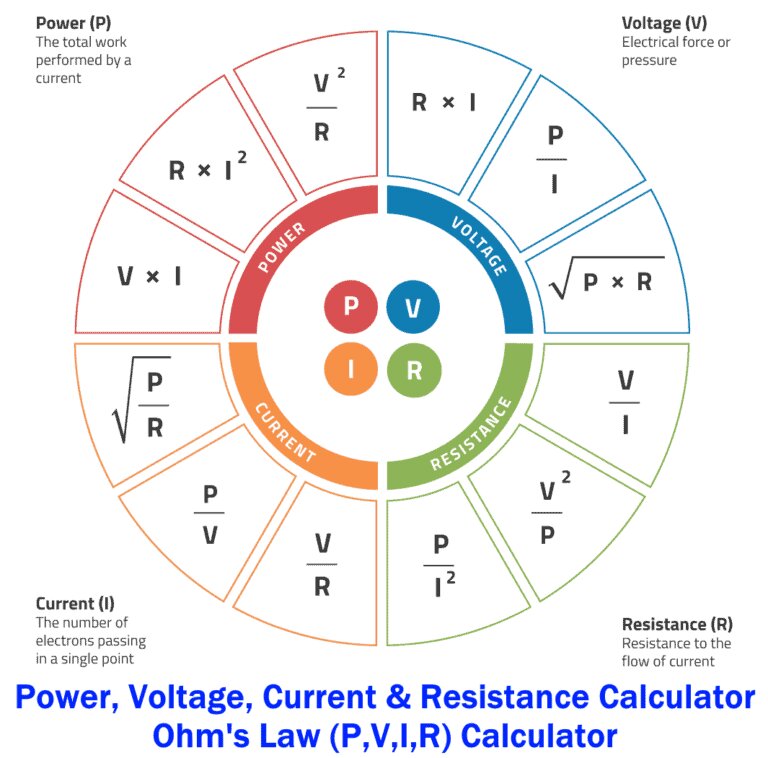
These three concepts—voltage, current, and resistance—are not independent. They are linked by a fundamental rule of electricity called Ohm's Law. It states that the voltage across a conductor is directly proportional to the current flowing through it, provided all physical conditions and temperature remain constant.
The relationship is expressed with a simple and powerful formula:
Where:
- V is the voltage in volts.
- I is the current in amps.
- R is the resistance in ohms.
This means if you know any two of the values, you can always calculate the third.
Let's try a practical example. Imagine you have a simple circuit with a 12V car battery connected to a headlight that has a resistance of 4Ω. How much current flows through the headlight?
To find the current (I), we can rearrange Ohm's Law: .
So, 3 amps of current flow through the headlight. This simple calculation is one of the most common tasks for an electrician.
Circuits and Power
An electrical circuit is simply a closed loop or path that allows electricity to flow from a source, through a load (like a lightbulb), and back to the source. For a circuit to work, it must be a complete, unbroken path.
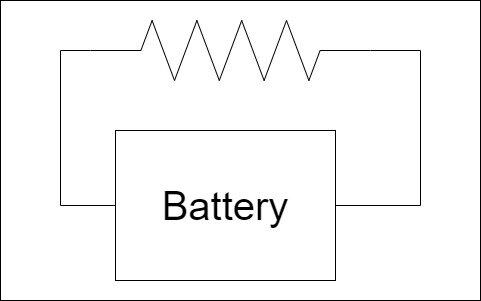
When current flows through a circuit, it performs work, such as lighting a bulb or turning a motor. The rate at which this work is done is called electrical power.
Power
noun
The rate, per unit time, at which electrical energy is transferred by an electric circuit.
Power (P) is measured in watts (W). The formula to calculate power is just as straightforward as Ohm's Law:
Let's go back to our headlight example. We know it has a voltage of 12V and a current of 3A. How much power does it use?
The headlight consumes 36 watts of power. This tells you how quickly it converts electrical energy into light and heat. Understanding power is crucial for sizing components like wires, fuses, and circuit breakers correctly to handle the electrical load safely.
Now, let's test your understanding of these core concepts.
Using the analogy of water flowing through a pipe, what does electrical current represent?
A simple circuit has a 9V battery connected to a component with a resistance of 18Ω. According to Ohm's Law (), how much current flows through the circuit?