Introduction to Basketball
Introduction to Basketball
The Birth of a Game
In the winter of 1891, a Canadian physical education instructor named James Naismith faced a challenge. He needed to invent a new indoor game to keep his students active during the harsh Massachusetts winters. The game had to be less rough than football but more engaging than simple calisthenics. His solution was elegant: nail two peach baskets to the gymnasium balcony railings, grab a soccer ball, and create a set of 13 basic rules.
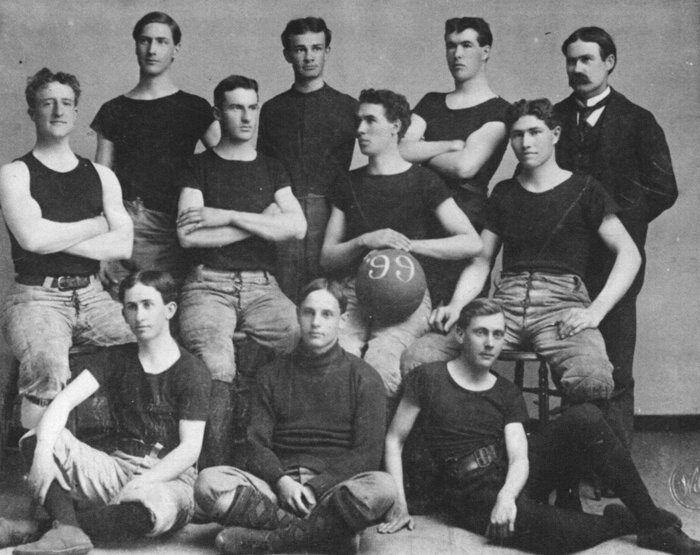
The objective was simple: throw the ball into the opposing team's basket. Players couldn't run with the ball; they had to pass it from where they caught it. Each time a team scored, the game was paused so someone could climb a ladder to retrieve the ball from the basket. Basketball was born.
How to Play
Today’s game is faster and more complex, but the core objective remains the same. Two teams compete to score more points than the other by shooting a ball through a hoop 10 feet (3.05 meters) high. A game is divided into periods, usually four quarters. The team with the most points at the end of the final period wins.
The fundamental goal is straightforward: put the ball in the basket and stop the other team from doing the same.
To move with the ball, a player must continuously bounce, or dribble, it. If a player stops dribbling, they must pass or shoot. Taking more than a step and a half without dribbling is a violation called traveling.
Points are scored in three ways:
- 3 points: A shot made from behind the three-point line.
- 2 points: A shot made from anywhere inside the three-point line.
- 1 point: An unguarded shot from the free-throw line, awarded after certain fouls.
A foul is illegal physical contact that impedes an opponent. If a player is fouled while shooting, they get to shoot free throws. Accumulating too many fouls can result in a player being removed from the game.
The Court
A basketball court is a rectangular floor with a hoop at each end. The court is divided into two main halves by the mid-court line. Specific markings on the court define the rules of play, telling players where they can score certain points and where specific rules apply.
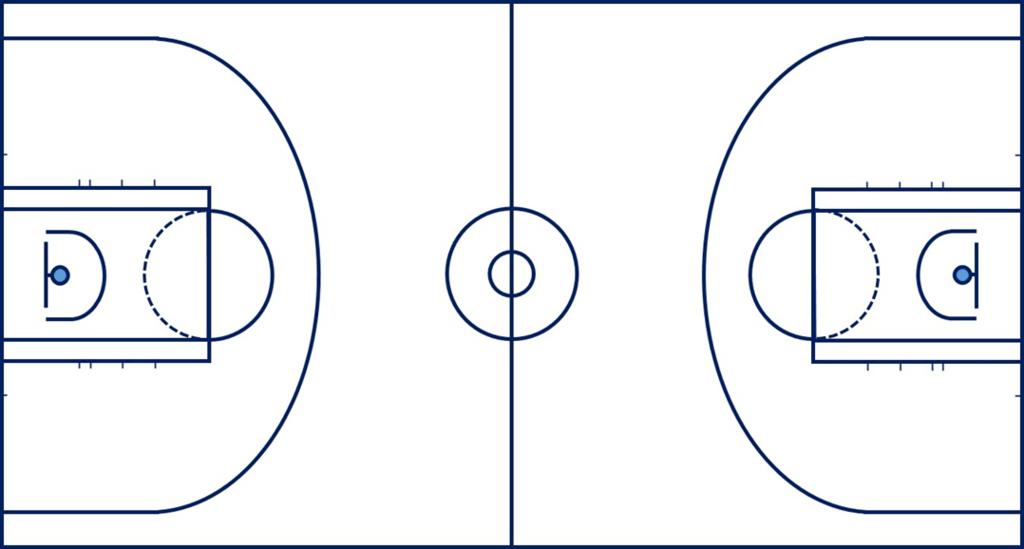
Understanding the main sections of the court is key to following the game.
| Marking | Purpose |
|---|---|
| Three-Point Line | The arc that separates two-point shots from three-point shots. |
| The Key (or Paint) | The rectangular area under the basket. Offensive players can't stay here for more than three seconds at a time. |
| Free-Throw Line | The line from which players take free throws. It's also the top of the key. |
| Center Circle | Where the game begins with a tip-off between two opposing players. |
The Team
Each team has five players on the court at any given time. While players can move anywhere, they typically have specific positions and responsibilities that leverage their unique skills.
Here are the five traditional positions:
- Point Guard (PG): Often called the "coach on the floor." This player is typically the team's best ball handler and passer, responsible for setting up the offense.
- Shooting Guard (SG): Usually the team's best shooter. Their main role is to score points, especially from long range.
- Small Forward (SF): A versatile player who can score from both inside and outside. They are often athletic and able to defend multiple positions.
- Power Forward (PF): A strong player who plays close to the basket. They are expected to rebound, play tough defense, and score from close range.
- Center (C): Typically the tallest player on the team. They play nearest to the basket, focusing on rebounding, blocking shots, and scoring in the paint.
Now that you know the basics of the game, its rules, and its players, it's time to test your knowledge.
Who is credited with inventing the game of basketball in 1891?
In basketball, what is the violation called when a player takes too many steps without bouncing the ball?
From a simple idea to a global sport, basketball's fundamentals are the foundation for all the exciting plays and strategies you'll see on the court.