Introduction to Basic Electricity
Electricity Basics
The Nature of Charge
At the heart of all things electric is charge. It's a fundamental property of matter, much like mass. Charge comes in two flavors: positive and negative. You can think of them as opposites that attract. A positive charge and a negative charge will pull toward each other. On the other hand, like charges repel. Two positives will push each other away, and so will two negatives.
These charges are carried by tiny particles. The most common carriers we talk about are electrons, which have a negative charge, and protons, which have a positive charge. Usually, atoms have an equal number of electrons and protons, making them electrically neutral. But when there's an imbalance, an object has a net charge, and that's when interesting things start to happen.
Flowing and Resisting
How easily can electric charge move through a material? The answer to that question separates materials into two main categories: conductors and insulators.
Conductors are materials that allow electric charge, usually in the form of electrons, to flow through them with very little effort. Metals like copper and aluminum are excellent conductors. That's why they are used for electrical wires.
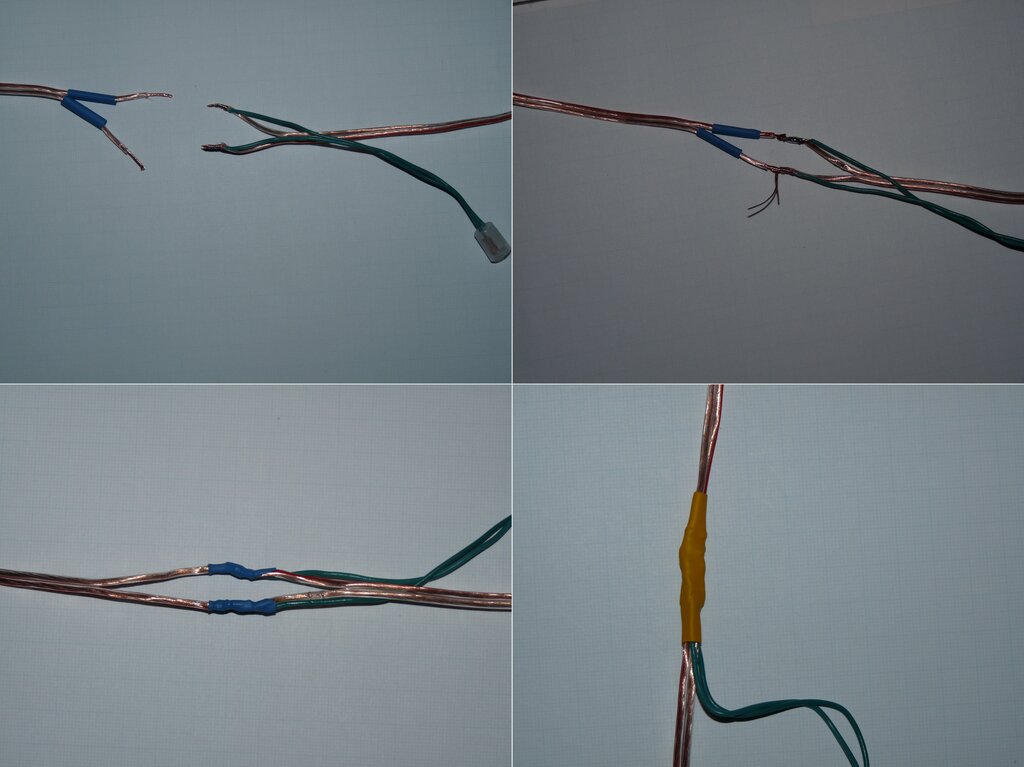
Insulators are the opposite. They hold onto their electrons tightly, making it very difficult for charge to move. Materials like rubber, plastic, and glass are good insulators. They are often used to coat electrical wires to keep the electricity contained and prevent shocks.
Voltage, Current, and Resistance
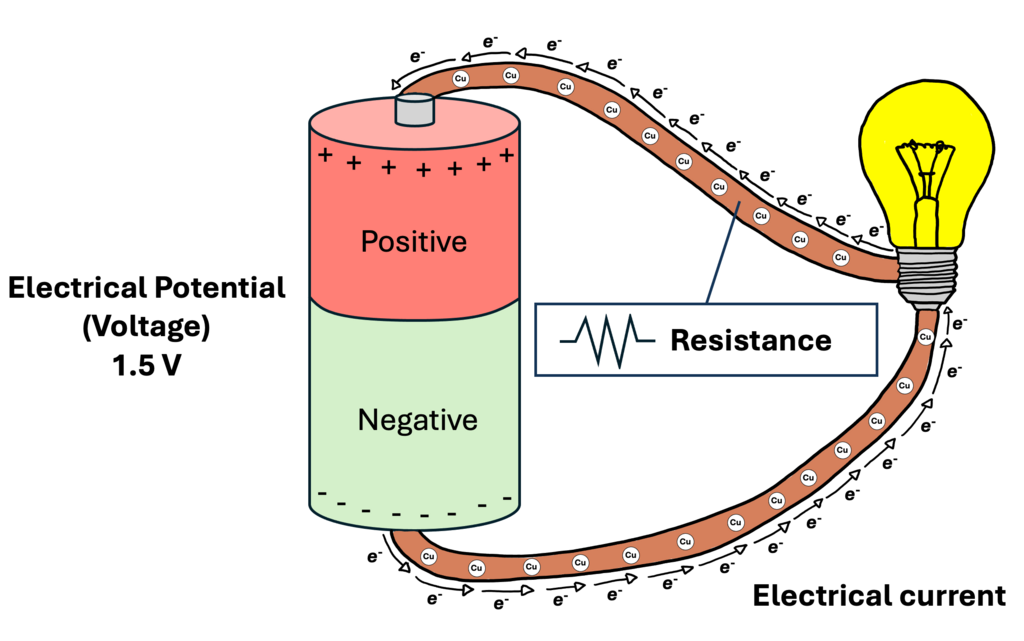
To understand how electricity works in a circuit, we need to get familiar with three key concepts. Think of electricity flowing through a wire like water flowing through a pipe.
Voltage
noun
The pressure or force that pushes electric charge forward. It's the 'push' in the system.
Voltage is measured in volts (V). In our water analogy, voltage is like the water pressure. The higher the pressure, the more forcefully the water moves.
Current
noun
The rate at which electric charge flows past a point in a circuit. It's the 'flow' itself.
Current is measured in amperes (A), or amps for short. In the pipe analogy, current is the flow rate of the water, like gallons per minute.
Resistance
noun
A measure of how much a material opposes the flow of electric current. It's the 'friction' in the system.
Resistance is measured in ohms (Ω). In our analogy, resistance is like a narrowing of the pipe. It restricts the flow of water. A thin pipe has more resistance to water flow than a wide one.
Ohm's Law
These three quantities, voltage, current, and resistance, are all related. A German physicist named Georg Ohm figured out the connection, which is now named Ohm's Law in his honor.
Ohm's Law states that the current flowing through a conductor is directly proportional to the voltage across it and inversely proportional to the resistance.
Mathematically, it's a very simple and powerful formula. It says that voltage () is equal to the current () multiplied by the resistance ().
This means if you increase the voltage (the push), the current (the flow) will increase, assuming the resistance stays the same. But if you increase the resistance (narrow the pipe), the current will decrease, even with the same voltage. This simple relationship is the foundation for analyzing many electrical circuits.
Let's check your understanding of these core concepts.
What happens when an object with a positive charge is brought near an object with a negative charge?
In the common analogy of electricity as water flowing through a pipe, what does voltage represent?
With these basics of charge, materials, and the relationship between voltage, current, and resistance, you have the building blocks for understanding the world of electricity.