Introduction to Bahasa Indonesia
Introduction to Bahasa Indonesia
Meet Bahasa Indonesia
Welcome to Bahasa Indonesia, the official language of Indonesia. With over 275 million people spread across more than 17,000 islands, Indonesia needed a way to connect its diverse population. The solution was Bahasa Indonesia, a language that unites hundreds of local ethnic groups, each with its own distinct language.
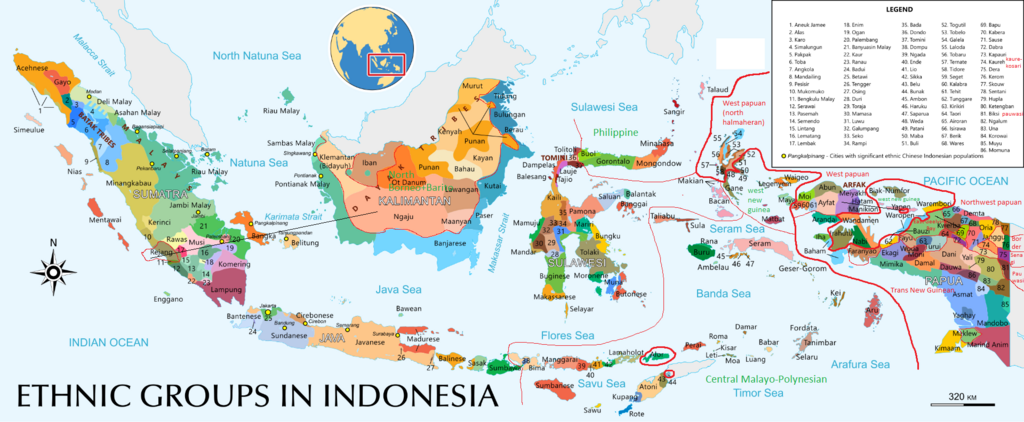
Bahasa Indonesia is a standardized form of Malay, an Austronesian language that has been used as a lingua franca in the Indonesian archipelago for centuries. It was officially adopted as the national language with Indonesia's independence in 1945. Its purpose wasn't to replace local languages like Javanese or Sundanese, but to provide a common tongue for communication in government, education, and media.
For English speakers, there's great news: Bahasa Indonesia is one of the easier Asian languages to learn. It uses the Latin alphabet, has no tones, and features a relatively straightforward grammatical structure.
The Alphabet and Sounds
Getting started with pronunciation is simple because the sounds are quite consistent. Unlike English, where a letter can have multiple sounds (think of the 'a' in 'cat,' 'car,' and 'cake'), Indonesian letters almost always represent the same sound.
This phonetic consistency is a huge advantage for learners. What you see is almost always what you get.
Let's begin with the vowels. They are the foundation of Indonesian pronunciation.
| Vowel | Pronunciation Guide | Example Word (Meaning) |
|---|---|---|
| a | like the 'a' in father | apa (what) |
| i | like the 'ee' in see | ini (this) |
| u | like the 'oo' in moon | umur (age) |
| e | has two sounds (see below) | sore (afternoon) |
| o | like the 'o' in go | orang (person) |
The letter 'e' is the only tricky vowel. It has two distinct sounds:
- Like the 'e' in "bed." This is often found in open syllables. For example, sore (afternoon) is pronounced sor-AY.
- Like the 'a' in "sofa" (an unstressed 'uh' sound). For example, selamat (greetings, safe) is pronounced suh-lah-mat.
Don't worry too much about this for now. You'll get a feel for the difference with practice and exposure.
Key Consonants
Most consonants sound just like they do in English, but a few are worth special attention.
| Letter | Pronunciation Guide | Example Word (Meaning) |
|---|---|---|
| c | always like the 'ch' in chair | cari (to look for) |
| g | always a hard 'g' like in go | gigi (tooth) |
| r | rolled or trilled, like in Spanish | roti (bread) |
| ng | like the 'ng' in singer | senang (happy) |
| ny | like the 'ni' in onion or Spanish 'ñ' | nyanyi (to sing) |
Pay close attention to 'c' and 'ng'. The 'c' is never soft like in "city." It's always a 'ch' sound. The 'ng' sound is very common and appears at the beginning, middle, and end of words. Practice saying it without adding a hard 'g' sound at the end, as in singer, not finger.
The rolled 'r' can be challenging for native English speakers. Try lightly tapping the tip of your tongue against the roof of your mouth, just behind your teeth.
With these basic rules, you can now pronounce a wide range of Indonesian words. Let's try one.
thank you
Breaking it down: te-ri-ma ka-sih. Notice the 'r' is slightly rolled, the 'i' is an 'ee' sound, and the final 'h' is a light puff of air. You've just learned one of the most important phrases in any language.
What was the primary reason for adopting Bahasa Indonesia as the official language of Indonesia?
True or False: A key reason Bahasa Indonesia is considered relatively easy for English speakers is that its letters almost always represent the same sound.
That's your first step into Bahasa Indonesia. By focusing on these clear and consistent sounds, you're building a strong foundation for speaking and understanding the language.