Introduction to Backend Web Development
Introduction to Backend Development
The Engine Room of the Web
Every time you log into an app, buy something online, or even just refresh a social media feed, you're interacting with a system that has two distinct sides. There's the part you see and touch—the buttons, the layout, the text. That's the frontend. But behind the scenes, there's another part working tirelessly to make it all happen. This is the backend.
Think of a website like a restaurant. The frontend is the dining room: the decor, the menu, the waiter who takes your order. The backend is the kitchen: the chefs, the ovens, the ingredients, and all the processes that turn your order into a meal.
You can't see the kitchen from your table, but without it, the restaurant wouldn't function. The backend is the engine and infrastructure that powers the application. It handles everything the user doesn't see directly, from processing data to communicating with databases.
The frontend is all about presentation. It's built with languages like HTML, CSS, and JavaScript that your web browser can understand and display. The backend, however, is about logic and data. It runs on a server, which is essentially a powerful computer designed to handle requests from users. This is where the heavy lifting happens.
What a Backend Developer Does
Backend developers are the architects and builders of the server-side of an application. Their work ensures that everything is fast, secure, and reliable. Their responsibilities fall into a few key areas.
Back-end development focuses on the server-side logic and functionality that powers a website or application.
Server-side Logic: This is the brain of the operation. Backend developers write code that processes user requests, handles business rules, and dictates how the application behaves. For example, when you add an item to your shopping cart, backend logic updates your cart's total, checks if the item is in stock, and saves the cart for later.
Database Management: Almost every modern application needs to store information. User accounts, product details, blog posts—it all lives in a database. Backend developers are responsible for designing, creating, and managing these databases to ensure data is stored safely and can be retrieved quickly.
APIs (Application Programming Interfaces): How does the frontend talk to the backend? Through an API. An API is a set of rules and protocols that allows different pieces of software to communicate. Backend developers build APIs that the frontend can call to get or send information. It's like the waiter in our restaurant analogy, carrying orders to the kitchen and bringing food back to the table.
| Aspect | Frontend | Backend |
|---|---|---|
| Concerns | What the user sees and interacts with | The underlying logic, data, and infrastructure |
| Location | Runs in the user's web browser | Runs on a remote server |
| Core Tasks | User interface (UI), user experience (UX) | Data processing, database management, security |
| Languages | HTML, CSS, JavaScript | Python, Java, Node.js, Ruby, PHP, Go |
The Power of Server-Side Code
So, why can't everything just happen in the browser? The main reasons are security and data management. Many operations require access to sensitive information or a centralized database that shouldn't be exposed directly to the user.
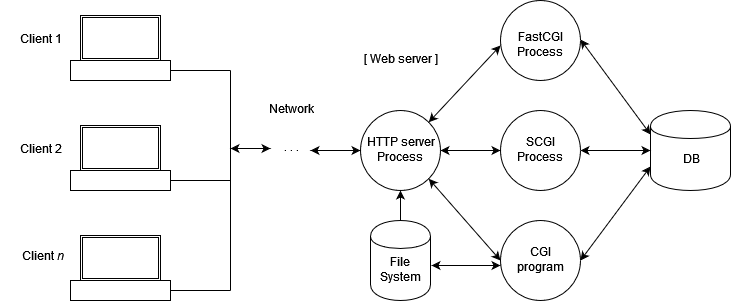
Consider a simple login system. The login form you see is the frontend. When you enter your username and password and click 'Log In', the frontend sends that information to the backend. The backend code then takes over. It securely connects to the database, checks if an account with that username exists, and verifies if the password matches. If everything checks out, it sends a 'success' message back to the frontend, which then logs you in. If not, it sends back an error.
This crucial verification step must happen on the server. If the logic were on the frontend, a malicious user could potentially bypass it to gain access. The backend acts as a secure gatekeeper for the application's data and functionality.
Backend development is the invisible foundation that makes the modern web possible. While users admire the sleek design and smooth animations of the frontend, it’s the robust and efficient backend that keeps the application running smoothly, securely, and at scale.
What is the primary role of the backend in a web application?
In the analogy of an application as a restaurant, the API (Application Programming Interface) acts as the:
Now that you've got the basics, you're ready to explore the specific technologies and languages that bring the backend to life.