Introduction to Automation
Introduction to Automation
What is Automation?
At its heart, automation is about using technology to do a job with less human help. Think of it like setting up a row of dominoes. You do the initial work of setting them up and tipping the first one, but technology takes over and handles the rest of the chain reaction for you.
Automation
noun
The use of technology to perform tasks that would otherwise require human input or intervention.
This doesn't mean removing humans from the picture entirely. Instead, it's about shifting their role from doing the repetitive work to designing and overseeing the systems that do it.
Automation refers to the use of technology to perform tasks with minimal human involvement.
A Quick Trip Through Time
The idea of automation isn't new. People have been creating self-operating devices for centuries. In the late 1700s, American inventor Oliver Evans designed a completely automated flour mill. Grain was moved through the milling process using a series of conveyors and elevators, all powered by water wheels. No human hands had to lift a single bag.
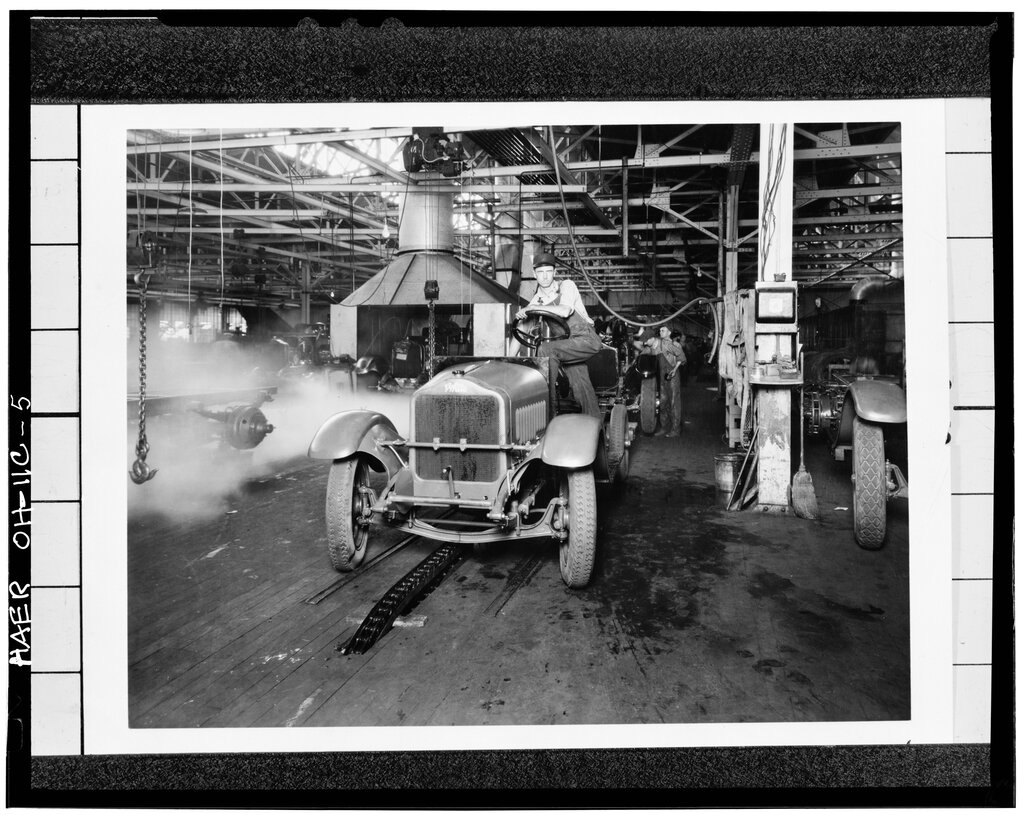
The Industrial Revolution in the 18th and 19th centuries supercharged this trend with steam power and mechanization. But modern factory automation truly came into its own with Henry Ford's assembly line in the early 20th century. By bringing the work to the worker on a moving conveyor, he created a system that drastically sped up production.
The arrival of computers in the mid-20th century marked the next great leap. Suddenly, machines could not only perform physical tasks but also make decisions based on programmed logic. This opened the door for the sophisticated robotics and software automation we see today.
How Automation Works
So how does a machine operate on its own? The secret lies in two key principles: control systems and feedback mechanisms.
A control system is the "brain" of an automated process. It manages, commands, and regulates the behavior of other devices or systems. But a brain is useless without senses. That's where feedback comes in.
A feedback mechanism, or feedback loop, is a process where the output of an action is used to modify the next action. It's a cycle of measuring, comparing, and correcting.
You use a feedback loop every day: your home's thermostat. You set a desired temperature (the goal). The thermostat's sensor measures the actual room temperature (the output). It compares the two and, if the room is too cold, it tells the furnace to turn on (the correction). Once the desired temperature is reached, it tells the furnace to shut off.
This measure-compare-correct cycle is the foundation of automation. The same logic that keeps your home comfortable also allows a factory robot to weld a car door with pinpoint precision or a software script to automatically sort your emails. The tools are more complex, but the underlying principle is the same: a system constantly checks its own work and adjusts to meet a pre-defined goal.
What is the primary goal of automation?
Which innovation is cited as a major step forward for factory automation in the early 20th century?
Automation isn't just about robots; it's a fundamental concept of using intelligent systems to handle tasks, built on a long history of human ingenuity.