Introduction to Artificial Intelligence
Introduction to AI
What is Artificial Intelligence?
At its core, artificial intelligence is about creating machines that can think, learn, and solve problems like humans do. It's a broad field in computer science focused on building smart systems capable of performing tasks that typically require human intelligence. This could be anything from understanding language and recognizing images to making decisions and discovering new patterns in data.
Artificial Intelligence
noun
A field of computer science dedicated to creating systems that can perform tasks that normally require human intelligence.
Think of it this way: we teach a child by showing them examples. They see a few dogs and eventually learn to recognize any dog. AI systems, particularly a subfield called machine learning, work in a similar way. They analyze vast amounts of data to learn patterns, without being explicitly programmed for every single task.
A Quick Trip Through Time
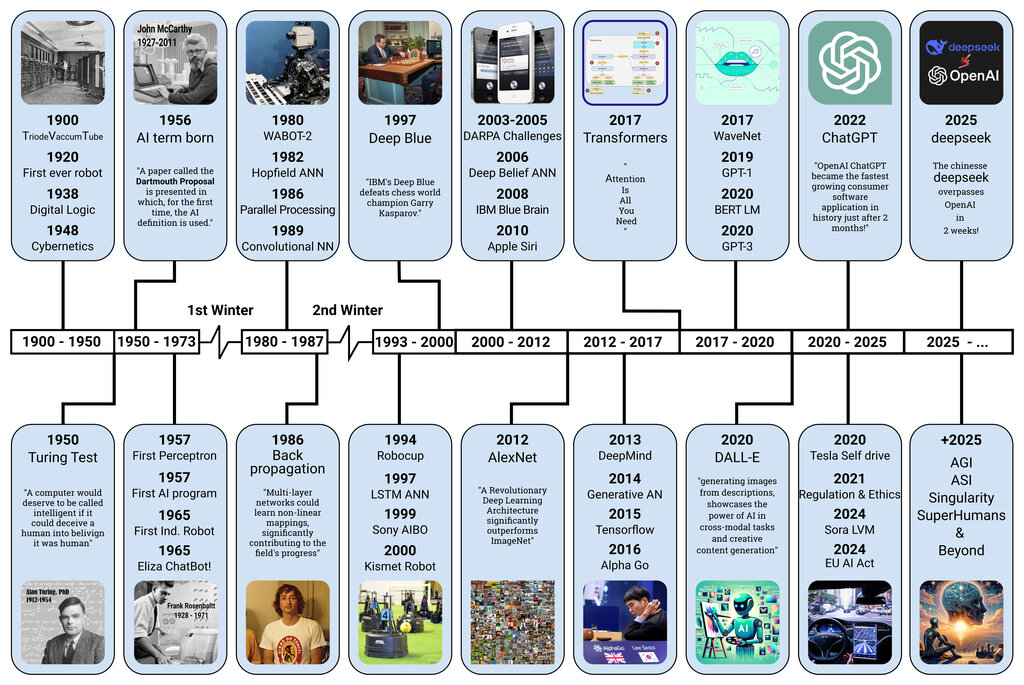
The idea of intelligent machines isn't new; it has roots in ancient myths. But the scientific journey began in the mid-20th century. The term "artificial intelligence" was officially coined in 1956 at a workshop at Dartmouth College. This event brought together the founding fathers of AI and kicked off decades of research.
The path wasn't always smooth. The field went through periods of high expectations followed by disappointing results, known as "AI winters," when funding and interest dried up. However, breakthroughs in computing power and the availability of massive datasets in the 21st century sparked a renaissance. Today, AI is advancing faster than ever.
The Three Categories of AI
Not all AI is created equal. We can categorize AI based on its capabilities. The main distinction is between systems that are specialized for one task and those that can perform any intellectual task a human can.
- Artificial Narrow Intelligence (ANI) This is the only type of AI that exists today. ANI is designed to perform a single, specific task very well. Think of your phone's voice assistant, a chess-playing computer, or the AI that recommends movies on a streaming service. It might seem incredibly smart in its area of expertise, but it can't operate outside of its predefined set of skills. The chess program can't suggest a movie, and the voice assistant can't play chess.
- Artificial General Intelligence (AGI) This is the next step, a type of AI that's still theoretical. AGI would have the ability to understand, learn, and apply knowledge across a wide range of tasks at a human level. An AGI could write a novel, compose a symphony, or conduct scientific research with the same versatility as a person. Building AGI is the ultimate goal for many researchers, but it remains a massive scientific challenge.
- Artificial Superintelligence (ASI) ASI takes things even further. This is a hypothetical form of AI that would surpass human intelligence in virtually every field, from scientific creativity and general wisdom to social skills. An ASI would be far more capable than the smartest human minds. The concept raises profound questions and is a topic of both excitement and serious debate among scientists and philosophers.
Understanding these categories helps place current AI technologies in context and provides a roadmap for where the field might be headed.
What is the core goal of artificial intelligence as described in the text?
The term "artificial intelligence" was officially coined at a workshop at Dartmouth College in 1956.