Introduction to Artificial Intelligence
Introduction to AI
What Is Artificial Intelligence?
Artificial Intelligence, or AI, is a field of computer science focused on creating machines that can perform tasks that typically require human intelligence. Think of it as teaching a computer to learn, reason, problem-solve, and understand language. The ultimate goal is to build systems that can operate autonomously, adapting to new situations without being explicitly programmed for every scenario.
At its core, AI is about simulating human intelligence in machines.
This doesn't mean creating robots that look and act exactly like us. Instead, it's about the processes of intelligence. Can a machine recognize a cat in a photo? Can it translate a sentence from one language to another? Can it analyze medical data to suggest a diagnosis? These are all applications of AI.
A Brief History of AI
The idea of intelligent machines has been around for centuries in myths and stories, but the scientific pursuit of AI began in the 1950s. A pivotal moment was the Dartmouth Workshop in 1956, where the term "artificial intelligence" was officially coined. Early researchers were optimistic, believing that a machine as intelligent as a human was just a few decades away.
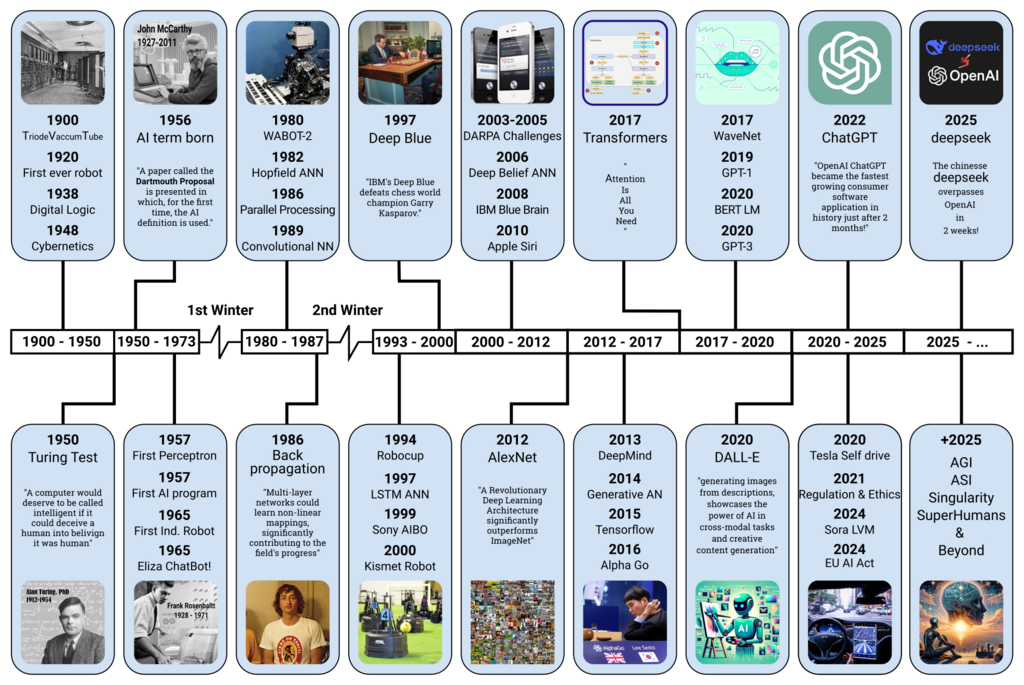
Progress wasn't a straight line. The field experienced several "AI winters," periods when funding dried up and public interest waned because the lofty promises of early AI didn't materialize quickly enough. Computing power was limited, and the complexity of creating true intelligence was vastly underestimated.
However, breakthroughs in computing power and the availability of massive amounts of data in the late 20th and early 21st centuries led to a resurgence. A major milestone came in 1997 when IBM's Deep Blue chess computer defeated world champion Garry Kasparov, proving that a machine could strategize better than the best human player in a complex game.
The Three Main Types of AI
Not all AI is created equal. We can categorize AI based on its capabilities. The three main classifications are Narrow AI, General AI, and Super AI.
Artificial Narrow Intelligence (ANI), also known as Weak AI, is the only type of AI we have successfully created so far. ANI is designed and trained for one particular task. It operates within a pre-defined, limited range.
Your voice assistant, the algorithm that recommends shows on Netflix, and the software that powers self-driving cars are all examples of Narrow AI. They are incredibly powerful at what they do, but they can't operate outside their specific domains. You can't ask your smart speaker to drive your car.
Artificial General Intelligence (AGI), or Strong AI, is the kind of intelligence we see in movies. It refers to a machine with the ability to understand, learn, and apply knowledge across a wide range of tasks at a human level. An AGI would be able to perform any intellectual task that a human being can. This type of AI does not yet exist and is a major goal for many researchers.
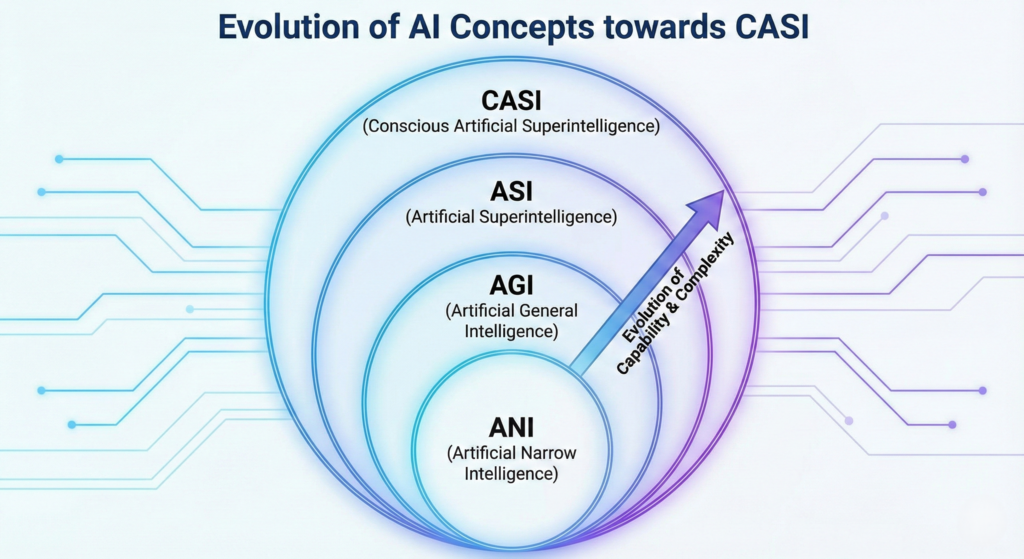
Artificial Superintelligence (ASI) is a hypothetical form of AI that would possess intelligence far surpassing that of the brightest human minds. An ASI wouldn't just replicate human intelligence; it would vastly exceed it in every domain, from scientific creativity and general wisdom to social skills. The development of ASI raises profound ethical and safety questions that experts are actively debating today.
What is the primary focus of the field of Artificial Intelligence?
The type of AI that can perform any intellectual task a human can is known as ________.
This introduction lays the groundwork for understanding the world of AI. By knowing its definition, history, and different types, you're ready to explore its more complex aspects.