Introduction to Artificial Intelligence
Introduction to Artificial Intelligence
What Is Artificial Intelligence?
Artificial Intelligence (AI) is the science of making machines that can think and learn like humans. The goal is to create systems that can perform tasks that normally require human intelligence, like recognizing speech, making decisions, or translating languages.
Think of it this way: we don't program an AI with every possible answer. Instead, we create a system that can figure out the answers on its own by identifying patterns in data.
At its core, AI is about creating intelligence outside of a biological brain. This intelligence can take many forms, from a simple algorithm that suggests which movie you might like next to a complex system that can drive a car.
A Brief History of AI
The dream of intelligent machines has been around for centuries, but the formal field of AI research is relatively young. It officially began in the summer of 1956 at a workshop at Dartmouth College, where the term "artificial intelligence" was first used.
Early researchers were incredibly optimistic. They believed that a machine as intelligent as a human being was only a generation away. This initial excitement led to significant government funding and the creation of AI that could solve algebra problems and prove theorems in geometry.
But the initial progress hit a wall. The problems turned out to be much harder than expected. By the mid-1970s, the field entered a period known as the "AI winter," where funding dried up and interest waned. The computers of the time simply weren't powerful enough for the complex tasks researchers wanted to achieve.
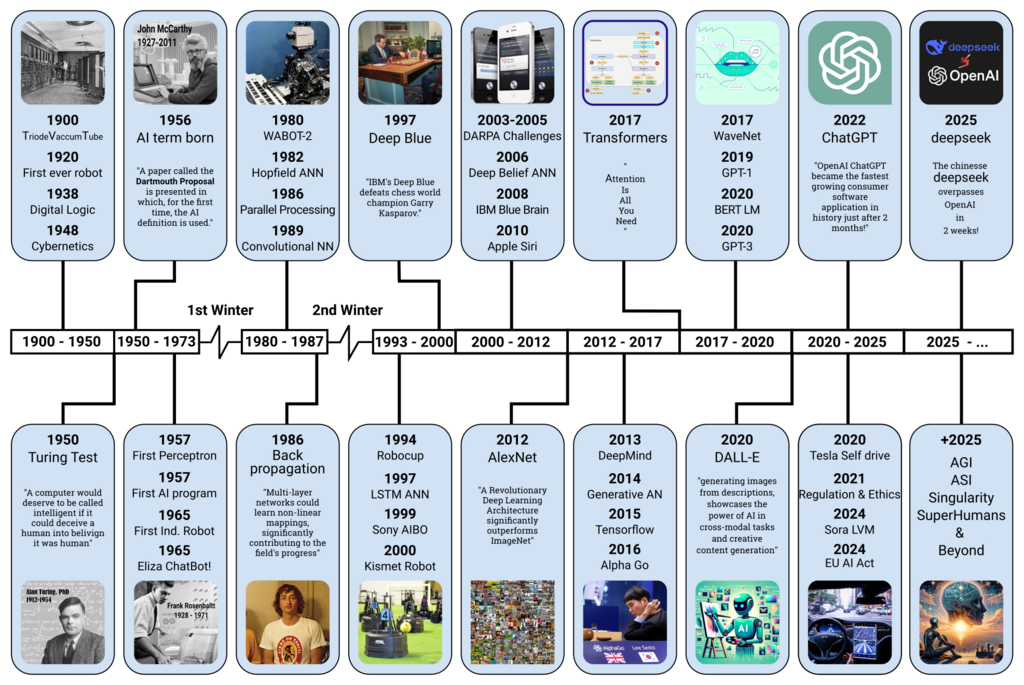
Things started to change in the 1980s and 90s with the rise of a new approach: machine learning. Instead of trying to write rules for every possible situation, researchers focused on creating systems that could learn from data. This shift, combined with the exponential growth of computing power, thawed the AI winter and set the stage for the AI revolution we see today.
The Branches of AI
AI is not a single technology but a broad field with many specialized subfields. Think of it like medicine, which has branches like cardiology and neurology. Each subfield of AI focuses on a different aspect of intelligence.
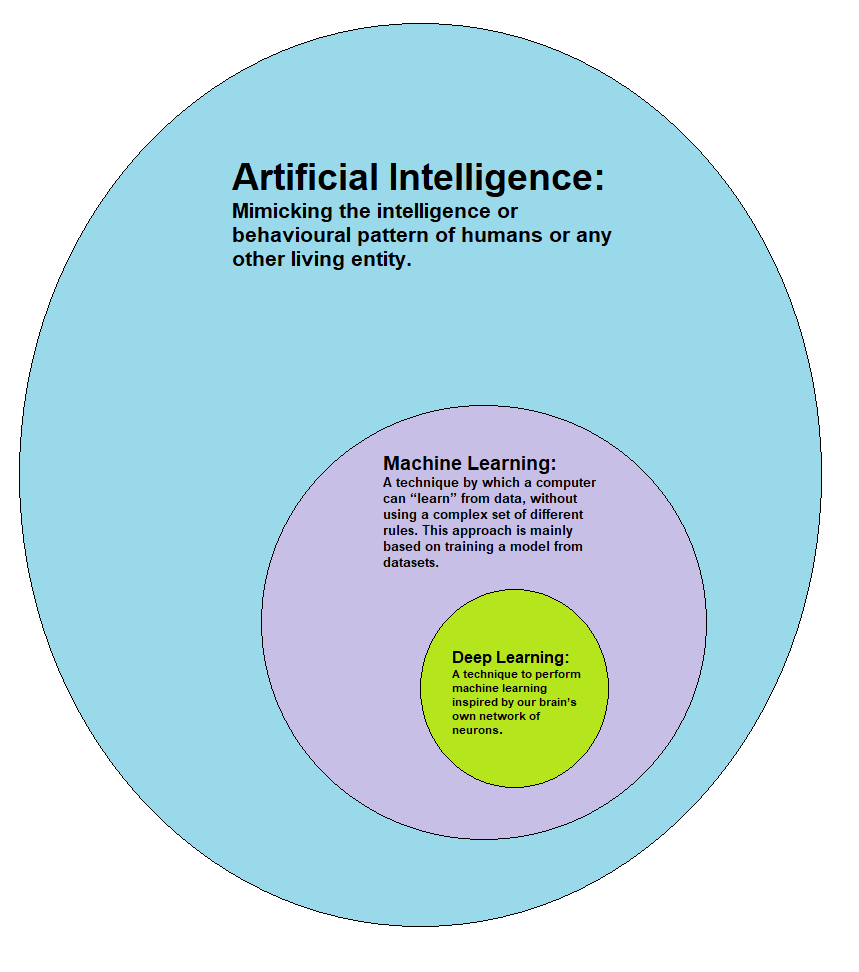
Here are some of the most important branches:
Machine Learning
noun
A subset of AI where systems learn and improve from experience without being explicitly programmed. It's the engine that powers many AI applications, from recommendation systems to spam filters.
Deep Learning is a specialized type of machine learning that uses structures inspired by the human brain, called neural networks. These networks have many layers, allowing them to learn complex patterns in large amounts of data. Deep learning is the technology behind self-driving cars and voice assistants.
Natural Language Processing
noun
Commonly known as NLP, this branch focuses on the interaction between computers and human language. It gives machines the ability to read, understand, and generate human speech.
Computer Vision is the field that trains computers to interpret and understand the visual world. Using digital images from cameras and videos, machines can identify and classify objects, and then react to what they "see."
Ready to check your understanding? This quiz will cover the fundamental ideas we've discussed.
What is the primary goal of Artificial Intelligence (AI)?
The term "artificial intelligence" was first officially used at a workshop in 1956. Where was this workshop held?
These core concepts form the foundation of artificial intelligence. By understanding what AI is, where it came from, and its main branches, you're ready to explore how these technologies work in more detail.