Introduction to Artificial Intelligence
Introduction to Artificial Intelligence
What Is Artificial Intelligence?
Artificial intelligence, or AI, is the science of making machines that can think and learn like humans. It's about creating systems that can perform tasks that normally require human intelligence, like recognizing faces, understanding speech, or solving complex problems.
Think of it as teaching a computer to see the world, understand it, and make decisions, much like a person does.
The goal isn't just to make a machine follow a rigid set of instructions. Instead, AI aims to give machines the ability to adapt, reason, and improve on their own. It's the difference between a simple calculator that only does what you tell it and a system that can learn to play a game better than any human.
A Brief History of AI
The idea of intelligent machines has been around for centuries, but the modern field of AI began in the mid-20th century. A pivotal moment was a workshop at Dartmouth College in 1956, where the term "artificial intelligence" was first used. Early researchers were incredibly optimistic, believing that a machine as intelligent as a human being was just a few decades away.
1956: Dartmouth Conference: Official birth of AI as a field of study, coining the term “Artificial Intelligence.”
However, progress was slower than expected. The initial excitement gave way to periods known as "AI winters," when funding dried up and public interest faded. The challenges were immense, and the computers of the time weren't powerful enough to handle the complexity.

Things began to change in the late 1990s and 2000s. The rise of the internet created massive amounts of data, and computer processing power grew exponentially. These two ingredients, data and power, fueled a renaissance in AI, leading to the breakthroughs we see today.
Why AI Matters Today
AI is no longer just a subject of science fiction. It's a fundamental part of modern society, working behind the scenes in countless ways. When your phone suggests a reply to a text, a streaming service recommends a movie, or a navigation app finds the fastest route, that's AI at work.
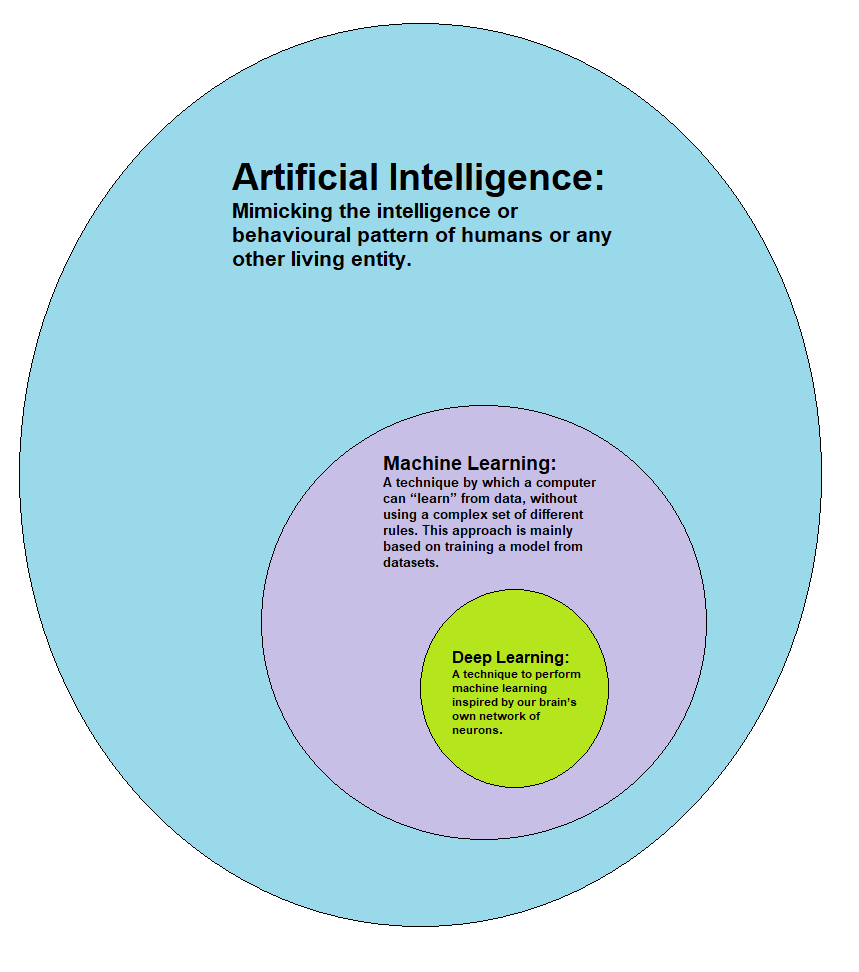
The significance of AI lies in its ability to process vast amounts of information and recognize patterns that are beyond human capability. This allows us to tackle some of the world's most challenging problems, from diagnosing diseases earlier to developing more sustainable energy sources. It automates mundane tasks, freeing up people to focus on more creative and strategic work.
AI is a tool for extending human capabilities, much like a telescope lets us see farther into space.
As the technology continues to evolve, its impact will only grow, reshaping industries and changing the way we live and work. Understanding what it is and where it came from is the first step in navigating this new landscape.
Ready to check your understanding?
What is the primary goal of Artificial Intelligence?
The term "artificial intelligence" was first used at a workshop at Dartmouth College in 1956.
This foundation gives you a starting point for exploring the many facets of artificial intelligence.